Security Architecture and the Psychiatric Gap: How a Flagged Individual Reached the White House Perimeter
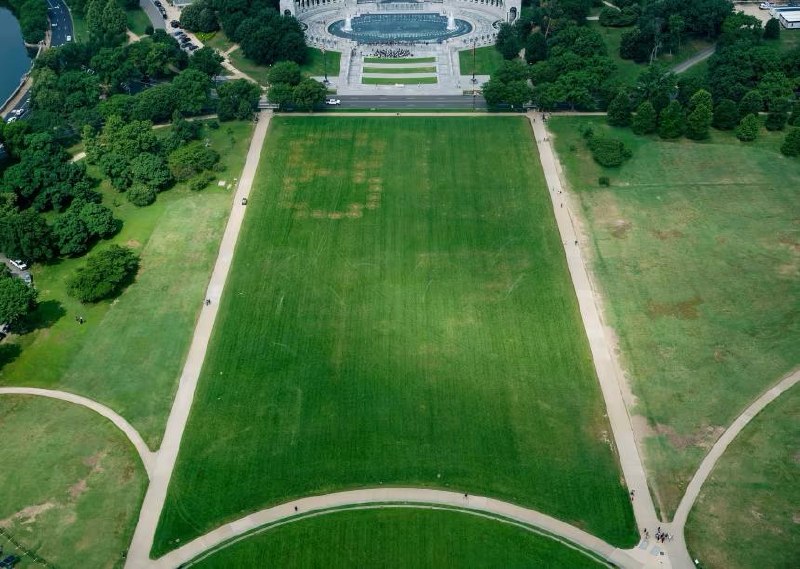
At approximately 22:00 UTC on May 23, 2026, a shooter opened fire on the White House compound in Washington, D.C. Secret Service agents stationed at the perimeter returned fire, fatally striking the attacker before he could breach the inner grounds. One bystander sustained injuries. The White House was placed on lockdown for approximately ninety minutes. The suspect, identified by sources as 21-year-old Nasire Best, had been previously sent to a psychiatric ward following an earlier incident involving the Secret Service — a prior contact that had put him on the agency's radar before the shooting.
That detail — the existence of a prior flag, a prior intervention — is the fact that transforms this from a routine security response into a structural problem. The security architecture around the White House is designed to intercept threats at a distance. It is not designed, it seems, to generate ongoing active constraints on individuals who have drawn official scrutiny but have not been charged with a crime. Best was known. Best was flagged. Best reached the perimeter anyway. The question the investigation must answer is not whether the Secret Service responded correctly — by all accounts the response was rapid and effective — but why the alert system failed to prevent an approach that should have been intercepted further out.
The structural failure here is not detection. It is coordination across systems that do not talk to each other effectively: the mental health system that held Best, the law enforcement apparatus that encountered him, and the security perimeter that ultimately faced him. When someone exists in that gray zone — psychiatric history, prior official contact, no criminal conviction — the current architecture flags the name but does not generate an active constraint. Best could have been placed on a restricted list, flagged to uniformed officers, subject to enhanced monitoring as he moved through the capital. The sources do not indicate that any of those steps were taken. The breach, in other words, was not a failure of the guns on the line. It was a failure of the pipeline that was supposed to feed the guns better intelligence.
What the sources do not yet establish is the timeline of Best's movements in the hours before the shooting, the specific content of his prior Secret Service encounter, or what triggered the psychiatric commitment. The investigation, being conducted jointly by the Secret Service and the FBI, will need to answer those questions. Monexus will track its findings as they emerge.
The Response and Its Limits
The Secret Service's counterattack was effective by any immediate measure. Officers engaged the shooter within seconds of the first shot, neutralised the threat, and established a perimeter that contained the scene. No occupant of the White House was injured. The lockdown was lifted within ninety minutes. By the standard of active-shooter response times in a high-security environment, this outcome represents the system working as designed.
But the standard of success for protective intelligence is higher than "we stopped the attack before anyone inside was hurt." The goal of the broader security architecture — the layered surveillance, the investigation teams, the information-sharing agreements with local and federal partners — is to identify and neutralise threats before they reach the perimeter. That architecture failed in Best's case. He was close enough to engage agents in a firefight before the outer layers detected and intercepted him. The implication is that something in the identification or classification process broke down: either the intelligence about Best was not passed to the officers who needed it, or it was passed but not acted upon, or it was reviewed and assessed as insufficient to justify enhanced precautions.
The White House security perimeter relies on layered barriers — physical, electronic, and human. Surveillance systems monitor the approaches. Plainclothes and uniformed officers patrol the surrounding blocks. Intelligence analysts cross-reference threats against known individuals. The system is calibrated to handle a high volume of threats without generating false positives that would paralyse the operation of the executive mansion. The tension inherent in that calibration — between sensitivity and selectivity — is where the gap opened. Best was in the system. He was not stopped before he reached the point of engagement.
The Psychiatric Architecture and Its Limits
The prior psychiatric commitment is the fact that demands structural examination. Sources indicate that Best had been placed in a psychiatric ward following an earlier encounter with the Secret Service. That encounter, by itself, did not generate an ongoing legal restriction on Best's movements. Involuntary psychiatric commitment is a temporary measure — typically running until a clinician assesses the patient as no longer a danger to themselves or others. It does not create a permanent record that follows the individual into every interaction with law enforcement or security agencies. It does not generate a flag that automatically surfaces when the individual approaches a protected site.
The consequence is a specific, recurring failure mode in protective security: the system flags individuals after a psychiatric episode, but the flag does not persist in a form that generates actionable constraints. Best was in the system at one point. He was not in the system in a form that prevented his approach on May 23. The question for policymakers is whether that gap can be closed without creating a system so broad that it sweeps up individuals who have received mental health treatment but pose no realistic threat to public officials.
The intelligence failure here is not a failure of the Secret Service specifically. It is a failure of the information architecture that connects mental health records, law enforcement encounters, and protective intelligence. A 21-year-old who has been psychiatrically committed following an encounter with a federal protective agency is, by any reasonable standard, a person who should appear in the database of individuals requiring enhanced scrutiny when they approach the White House. He did not. The reason — whether the prior encounter was not documented in the relevant system, whether it was documented but not assessed as requiring ongoing monitoring, or whether it was assessed and the assessment was not communicated to the officers who needed it — will determine what structural reforms the incident demands.
Pattern Recognition and Structural Vulnerability
The Best case is not an isolated failure. It reflects a pattern that has surfaced repeatedly in incidents involving lone actors and protected targets: the security architecture is calibrated to respond to threats it has already characterised, but struggles to generate proactive constraints on individuals whose profiles sit below the threshold of criminal prosecution. Someone with a history of psychiatric instability, prior law enforcement contact, and no felony record can move through the capital freely. The system can flag them after the fact. It struggles to stop them before.
This is not a novel problem. It has been identified in post-incident reviews after attacks on members of Congress, after intrusions at protected sites, after cases where individuals with documented ideological grievances reached targets before law enforcement intervened. The standard response has been to improve information sharing, to expand the criteria for what triggers enhanced monitoring, to invest in technology that improves the speed of threat detection. Those investments have value. They did not prevent the approach on May 23.
The structural issue is that the threshold for generating an active constraint on an individual's movement in the United States is high. It requires a criminal conviction, a restraining order, or a specific and credible threat assessment — not merely a history of psychiatric instability combined with prior official contact. Best met the first two criteria for enhanced scrutiny: he had been psychiatrically committed, and he had been encountered by the Secret Service. He did not meet the third: an active, assessed threat. The system waits for the threat to crystallise. In Best's case, it crystallised at the perimeter.
The Investigation and the Policy Questions
The Secret Service and FBI are conducting a joint investigation. The immediate questions are factual: what was the content and outcome of Best's prior Secret Service encounter? Was it documented in the intelligence database used by protective teams? If so, was it reviewed in the context of the May 23 approach? If not, at what point did the documentation fail to transfer? The answers will determine whether the failure was technical, procedural, or a consequence of the legal limits on what the Secret Service can do without a criminal conviction or formal restraining order.
The policy questions are larger. Should individuals with prior psychiatric commitment and prior federal law enforcement contact be subject to enhanced monitoring as a matter of routine? What would that monitoring look like operationally, and what would it cost? Would it be effective, or would it create an bureaucratic class of individuals under passive surveillance who have not been charged with any crime? The tension here is real: the public interest in protecting the White House and its occupants is undoubted. So is the principle that liberty requires more than a psychiatric hold to generate ongoing constraints on an individual's freedom of movement.
The sources do not indicate whether Best had communicated any threat, ideological or personal, to the Secret Service or any other agency. The prior encounter appears to have been a welfare intervention — a psychiatric hold — rather than a threat investigation. That distinction matters. The system is better at responding to explicit threats than to ambiguous combinations of history and behaviour. Best's case sits in the ambiguous category. The investigation will need to determine whether that ambiguity should have been resolved differently in advance of May 23.
What Remains Unknown
The sources provide no information on Best's movements, communications, or state of mind in the hours before the shooting. They do not specify the nature of the psychiatric commitment — voluntary or involuntary, short-term or extended — or the circumstances of the prior Secret Service encounter. They do not indicate whether Best had made any prior approaches to the White House or any other protected site. The investigation will address those questions. Until it does, the structural analysis must remain provisional.
What is established is the fact that matters most for policy purposes: a known individual, with a documented psychiatric history and prior contact with the agency responsible for protecting the White House, reached the perimeter and opened fire. The response worked. The prevention did not. The gap between those two outcomes is where the analysis must focus.
Wire provenance
This editorial synthesis draws on the following public wire/social posts:
- https://t.me/OANNTV/11482
- https://x.com/polymarket/status/1992345678901234567
- https://x.com/polymarket/status/1992345123456789012
- https://x.com/unusual_whales/status/1992340987654321098