AfDB Annual Meeting Opens Under Ebola's Shadow as WHO Warns Response Is Capacity-Stretched
The African Development Bank's annual meetings convene under a rare double pressure: a deepening Ebola outbreak that WHO officials say is outpacing containment efforts, and a parallel push for the continent to finance its own development more aggressively.
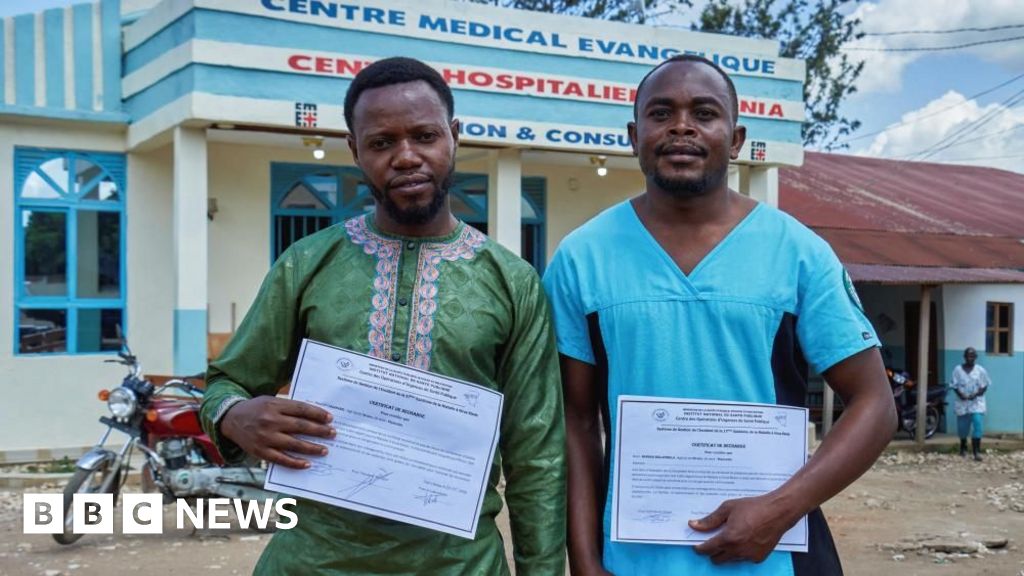
The African Development Bank's annual meetings opened on Sunday with an unlikely backdrop: a health crisis that has pushed WHO officials to publicly state that containment efforts are falling short.
The timing is not incidental. AfDB President Akinwumi Adesina has framed this year's gathering around a theme the institution has been promoting for some time—deepening domestic resource mobilization across the continent. The message is that Africa must generate more of its own development capital, less dependent on external Official Development Assistance. The Ebola outbreak adds weight to that argument in ways that cut both ways.
WHO Director-General Tedros Adhanom Ghebreyesus told journalists on 25 May 2026 that the outbreak was, in his words, "outpacing us," with suspected deaths reaching 220. The statement was stark by the standards of an official who typically calibrates public remarks carefully. His office later confirmed the figure represented suspected rather than laboratory-confirmed fatalities—an important distinction that also signals how patchy-confirmed testing capacity remains in the affected areas.
Immediate Framing: A Crisis Inside a Mandate
The Reuters reporting on the AfDB meeting captured the tension succinctly: Africa is hunting for development cash at home while also contending with an epidemic that has historically drawn its response capacity into question. The AfDB does not fund health emergency response directly—that role lies with WHO, GAVI, the Global Fund, and bilateral donors. But the Bank's financing architecture touches the same systems that determine whether a health system can detect, report, and contain an outbreak before it spreads.
Adesina has spoken publicly about the Bank's commitment to building what he calls "resilient health infrastructure" across member states. The phrase appears in AfDB speeches and annual reports regularly. Whether that commitment translates into concrete reallocation during an active outbreak is a different question, and one the institution's shareholders will be watching.
The Reuters dispatch noted that AfDB officials had not announced any emergency health financing as of the meeting's first day. This is not unusual—institutional response times at multilateral development banks typically move at the pace of board approvals, not outbreak clocks. It does, however, illustrate a structural gap: the moment when crisis response is most needed is precisely when bureaucratic processes are least equipped to act quickly.
The Counterpoint: Where Domestic Finance Stands
The argument for domestic resource mobilization is sound on its own terms. Africa collectively receives roughly $50 billion annually in ODA—a figure that sounds large until measured against a continent of 1.4 billion people with expanding infrastructure, education, and health deficits. The AfDB's own research has documented the structural limitations of development assistance that arrives with conditionalities attached to donor-country priorities.
But the Ebola scenario exposes the limit of that argument when deployed as an immediate response strategy. Domestic tax bases in affected and at-risk countries are themselves constrained by the informal-economy ratios, governance capacity, and commodity-dependency patterns that domestic mobilization advocates are themselves trying to shift. You cannot simultaneously tell countries to build their own fiscal base and expect that base to absorb an epidemic shock without external help.
The paradox has been noted in academic and policy literature for years: the very countries most likely to face epidemic outbreaks are the least equipped to fund their own containment. The outbreak region—sources have not definitively named the specific country or countries in this latest wave, though regional briefings have indicated multiple jurisdictions affected—typically combines porous borders, cross-border movement patterns, and health system underfunding that no domestic mobilization pledge can reverse in the time that matters.
Structural Context: Who Actually Pays for African Epidemics
The financial architecture of global health has long operated on a logic that disadvantages the Global South. Outbreak detection and response funding flows from a small number of bilateral donors—primarily the United States, the United Kingdom, Germany, Japan—to global institutions that then distribute grants and loans. The United States Agency for International Development, the Wellcome Trust, and the European Commission's DEVCO directorate remain the dominant funders of epidemic preparedness in Africa.
This arrangement has benefits—it pools expertise and resources. It also has structural implications that the AfDB's domestic mobilization framing implicitly challenges. If Africa is to finance more of its own development, the question of who finances African health security becomes sharper, not softer. The current model assumes that external donors will fill the gap when domestic systems fail. A domestic mobilization model that reduces that assumption without replacing it with a credible alternative is incomplete.
Polymarket tradingactivity reflects a degree of external unease about the outbreak's trajectory. Markets are not epidemiologically meaningful, but they do indicate that informed participants outside the continent are pricing in a non-trivial probability of further international spread. That signal should focus minds at the AfDB table as much as the internal development finance debate.
What Happens Next
The AfDB meetings run through the week. Whether a health emergency financing mechanism gets activated—whether through a rapid-disbursement emergency loan, a co-financing arrangement with WHO, or a reallocation from existing health sector commitments—will be watched by ministries of finance across member states who are managing their own domestic pressures.
The WHO figure of 220 suspected deaths is, as of this writing, the most recent confirmed public number from Tedros directly. Whether laboratory testing confirms a larger or smaller proportion of those deaths changes the public health response but not the core dynamic: an institution that exists to fund development is being asked—directly by the epidemic context and indirectly by the domestic mobilization argument it is itself promoting—whether it has the tools to respond to crises that development is supposed to prevent.
This publication covers the AfDB meeting from the development finance angle rather than the financial markets angle; wire services spent more time on bond and currency reaction. The structural question—development architecture's capacity to absorb health shocks—received less attention in the initial Reuters dispatch, and that is where Monexus placed its emphasis.
Wire provenance
This editorial synthesis draws on the following public wire/social posts:
- http://reut.rs/4e4gVxy