Antonelli's Montreal Masterclass Leaves Russell Reeling as Mercedes Gap Widens
Kimi Antonelli extended his championship lead to 43 points with a fourth consecutive victory in Montreal, while teammate George Russell's power unit failure handed the teenager an unchallenged run to the flag.
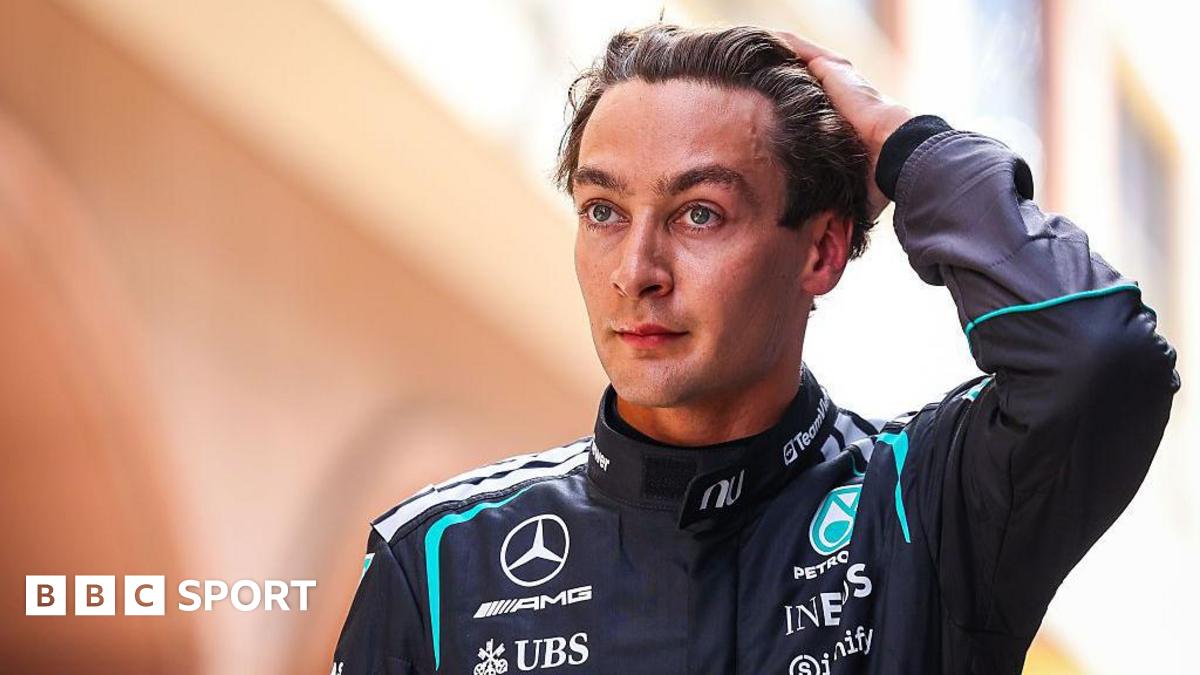
Kimi Antonelli crossed the finish line at the Circuit Gilles Villeneuve on 24 May 2026 with a margin of 3.2 seconds over Lewis Hamilton, his Mercedes teammate. Max Verstappen finished third, a further 8.7 seconds back. The margin told a story of dominant execution rather than a closely contested race. George Russell, the British driver who started alongside Antonelli on the front row, had retired 17 laps earlier with a power unit failure — the same mechanical fault that had sidelined him in the previous round.
The result extended Antonelli's championship lead to 43 points after five races, a margin that has grown with each successive grand prix. Russell, left to watch from the garage as his 18-year-old teammate drove into the distance, called the sequence of setbacks "damnable luck." The description is not without merit. Two retirements in five races have compressed what was expected to be a closely fought internal contest between the two Mercedes drivers into a lopsided affair that has unsettled Russell's own camp.
The Battle That Never Was
The build-up to Sunday's race promised a duel. Russell had qualified on the front row, just two-tenths of a second off Antonelli's pole time. When the lights went out, Russell held the inside line into the first chicane and the two Mercedes ran wheel-to-wheel through the opening stint. The telemetry showed them matched to the decimal through the speed trap at the end of the main straight.
Then came the failure. Mercedes confirmed post-race that a power unit seal had degraded, causing a loss of hydraulic pressure. Russell reported the problem over team radio with the clipped efficiency of a driver who had already processed the outcome. "It's gone," he said. The team pulled him in immediately, preferring to preserve the unit for future use rather than risk catastrophic damage to the chassis.
The retirement handed Antonelli effective control of the race, though he still had to manage deteriorating tyres in the closing stages and resist a late charge from Hamilton, who had started from third. That Hamilton held on to second rather than mounting a serious challenge to Antonelli said more about the Ferrari's pace deficit than any Mercedes vulnerability.
A Pattern Emerging
Russell has now retired from two of five races in 2026. The Montreal failure follows an engine problem in the previous round — a sequence that has no obvious common cause beyond the statistical misfortune of a brand-new power unit failing twice in quick succession. Mercedes motorsport director Toto Wolff, speaking immediately after Russell's retirement, stopped short of blaming the power unit directly but acknowledged the team needed to understand why the component had failed twice. "It's a different part, different fault mode," he said, as reported by Sky Sports. "But George has had two DNFs now and we owe him a clean run."
The championship arithmetic is less forgiving than the technical explanations. Russell entered 2026 as the driver with the stronger 2025 form — a season in which he had outperformed Hamilton consistently. The assumption entering this year was that Antonelli, despite his extraordinary junior career, would need time to settle into the top grid against a teammate who had three seasons of experience at the sharp end. That assumption has not survived contact with reality.
Antonelli's form over the opening five rounds has been relentless in a way that recalls early-season runs from dominant cars of previous eras, but without the caveats that usually attach to such comparisons. The teenager has not merely won — he has won at circuits with very different characteristics, managing tyre degradation on the high-abrasion Montreal asphalt and extracting pace from a car that, by the constructors' championship reckoning, is running at the limit of its development. Ferrari and McLaren have closed the gap from the winter, yet Antonelli has kept winning.
Championship Arithmetic
The 43-point buffer after five races is the largest any driver has held at this stage of a season since at least the current points system was introduced. The structure of the scoring means that with five cars regularly scoring podium finishes, a consistent driver accumulates points at a rate that compounds quickly. Antonelli has scored in every race. Russell, with two retirements, has not.
The question for Mercedes is not whether Antonelli can sustain this form but whether Russell can recover from it. Championship comebacks of 40-plus points are not unprecedented, but they require the leader to suffer a reversal — and Antonelli has shown no mechanical fragility comparable to what Russell has encountered. The dynamic is uncomfortable for a team that expected to manage two drivers competing for the same championship rather than watching one establish an almost insuperable lead.
Hamilton's second place in Montreal offered a secondary data point. The seven-time champion, in his second season with Ferrari, finished ahead of both Mercedes cars that reached the finish — a reminder that the 2026 machinery balance shifts across weekends depending on upgrade packages and track characteristics. Ferrari appears to have closed much of the straight-line speed deficit that plagued its early season, making Sundays more competitive than the qualifying gaps suggested.
What Comes Next
Russell will arrive at the next round with his engineers reviewing the power unit data, searching for a root cause that two failures in five races have not yet revealed. His 43-point deficit is not insurmountable in a championship that runs another 17 rounds, but the margin for error has essentially disappeared. Every result — a second place when a win is available, a fourth when a podium is possible — now carries a double weight in the context of a teammate who is converting pole positions into victories at a rate that makes such calculations academic.
The Montreal weekend closed with Antonelli standing on the top step of the podium, Russell watching from the pit wall, and the championship table reflecting a gap that has widened with each race. Mercedes has a problem it did not anticipate: not whether its young driver is ready for the championship fight, but whether its experienced one can stay close enough to make the fight real.
The sources do not specify the exact power unit component that failed in Russell's car, and Mercedes has not yet published its full technical analysis of the Montreal retirement.