Berlin Rally Highlights Political Crosscurrents as Republicans Push Back on Iran Deal
A pro-Iran demonstration in Berlin on 25 May 2026 coincided with mounting Republican criticism of emerging US-Iran deal terms, highlighting the domestic and international pressures converging on the negotiations.
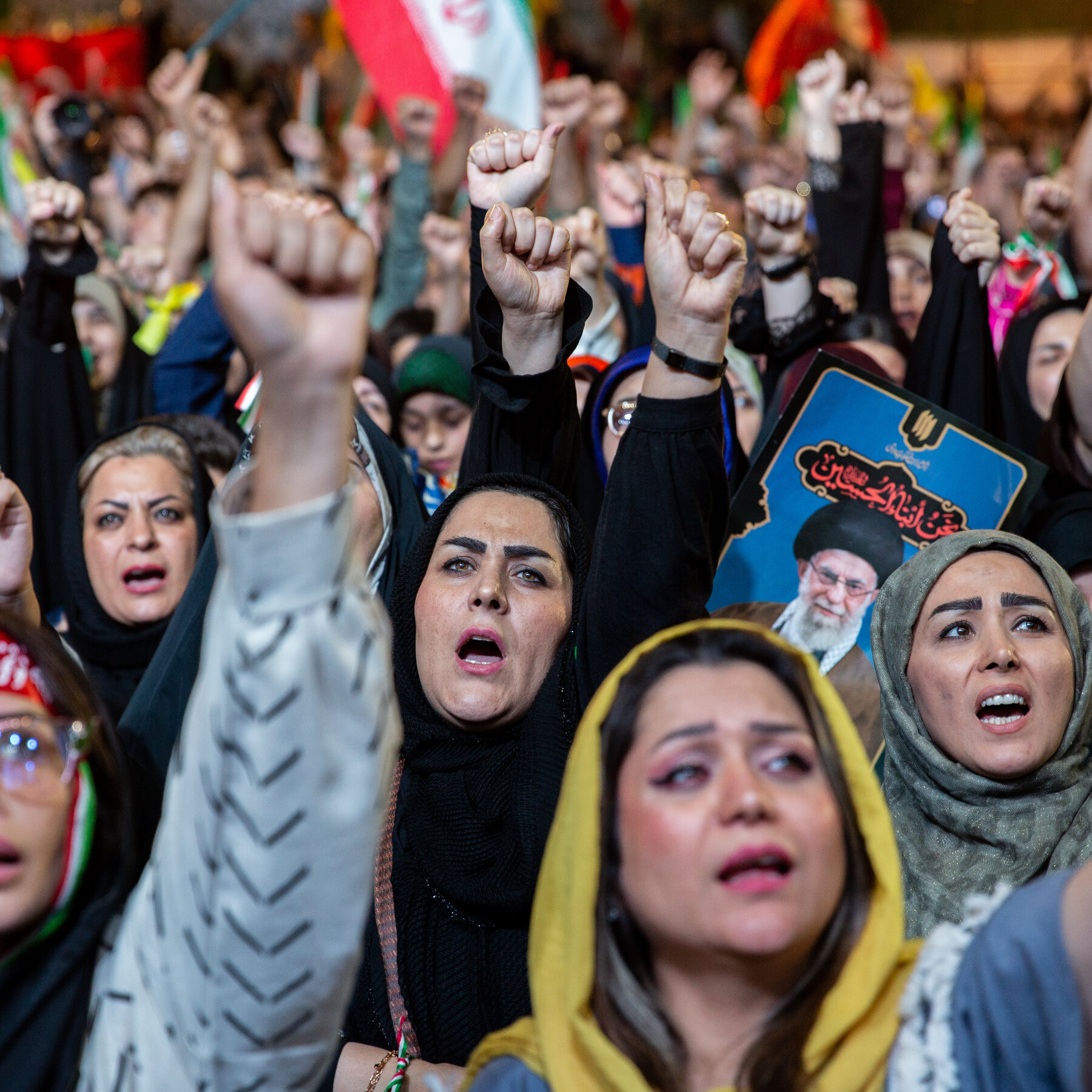
A pro-Iran rally took place in Berlin on 25 May 2026, unfolding against a backdrop of intensifying political controversy in Washington over the terms of a prospective agreement between the United States and Iran. The demonstration, reported by PressTV correspondent Dieter Reinisch, gathered supporters of Tehran in the German capital at a moment when Republican lawmakers have escalated their opposition to what media are describing as the contours of an emerging deal to resolve the protracted standoff.
The simultaneous emergence of grassroots mobilisations in Europe and congressional resistance in Washington illustrates the competing pressures bearing down on the diplomacy. While the US administration has signalled a desire to conclude negotiations, Republican critics argue that the proposed terms would offer Iran insufficient concessions in exchange for commitments that have historically proven difficult to verify.
The Republican Line of Attack
Senior Republican figures have moved quickly to define the emerging framework as a capitulation. Senator Tom Cotton, a leading voice on Iran policy, has publicly opposed any agreement that permits Tehran to retain enrichment capacity. Secretary of State Marco Rubio, in public remarks, rejected what he characterised as appeasement of the Iranian regime. The criticism has been amplified by conservative media and by rank-and-file members who argue that the administration's negotiators have shown excessive flexibility.
The sources reporting Republican criticism do not specify the precise terms under negotiation. However, the thrust of the objections centres on whether any agreement would meaningfully constrain Iran's nuclear programme while providing sanctions relief proportionate to Tehran's concessions. Republican senators have demanded that the administration demonstrate stronger leverage at the negotiating table, arguing that Iran faces sufficient economic pressure to accept a more favorable US position.
What a Prospective Deal Might Contain
Based on available reporting, the prospective agreement appears to contemplate phased sanctions relief in exchange for verifiable constraints on Iran's nuclear activities. The framework reportedly envisions a sequence in which Tehran would accept enhanced monitoring in exchange for incremental sanctions easing, with a pathway toward Iran's broader reintegration into global energy markets. The administration has insisted that any agreement must include robust verification mechanisms.
The sources do not confirm whether the terms under discussion include explicit commitments on Iran's regional behavior or its ballistic missile programme — both issues that Republican critics have insisted must be addressed. The ambiguity surrounding the full scope of the proposed deal has itself become a point of contention, with opponents arguing that the public framing obscures provisions that would prove deeply problematic upon closer examination.
International Dimensions
The Berlin rally highlighted the international dimension of the debate. Supporters of Iran who took to the streets of the German capital represent a constituency that views the US approach as antagonistic and sanctions policy as unjust. European states, for their part, have generally supported a negotiated resolution to the Iran question and have sought to preserve the diplomatic space for a deal even as transatlantic tensions on other issues have grown.
The rally's timing — coinciding with peak Republican opposition in Washington — underscores how the Iran question cuts across both domestic and international political alignments. For Tehran, European public demonstrations in support of Iran serve as a useful counterweight to US pressure, reinforcing the perception that American policy lacks universal legitimacy. For Washington, the persistence of such sentiment in allied capitals complicates the task of building a unified international coalition around maximum pressure.
Stakes and Trajectory
The outcome of the current negotiations carries significant consequences across multiple domains. A successful agreement could substantially alter the Middle Eastern strategic landscape, reduce the risk of regional proliferation dynamics, and open pathways for Iranian crude to re-enter global markets — with material implications for energy pricing. A failed negotiation, by contrast, risks accelerating a further deterioration in US-Iranian relations at a moment when the broader Middle East remains volatile.
For the Republican opposition, the stakes are predominantly political. An agreement that critics can characterise as a concession without adequate verification mechanisms offers a ready target for electoral and legislative contestation. The administration, for its part, faces pressure to demonstrate that diplomacy can achieve outcomes that more confrontational approaches have not, while managing the genuine analytical uncertainty about whether Tehran can be trusted to honor commitments under any plausible framework.
Several variables will determine how this story develops over the coming weeks: the substantive outcome of negotiations, Iran's response to the terms on offer, the response of hardliners within both Washington and Tehran, and the downstream effects on energy markets and regional security arrangements. The Berlin demonstration makes clear that the Iran question will not be resolved through diplomatic process alone. The domestic and international political contestation surrounding that process is, if anything, intensifying.
This publication's reporting on the Berlin rally draws on PressTV's correspondent dispatch. The Republican criticism of deal terms is sourced from the same PressTV wire service; readers should note that Iranian state-affiliated outlets present the administration's position and Republican objections through a particular editorial lens that emphasises US internal political division. Monexus will continue to seek corroboration from additional sources as reporting develops.
Wire provenance
This editorial synthesis draws on the following public wire/social posts:
- https://t.me/presstv/7894
- https://t.me/presstv/7893