The Man in the Dress and the Race China Is Actually Winning
While Western headlines fixate on a billionaire's viral AI fashion choices, Beijing is executing the most coherent industrial strategy in modern history — and the race to shape humanoid robotics standards may be the least-covered inflection point of 2026.
The image did exactly what viral content is designed to do: it circulated. A Chinese technology entrepreneur, branded in international coverage as a "crazy boss," had used AI to render himself in women's clothing and posted the results to social media. The framing was consistent across outlets: here was a billionaire chasing relevance through spectacle, aiming to become the world's richest person by weaponising his own notoriety. It was a clean, satisfying story. It was also a story about the least important thing happening in Chinese technology right now.
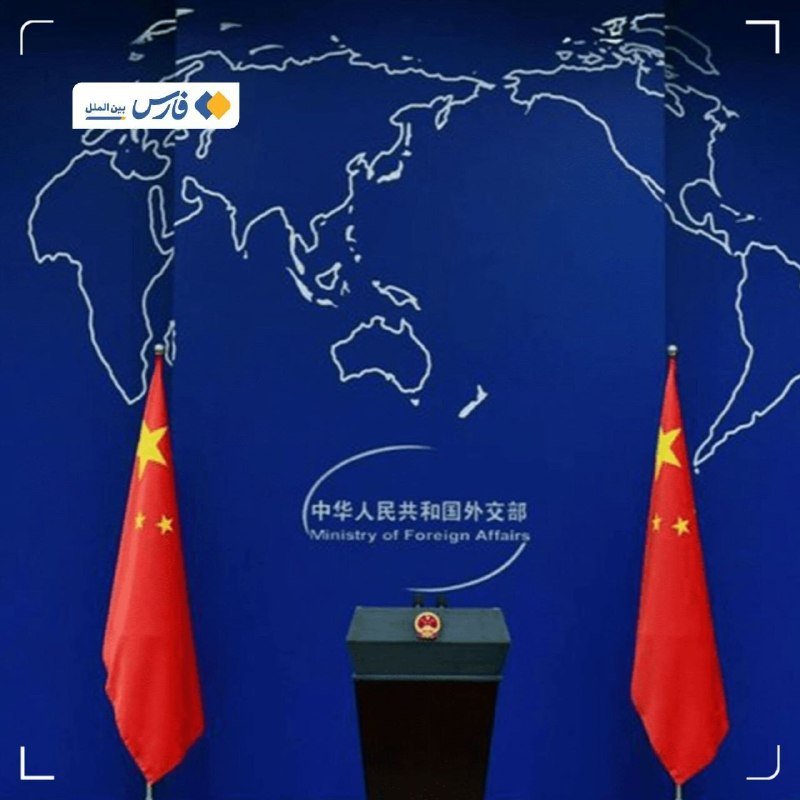
On the same day those AI images were generating screenshots and commentary, Huawei unveiled what it calls the Tau Scaling Law — a technical roadmap projecting that the company will achieve 1.4-nanometre equivalent chip density by 2031. Meanwhile, China's Ministry of Industry and Information Technology announced that every humanoid robot manufactured domestically would receive a mandatory digital identification number, establishing industry standards that Beijing intends to promote internationally. Beijing also expanded services for migrant workers in a deliberate effort to stoke domestic consumption. These are not the actions of a technology sector in crisis. They are the actions of a government running a coordinated industrial campaign with a coherence that Western democracies have spent years telling themselves China could not sustain.
The fixation on the spectacle — the dress, the billionaire, the headline — is not accidental. It reflects something structural about how international media selects and frames Chinese technology stories. Developments that fit the narrative of dysfunction, vanity, or state-directed irrationality travel easily across wire services. Developments that suggest long-term strategic capacity and execution — the 1.4nm roadmap, the robotics ID system — require more technical context and generate fewer clicks. A billionaire in a dress is worth a thousand words of semiconductor policy. That is the distortion, and it has consequences for how governments in democracies understand the competitive environment they are actually operating in.
China's humanoid robotics sector is not a speculative side project. The digital ID framework announced on 25 May 2026 is designed to solve a practical problem: establishing traceability, safety standards, and interoperability for robots that will eventually operate in factories, logistics networks, and potentially domestic service roles at significant scale. By assigning every unit a government-verified identifier, Beijing is building the regulatory backbone that would allow Chinese robotics manufacturers to operate under unified standards — standards that, if adopted internationally, give Chinese firms a structural advantage in export markets. This is standards-setting as industrial strategy, and it is happening largely outside the view of Western policy audiences.
The Huawei trajectory is the more granular illustration. The company's "chip queen" — the sobriquet applied to the executive leading HiSilicon's semiconductor division — has become a symbol within China's technology establishment of what sustained investment can produce against external pressure. Huawei's roadmap to 1.4nm-equivalent density by 2031 arrives after years of United States export controls that were explicitly designed to prevent exactly this kind of advancement. Whether Huawei hits that timeline is not the only relevant question. That the company is publishing credible roadmaps at all — rather than simply maintaining legacy architectures — suggests that the export control regime, while genuinely damaging to Huawei's consumer hardware business, has not accomplished its primary strategic objective. The semiconductor decoupling that Washington designed has produced a Chinese acceleration that was not the intended outcome.
There is a coherent counter-argument to the alarmist reading: China's technology sector faces real constraints that the optimistic framing glosses over. Huawei's roadmap is a target, not a guarantee. The equipment required to achieve 1.4nm density depends on extreme ultraviolet lithography machines that no Chinese manufacturer currently produces at scale. The talent pipeline, while deep, still relies partly on engineers trained abroad. And the domestic consumption strategy — the migrant worker services expansion — is a response to genuine weakness: export-oriented manufacturing alone cannot sustain the growth model that Beijing requires. These are real frictions, not propaganda. Any honest assessment of China's technology position must hold them in view.
But the frictions do not change the direction. They slow the pace; they do not alter the trajectory. The pattern across AI-generated images, digital robot IDs, and semiconductor roadmaps is the same: Beijing is playing a long game with industrial instruments that Western governments have not yet matched in coherence or sustained funding commitment. The humanoid robotics standards push in particular represents a quiet inflection point — a moment where the rules of a future industry are being written, and China is actively present at the table rather than reacting to standards set elsewhere. Whether the West registers that fact in time to respond effectively is the question that actually matters. The man in the dress is not the answer to it.
This publication approached the semiconductor and robotics standards stories with additional editorial context on Huawei's export-control history, the function of digital ID systems in supply chain governance, and the structural incentives driving China's domestic consumption push — framing absent from the wire coverage of the AI images in the same news cycle.
Wire provenance
This editorial synthesis draws on the following public wire/social posts:
- http://reut.rs/3RZ7PJS