How Doha Became the Backchannel: Iran, the US, and the Long Game Over Frozen Billions
Iranian officials landed in Doha this week for a second round of talks with American counterparts, raising cautious optimism that a deal over frozen sovereign assets may finally be within reach. The talks, mediated by Qatar with Pakistani backing, touch the Strait of Hormuz, Iran's nuclear programme, and tens of billions of dollars locked in Western accounts since 2018.
The plane carrying Mohammad Bagher Ghalibaf, speaker of Iran's parliament, and Abbas Araghchi, a senior diplomat, touched down in Doha on 25 May 2026. Their agenda, according to sources cited by Al-Arabiya, centred on two interlocking demands: the release of Iranian sovereign funds frozen in accounts across Europe and the Gulf, and guarantees that any agreement would not collapse under the weight of renewed American sanctions. Qatar's prime minister hosted the meetings. Pakistan, by most accounts, played a supporting role in bringing the parties to the table.
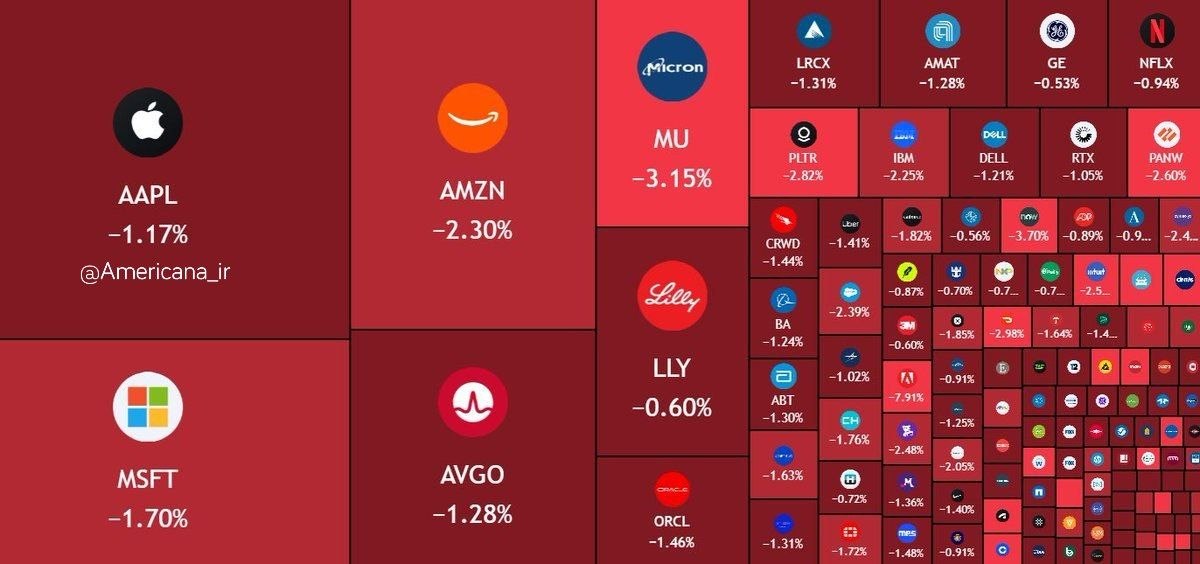
Within hours of their arrival, a separate source briefed Al Jazeera that a "framework of understanding" had been reached between Iran and the United States on the question of frozen assets. The wording mattered: a framework is not a deal. But the signal was enough to move markets. Bitcoin and broader crypto prices ticked upward on 25 May as traders priced in an improving probability of a US-Iran détente, according to CoinDesk reporting. Oil markets, more sensitive to Strait of Hormuz traffic than to crypto sentiment, showed more measured movement.
Whether the framework survives contact with the American legislative calendar and the Israeli government's well-documented hostility to any sanctions relief for Tehran remains very much an open question.
The Money Problem
The sums at stake are large, though precise figures vary depending on which assets one counts and under which jurisdiction they sit. Iranian central bank reserves frozen in correspondent accounts — primarily in euros and dollars held at European banks — are widely estimated in the range of several billion dollars. Add to that oil revenues trapped in escrow accounts under the Joint Comprehensive Plan of Action's residual mechanisms, and the total accessible pool rises further. Iranian officials have long insisted the funds belong to the Islamic Republic and should be repatriated unconditionally. American interlocutors, by most diplomatic accounts, have been willing to discuss conditional release — staged, verified, and reversible.
That conditionality is the core sticking point. The Trump administration, re-elected in 2025, campaigned partly on a platform of "maximum pressure 2.0" against Iran. But the practical politics of releasing frozen funds to a government that the State Department still designates as a state sponsor of terrorism are not straightforward, even for an administration broadly sceptical of the JCPOA's architecture.
Qatar's role is structural, not incidental. Since 2012, Doha has served as a discreet conduit for American-Iranian communications that neither capital wants conducted through open channels. Qatar hosts the largest American military base in the Middle East, al-Udeid, and simultaneously maintains dialogue with Tehran that would be politically toxic for most Arab governments to pursue openly. That dual relationship — alliance partner and backchannel — is precisely what makes Qatar useful to both sides.
Hormuz and the Strategic Calculus
The Strait of Hormuz does not appear on most diplomatic communiqués, but it runs through every calculation. Approximately 20 percent of global oil trade transits the 21-mile-wide shipping lane between Oman and Iran. In periods of elevated tension — most recently in 2019 and 2024 — the Islamic Revolutionary Guard Corps has conducted naval exercises that briefly disrupted commercial traffic. Each disruption sends a sharp signal to energy markets and to the insurance industry that underwrites tankers.
The IRGC's naval posture is distinct from the Foreign Ministry's negotiating posture, and that distinction matters for reading the talks. When Araghchi and Ghalibaf sit across from Qatari interlocutors in Doha, they are not speaking with one voice. Araghchi, widely regarded as the more pragmatic of Iran's senior diplomats, has spent years trying to negotiate sanctions relief through diplomatic channels. The IRGC's senior leadership, including figures close to Supreme Leader Khamenei, have a structural interest in maintaining the threat of Hormuz disruption as leverage — leverage that evaporates the moment the asset freeze is resolved.
This internal split within Iran's governing structure is one reason outside observers treat announcements of progress with caution. A framework agreed in Doha could bewalked back in Tehran within days if hardliners judge the terms too concessions-heavy.
What a Deal Would Look Like
Based on the public record of previous negotiations — most recently the 2015 JCPOA and its short-lived 2023 revival under the Biden administration — a frozen assets agreement would likely involve several interlocking components. Iran would receive access to a tranche of frozen funds, probably staged across twelve to eighteen months, conditional on International Atomic Energy Agency verification that its nuclear programme remained below weapons-grade enrichment thresholds. In exchange, Iran would commit to renewed constraints on highly enriched uranium stockpiling, which has grown substantially since the US withdrawal from the JCPOA in 2018.
Separate from the nuclear file, any agreement would need to address the secondary sanctions architecture that has prevented third-country banks from processing Iranian transactions even where primary sanctions did not formally apply. That architecture — maintained by Treasury's Office of Foreign Assets Control — is the most potent lever the United States retains. A deal that restores Iran's access to global banking channels would be, in effect, a partial sanctions rollback dressed in different language.
The Israeli government has made its position clear through official channels and through backchannel communications to Washington: any sanctions relief for Iran, however conditional, is unwelcome. That opposition is a structural factor, not a veto — Israel does not have a formal seat at the negotiating table — but it shapes the negotiating environment in ways that Ghalibaf and Araghchi understand as well as anyone.
The Financial Markets Reaction
The 25 May crypto market uptick was modest but legible. Bitcoin rose roughly 2 percent in the hours following the Al Jazeera framework report, according to CoinDesk's market data. Ethereum and several smaller-cap tokens followed. The correlation between geopolitical risk-asset pricing and crypto has been inconsistent over the past three years, but traders in the sector have repeatedly treated US-Iran deal probability as a directional signal — a reflection, perhaps, of the demographic overlap between crypto holders and investors who read Middle East stability through an oil-price lens.
The connection is not irrational. A US-Iran rapprochement that restored Iranian oil output to pre-2018 levels would, all else equal, reduce the geopolitical risk premium embedded in crude prices. It would also, if banking sanctions were eased, restore Iran's ability to transact in dollars — a small but symbolically significant reinsertion of dollar liquidity into an economy that has spent seven years operating on the margins of the global financial system.
The dollar's role in this dynamic is worth dwelling on. Sanctions enforcement is, at its core, a story about dollar infrastructure: the SWIFT messaging network, the correspondent banking system, the dollar's reserve currency status that makes it the settlement currency for roughly 80 percent of global trade in commodities. The United States can impose sanctions with extraterritorial reach precisely because dollar transactions pass through American clearing infrastructure. A country that can no longer access dollars is, in practical terms, cut off from a substantial portion of global trade — not because other countries refuse to trade with it, but because their banks cannot risk the secondary sanctions consequences of processing the transactions.
The framework reportedly under discussion in Doha would not change that dollar infrastructure. But it would restore one significant country's access to a portion of its own reserves — a precedent, however modest, that matters to the broader architecture of financial containment.
What Remains Uncertain
The sources available at time of publication do not specify the precise terms of the framework reportedly reached, the specific dollar figures under discussion, or the timeline for implementation that American negotiators would accept. The Al Jazeera source described it as a "framework of understanding" — language that could mean almost anything from a statement of shared intent to a near-final text awaiting only signatures and legislative cover.
Equally unclear is what, if anything, Iran has committed to on the nuclear file in exchange for asset access. The CoinDesk reporting mentions "highly enriched uranium" as a focus of the talks, but no specific enrichment thresholds or stockpile limits appear in the sources reviewed for this article. Iranian officials have previously insisted that their programme is entirely peaceful; American intelligence assessments have maintained, for years, that Iran has not made the decision to pursue a nuclear weapon but retains the technical capability to do so on relatively short notice.
Whether Ghalibaf and Araghchi return from Doha with a deal or a statement of continued dialogue will determine whether this week's optimism has a structural foundation or is simply the latest iteration of a negotiating process that has produced false starts since 2021. The sources reviewed for this article do not resolve that question.
This article draws on reporting from Al Jazeera, Al-Arabiya, and CoinDesk, all dated 25 May 2026.
Wire provenance
This editorial synthesis draws on the following public wire/social posts:
- https://t.me/GeoPWatch/8472
- https://t.me/FotrosResistancee/1842
- https://en.wikipedia.org/wiki/Strait_of_Hormuz
- https://en.wikipedia.org/wiki/Sanctions_against_Iran
- https://en.wikipedia.org/wiki/Qatar%E2%80%93United_States_relations
- https://en.wikipedia.org/wiki/Joint_Comprehensive_Plan_of_Action