The evacuation warning as legal script: how precision language obscures bombardment of Lebanese refugee camps
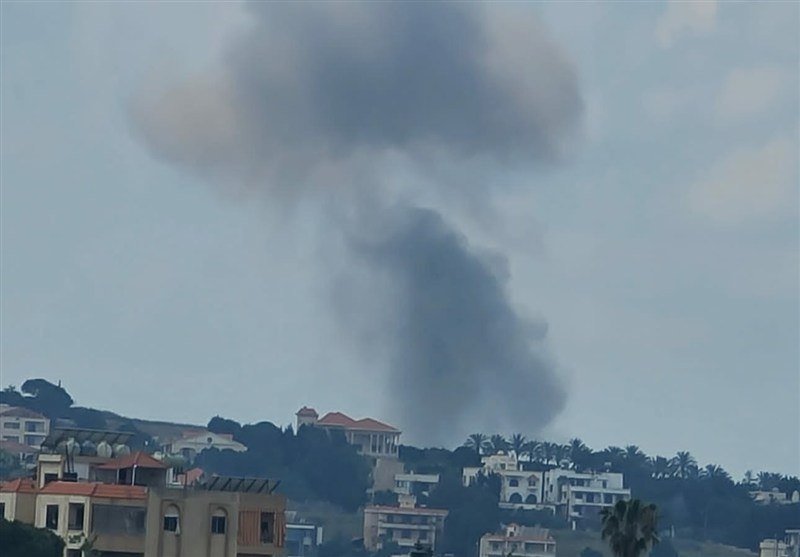
On 25 May 2026, the Israeli military issued an urgent evacuation warning to residents of Rashidieh, a Palestinian refugee camp situated near the ancient port city of Tyre on Lebanon's southern coast. Within hours, according to reports from BellumActa News and confirmed across regional wires, Israeli warplanes struck the warned building. The language of the warning — precise, time-stamped, distributed via digital channels — followed the template that has become standard operating procedure across successive cycles of Israeli bombardment in Lebanon. What it does not do is resolve the underlying legal and moral tension that the procedure is designed to manage.
The evacuation-warning mechanism is presented as the architecture of distinction: the layer of protection that separates a lawful military strike from an unlawful one. Warn the civilians, give them time to flee, strike the target. The formula has an internal logic. But the speed with which it has been normalised — and the specific geography to which it is now routinely applied — should prompt harder questions than the framing typically allows.
The refugee camp as target category
Rashidieh is not an unmarked civilian neighbourhood. It is one of twelve Palestinian refugee camps recognised under UNRWA's mandate, populated by descendants of those expelled from what is now Israel during the 1948 displacement. The camp has existed under Lebanese sovereignty but outside its full administrative reach for more than seven decades. Its residents hold a specific legal and humanitarian status — a status built on the premise that they are a population awaiting a solution, not a population to be managed through kinetic means.
When the Israeli military targets a building inside Rashidieh, it is operating in a space defined by叠加 claims: Lebanese sovereignty, Palestinian refugee status, UNRWA's protective mandate, and whatever military rationale the IDF cites for the strike. The evacuation warning is an attempt to sever the civilian from the target — to extract the individual from the camp's defined status before the weapon arrives. But the extraction is not total. Those who receive the warning face the choice of fleeing into a zone where Israeli forces have not guaranteed safety, or staying and accepting the label of non-combatant legitimacy.
The legal script and its limits
International humanitarian law requires that proportionality and distinction govern targeting decisions. Proportionality is notoriously elastic — it asks commanders to weigh anticipated civilian harm against the concrete and direct military advantage of a strike. Distinction is more absolute: a combatant must be identifiable as such, and civilian objects enjoy protection unless repurposed for military use. The evacuation-warning procedure is not, itself, a legal test. It is an administrative mechanism designed to demonstrate that the distinction requirement has been satisfied in practice.
The problem is not that warnings are issued. A genuine effort to minimise civilian harm is — or should be — a credit, not a liability. The problem is that the warning has become a sufficient condition for legal defensibility rather than a component of a broader assessment. Once the box is checked — civilians warned, time elapsed, strike executed — the legal conversation tends to close. The status of the target, the history of the location, the pattern of previous strikes in identical geographic contexts: these factors recede behind the procedural fact of the warning.
This publication has noted a consistent feature of coverage surrounding Lebanese targeting: the evacuation warning functions as a shield not merely for civilians but for the targeting rationale itself. The specific military justification for striking Rashidieh rather than another location is rarely interrogated with equivalent procedural scrutiny.
The geography of coercion
Tyre — Sour in Arabic — is one of the oldest continuously inhabited cities in the world. Its archaeological significance is recognised across Lebanese national heritage frameworks and UNESCO designations. The camp at Rashidieh sits adjacent to that urban fabric. The evacuation warnings and subsequent strikes therefore operate not only against a refugee population but against a historical urban landscape that Lebanese authorities have spent decades attempting to protect from the pressures of conflict.
The pattern of issuing warnings for structures near or within refugee camp perimeters, then striking those structures, has a structural consequence beyond the immediate blast radius. It communicates to the civilian population of Rashidieh — already subject to the compounding precarity of camp status, Lebanese residency restrictions, and limited economic mobility — that their location is not a protection. The warning is simultaneously an act of information and an act of coercion: you may leave, and you should leave, and the failure to leave will be noted.
This is not a new observation about how attrition warfare operates on civilian populations. But the specificity of the geography — the oldest city in the Levant, the oldest refugee camp in Lebanon — sharpens the stakes in a way that generic condemnation does not capture.
What the standard framing obscures
The dominant media narrative around the Rashidieh strike, as around similar strikes in southern Lebanon, proceeds from the legal script outward. The story is: warning issued, time given, target struck, collateral minimised. This framing is not false. But it is incomplete in a direction that systematically benefits the party with the stronger communications infrastructure and the more habituated relationship with Western wire desks.
What it leaves out: the military necessity question — whether the target could not have been engaged through means with lower civilian proximity. The cumulative-harm question — what repeated evacuation-and-strike cycles do to a contained civilian population with nowhere to absorb the displaced. The legal-status question — whether the refugee camp designation creates obligations that the evacuation-warning procedure does not discharge.
These questions are not unanswerable. They are simply rarely posed with the same procedural confidence as the question of whether the warning was issued in time. A publication that takes civilian harm as a first-order fact — as this one does — cannot treat the warning as a full answer.
The strike on Rashidieh on 25 May is a data point in a pattern. The pattern deserves the scrutiny the individual event rarely receives.
Wire provenance
This editorial synthesis draws on the following public wire/social posts:
- https://t.me/BellumActaNews/8473
- https://t.me/BellumActaNews/8475
- https://t.me/TheCradleMedia/12941
- https://t.me/PressTVMoment/5148