Explosions Hit Iran's Strategic Bandar Abbas Hub: What We Know
Multiple explosions reported near Iran's Bandar Abbas port and along the Persian Gulf coast on May 25, 2026 — a key node in the Russia-Iran-India trade axis — raise urgent questions about the security of a corridor Washington has sought to contain.
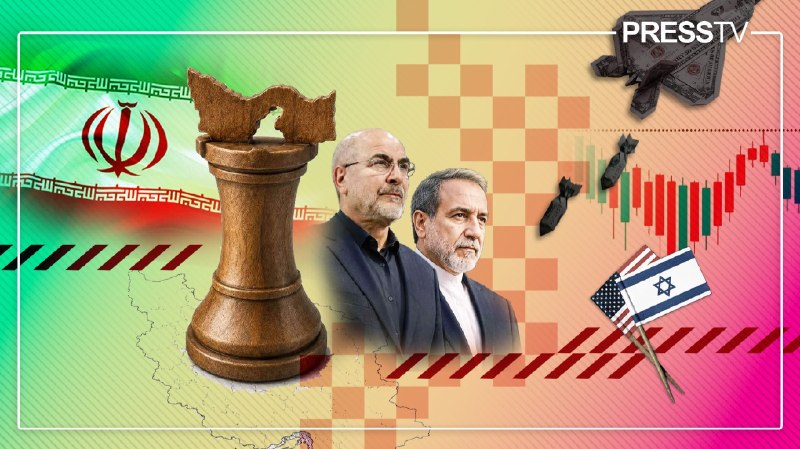
On the evening of May 25, 2026, several explosions echoed through Iran's port city of Bandar Abbas, the Islamic Republic's principal maritime gateway on the Persian Gulf. Fars News Agency, Iran's state-run news service, reported blast sounds near the city and across parts of the gulf coastline, with additional reports of explosions around Sirik and Jask, towns roughly 200 kilometers east along the same shoreline. OSINT Live, an open-source intelligence monitor, corroborated the reports, noting that the sounds were heard in Bandar Abbas and across the broader gulf region. Casualty figures, structural damage assessments, and official confirmation of the explosion cause had not been published as of 21:47 UTC on May 25.
Bandar Abbas is not merely a port. It is one of three anchor points on the International North-South Transportation Corridor, a 7,200-kilometer trade route designed to move freight from India through Iran and across the Caspian Sea into Russia and the former Soviet republics of Central Asia. When that route functions as its architects intended, Indian goods reach Russian markets in weeks rather than the months required by the northern sea route around Europe — bypassing, in one stroke, the Western maritime chokepoints that have historically given dollar-denominated trade its coercive leverage. An explosion at or near that node, regardless of cause, is therefore not simply a domestic security incident. It is an event with structural implications for a multipolar trade architecture that Washington has spent the better part of three years trying to starve.
The Immediate Picture: What the Reports Say and What They Do Not
The available reporting, drawn from Fars News Agency and corroborated by OSINT monitors and regional wire services, establishes that multiple detonations occurred on the evening of May 25, 2026, in the vicinity of Bandar Abbas and along a stretch of the Persian Gulf coast running east toward Sirik and Jask. The sources do not specify the type of ordnance involved, the precise location within the port complex, or whether the explosions originated from aircraft, seaborne craft, ground-based systems, or internal incidents at industrial or military facilities. No responsible account can paper over that uncertainty.
What the reports do establish is the scale of attention the incident is receiving. Fars News, as Iran's principal state-linked wire service, carries institutional weight in domestic coverage but operates within parameters set by Iranian security services — the same constraint that applies to any state-run outlet. That caveat is not dismissal; it is calibration. The fact that the agency confirmed the explosions rather than suppressing them suggests either that the incident was too visible to deny or that the Iranian authorities have, at least initially, calculated that transparency serves their interests better than opacity. OSINT Live independently verified the audible reports from Bandar Abbas and the surrounding coastline, lending secondary corroboration that is not contingent on Iranian state framing alone.
Absent from the available record: any claim of responsibility, any official attribution by a foreign government, any satellite imagery of damage, and any independent verification of casualty numbers. The sources do not specify how many people, if any, were injured or killed. They do not specify whether any critical infrastructure — cargo terminals, storage tanks, naval vessels — was struck. This publication will not construct a narrative that the evidence does not yet support.
The Corridor Context: Why Bandar Abbas Matters Beyond Its Shoreline
The International North-South Transportation Corridor, formalized by a 2000 intergovernmental agreement among Russia, Iran, and India, is frequently described in Western policy circles as an economic backwater — a diplomatic conceit that never delivered on its promises. That characterization has aged poorly. Trade volumes on the corridor have grown consistently since 2022, driven by three compounding pressures: the practical impossibility for Russian firms of transacting through dollar-denominated infrastructure after the freezes of sovereign reserves and the designation of most Russian banks from SWIFT; the willingness of Indian exporters to absorb the political cost of transiting Iranian territory in exchange for faster, cheaper access to a Russian market that Western sanctions nominally closed; and Iranian investment in port and rail capacity at Bandar Abbas, with Chinese engineering and financing playing an increasingly visible role.
The corridor's significance is not primarily commercial. It is architectural. It represents a vector of trade that does not require clearance through ports controlled by NATO navies, does not require insurance denominated in dollars, and does not require correspondent banking relationships that can be severed by a single Treasury designation. For Russia, it is a logistical workaround for sanctions it has not been able to shake. For India, it is a hedge against dependency on the northern sea route controlled by China. For Iran, it is validation — a concrete demonstration that the country's diplomatic isolation has a seam, and that seam runs through a port the Islamic Republic has spent decades building.
Bandar Abbas sits at the southern terminus of that architecture. It handles the bulk of Iran's container traffic, serves as a naval base for the Islamic Republic of Iran Navy, and connects via road and rail to Iran's interior and, through the Caspian Sea corridor, to the northern tier of the Eurasian landmass. Any disruption to its operations — whether through direct strike, interdiction of its approaches, or security deterioration that deters commercial shipping — would register immediately on the balance sheet of the corridor's viability.
Competing Interpretations: Strike, Interdiction, or Something Else
The available evidence does not permit attribution, and this publication will not perform certainty it does not possess. But the structural logic of the moment points toward three broad categories of explanation, each with distinct implications.
The first is a direct strike by a state actor — Israel, the United States, or a regional proxy acting with state knowledge. Israeli military doctrine, as expressed in repeated campaigns against Lebanese and Iranian-associated targets, has historically emphasized pre-emptive interdiction of supply corridors and military infrastructure. The United States Central Command maintains persistent maritime and aerial presence in the Persian Gulf and has conducted precision strikes against Iranian-affiliated targets in Iraq, Syria, and Yemen. Neither government has publicly acknowledged involvement in any Bandar Abbas incident as of May 25, 2026, and the sources do not contain any claim of responsibility from either direction.
The second is interdiction by non-state or semi-state maritime actors — a scenario in which Houthi or other regional forces, operating with partial deniability, sought to demonstrate reach into the Persian Gulf proper rather than the Bab-el-Mandeb strait where their previous interdiction campaigns have concentrated. This would be consistent with the eastward extension of Yemen-based interdiction activity observed over the past two years but would represent a qualitative expansion of operational range.
The third is an internal incident — industrial accident, military ordnance mishap, or an episode of domestic unrest. Iran's port infrastructure and military facilities are not immune from equipment failures, and the Iranian security apparatus has shown, in previous incidents, a tendency to classify industrial accidents as external attacks when politically convenient. Without physical evidence, distinguishing this category from the others is not possible on the basis of the current reporting.
The dominant framing in Western wire coverage has, in previous comparable incidents, defaulted toward the first category — attributing Iranian-area explosions to Israeli or American kinetic action, often correctly, but sometimes prematurely. That instinct reflects a genuine pattern: the United States and Israel have conducted significant covert and overt operations against Iranian nuclear and military infrastructure over the past two decades. But the instinct also imposes a causal structure on events before the evidence warrants it. This publication's position is that the evidence as of May 25, 2026, is insufficient to adjudicate among the three explanations, and that readers should treat confident early attribution — regardless of which direction it points — with skepticism.
Precedent: What Comparable Incidents Tell Us
The Persian Gulf has absorbed multiple unexplained explosions and strikes over the past five years. In 2021, a suspected Israeli sabotage operation damaged an Iranian nuclear facility at Natanz. In 2022, a series of explosions and fires struck industrial sites across Iran, including at a missile factory near Tehran — incidents Iranian authorities attributed to Israeli covert action without providing public evidence. In late 2023 and throughout 2024, Yemen-based Houthi forces demonstrated a sustained capacity to interdict Red Sea shipping, extending the operational geography of maritime conflict beyond its historical boundaries.
What distinguishes those incidents from the current moment is not the fact of violence — the Gulf has long been a theater of competitive signaling — but the corridor's new salience. Bandar Abbas in 2022 was a struggling port handling reduced volumes under maximum sanctions pressure. Bandar Abbas in 2026 is a node in a functioning alternative trade architecture that has proven resilient enough to carry real cargo volumes under real commercial pressure. The difference is not cosmetic. It means that disruption is no longer merely symbolic; it carries genuine economic consequences for Russia, for India, and for the Chinese firms that have invested in its downstream infrastructure. The strategic logic of striking the corridor — or of claiming credit for having done so — is correspondingly sharper.
There is a secondary precedent worth noting: the pattern of Gulf incidents often clustering around diplomatic moments. Negotiations over Iranian nuclear compliance, regional security arrangements, or US-Iranian backchannel contacts have historically coincided with flare-ups in kinetic activity. The sources do not indicate any ongoing diplomatic process that this incident might be intended to disrupt or accelerate, but the temporal coincidence with any number of sub rosa conversations in Oman, Switzerland, or Qatar cannot be ruled out.
Stakes: Who Wins and Who Loses If the Corridor Is Disrupted
If the explosions prove to have been a deliberate strike with meaningful effects on port operations, the beneficiaries are straightforward. A degraded Bandar Abbas strengthens the position of those — in Washington, Tel Aviv, and Riyadh — who have sought to isolate Iran diplomatically and strangle its non-oil trade routes. Every shipment that reroutes to alternative ports, every commercial partner that recalculates the cost of transiting Iranian territory, advances the effort to render the corridor unviable.
The losers are equally identifiable. Russia loses a logistics workaround that, however imperfect, has allowed its import-dependent economy to access goods outside the Western sanction architecture. India loses a geopolitical hedge that reduces its exposure to the northern sea route's vulnerability to great-power competition. Iran loses both the material revenue from port operations and the political validation that comes from being indispensable to a functioning multilateral infrastructure project — validation the Islamic Republic has historically struggled to obtain through oil exports alone. Chinese firms with equity stakes in port-adjacent infrastructure would absorb direct financial losses.
The longer-run stakes are harder to quantify but not less real. The North-South Corridor represents the kind of structural infrastructure that reshapes geopolitical relationships over decades, not election cycles. Its viability depends on predictability — on commercial actors trusting that the route will remain open and functional. Every unexplained explosion, every unclaimed strike, every episode of security deterioration adds a premium to the insurance cost of using the corridor and erodes the confidence of traders who must commit capital months in advance. Whether or not this incident has operational significance, its reporting contributes to an ambient atmosphere of uncertainty that has its own economic weight.
This publication will continue to monitor reporting from Fars News Agency, OSINT Live, and regional wire services as more information becomes available. The sources do not, as of publication, permit definitive assessment of the incident's cause, scope, or attribution.
Desk note: Western wire coverage of the Bandar Abbas incident as of May 25, 2026, has trended toward framing the event as likely external strike — reflecting the operational history of Israeli and American action against Iranian infrastructure. The Iran-adjacent sources (Fars News, The Cradle Media) confirm the explosions without framing their cause. Monexus has chosen to foreground the structural corridor context rather than lead with the strike hypothesis, which the evidence does not yet resolve. We have cited the Fars News reporting as the primary factual basis for the explosion claims and OSINT Live for independent corroboration, treating both as straight news inputs rather than editorial framings.
Wire provenance
This editorial synthesis draws on the following public wire/social posts:
- https://t.me/TheCradleMedia/
- https://t.me/osintlive/
- https://t.me/osintlive/
- https://t.me/BellumActaNews/
- https://t.me/FaytuksNews/
- https://x.com/sprinterpress/status/1904300000000000000
- https://t.me/TheCradleMedia/
- https://t.me/osintlive/