Ferrari's Electric Gamble: How the Luce Became the Flashpoint for Two Disruptions
Ferrari's first all-electric model, the Luce, represents a $640,000 gamble on whether heritage and performance can survive the electric transition — arriving at a moment when Pope Leo XIV has urged the world to reconsider the costs of unbridled technological ambition.
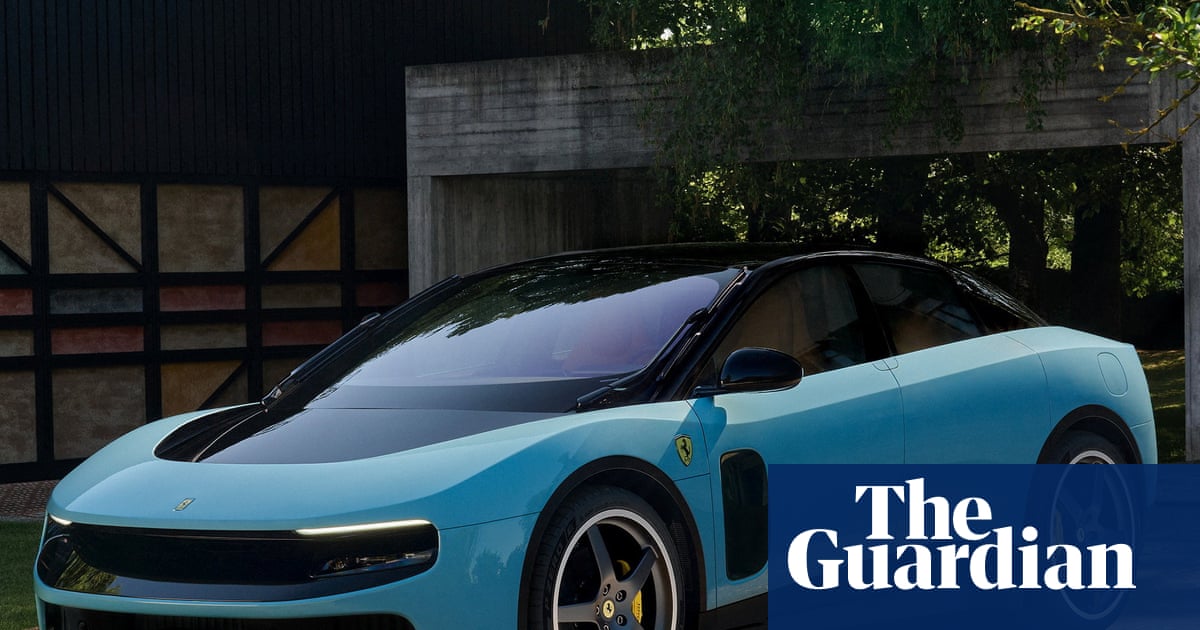
Ferrari unveiled its first fully electric production car on Monday, a 1,050-horsepower grand tourer called the Luce that starts at $640,000 and begins U.S. deliveries in the coming months. The reveal was accompanied by the announcement that Sir Jony Ive, the British designer who spent three decades reshaping consumer electronics at Apple, had led the Luce's exterior and interior design — a choice that immediately set the automotive industry talking.
The timing is not incidental. Ferrari chose to debut the Luce on the same day that Pope Leo XIV delivered what amounted to a broadside against Silicon Valley's accelerationist ethos. Speaking from the Vatican, the Pope urged the world to "slow down" on artificial intelligence, warning that the technology carries compounding risks of misinformation, escalated international conflict, and what he described as the prospect of endless, AI-accelerated war. Reuters reported the comments as part of a wider address touching on technology governance and the moral responsibilities of those who build transformative systems at scale.
Two disruptions, one news cycle.
The Heritage Question
Ferrari has spent 78 years defining what a naturally aspirated V12 represents. The sound, the redline, the mechanical theatre of a combustion engine tuned for maximum emotional effect — these have been load-bearing elements of the brand's identity, not incidental attributes. The arrival of the Luce, internally coded Project 250, forces a reckoning with whether that identity can survive the removal of its central premise.
The company's answer is to lean into a different kind of performance claim. The Luce's dual-motor architecture delivers 1,050 horsepower and a 0–60 time of 2.4 seconds. By the numbers, it is the fastest Ferrari in a straight line that the marque has ever produced for a road car. The strategy is straightforward: if the electric future cannot replicate what a V12 sounds like, it must exceed what a V12 delivers in every other measurable dimension. Whether that is a sufficient substitution for the car's enthusiasts is a question only the market can answer, and the market will take years to render its verdict.
The Ive Variable
The decision to bring in an outside designer of Ive's profile is unusual for a company that has historically treated its design language as a matter of institutional continuity rather than creative disruption. Ferrari's post-Enzo design vocabulary has evolved gradually, each generation retaining recognizable elements of its predecessor. The introduction of Ive — whose portfolio includes the iMac, the iPod, and the iPhone — signals something different: an acknowledgement that the electric transition requires not just new drivetrain hardware, but a revised design philosophy.
Ive's design principles, developed across two decades at Apple and sustained in his independent studio LoveFrom, have consistently emphasized simplicity, tactile clarity, and the elimination of visual noise. These are not the axioms that govern traditional Italian automotive design, which tends toward expressive surface language and the performance of mechanical complexity. The Luce's interior — described in early accounts as austere by Ferrari's standards — suggests that Ive has not simply applied a new aesthetic surface but has reinterrogated what a Ferrari interior is for.
Whether Maranello's existing customer base will accept that reinterpretation is a separate matter. Ferrari's order backlog and client relationships suggest the company has a window of goodwill to work with, but that goodwill is not unlimited, and the Luce's owners will be the first generation of Ferrari drivers who must explain to petrolhead acquaintances why their car has no engine sound.
Technology at a Crossroads
Pope Leo XIV's remarks on artificial intelligence landed in a media environment already saturated with claims about AI's transformative potential. His framing — cautious, explicitly moral, resistant to the premise that faster is inherently better — stands in sharp relief to the dominant technology-industry narrative of continuous acceleration. Reuters noted that the Pope's address described AI as capable of generating convincing false information at scale, amplifying geopolitical friction, and accelerating the pace of conflict to a degree that outpaces human decision-making capacity.
These are not novel concerns. The risks of AI-generated synthetic media, automated weapons escalation, and algorithmic amplification of grievance have been debated in policy circles for years. What distinguishes the Pope's intervention is its institutional weight and its directness. The Vatican is not a technology regulator, but its ability to shape moral discourse in parts of the world where that discourse still anchors public opinion is not trivial.
The convergence of themes is difficult to ignore. Ferrari is making a bet that the electric transition — a technology shift driven partly by regulatory pressure, partly by performance potential, and partly by the competitive threat posed by Chinese manufacturers who have built formidable electric vehicles without inherited brand equity — can be managed without eroding the qualities that make the marque worth $640,000. The outcome of that bet will say something about whether heritage brands can selectively absorb disruptive technology without becoming something fundamentally different. It will also, indirectly, test the proposition that faster and more powerful is always the right answer — a proposition that Pope Leo XIV has just publicly questioned.
What Comes Next
The Luce's U.S. launch in the coming months will be a bellwether. Ferrari has a well-documented track record of converting technological transitions into brand moments — the introduction of the Enzo in 2002, the hybrid LaFerrari in 2013 — and its clients have historically followed the company's lead on what constitutes performance. If the Luce earns acceptance, it validates the premise that electric propulsion is simply another drivetrain technology to be mastered, not a threat to the brand's core identity.
If it does not, the failure will be instructional for every legacy automotive manufacturer wrestling with the same transition. Porsche's Taycan proved there was a market for an electric Porsche; the question Ferrari faces is whether the same logic extends up the price and exclusivity curve, or whether there is a ceiling beyond which buyers will not follow.
Pope Leo XIV is not going to resolve that question from the Vatican. But his reminder that the pace of technological change is a choice, not a force of nature, provides a useful frame. Ferrari chose speed. The Pope is asking whether anyone paused to consider what was being left behind.
This publication covered the Ferrari Luce announcement as a technology and luxury-goods story, framing the Ive collaboration as a brand-strategy question rather than a product story alone. The Pope Leo XIV AI address was treated as context rather than the lead item, consistent with the wire's relative positioning of the two announcements.
Wire provenance
This editorial synthesis draws on the following public wire/social posts:
- https://t.me/cointelegraph/112345
- https://t.me/cointelegraph/112344
- https://x.com/polymarket/status/1923456789012345678
- https://t.me/cointelegraph/110987
- https://t.me/cointelegraph/110988