Five Iranian-Backed Armed Factions in Iraq Agree to Disarm, Sources Say
Five Iranian-backed armed factions in Iraq have agreed to hand over their weapons to the government, according to reporting by Asharq Al-Awsat, while two factions refused the terms — a development that could reshape the balance between Baghdad and the country's most powerful non-state actors.
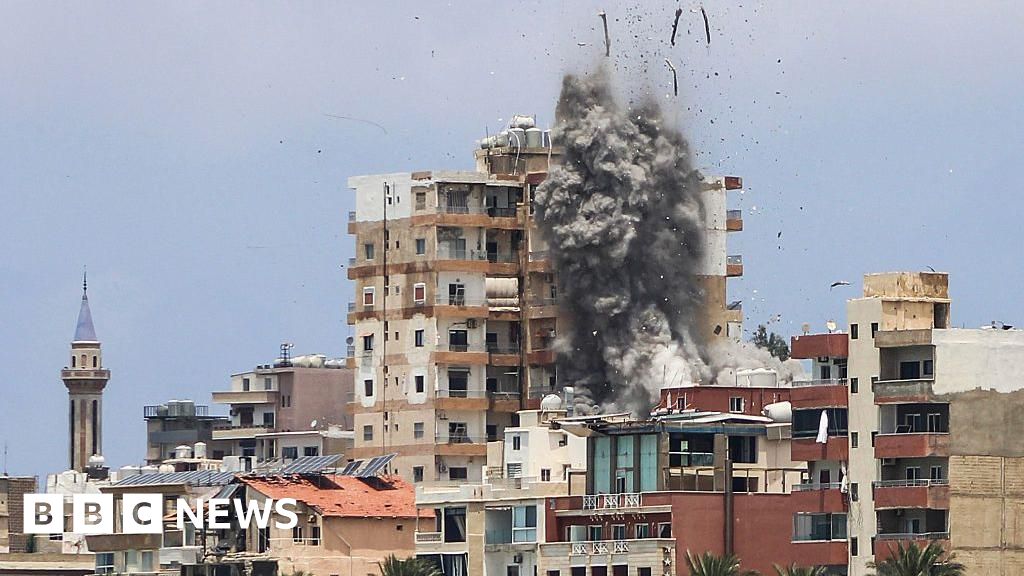
Five Iranian-backed armed factions in Iraq have agreed to disarm and hand over their weapons to the government, according to reporting by Asharq Al-Awsat on 25 May 2026. Two other factions refused the terms of the arrangement. The agreement, if it holds, would mark a rare instance of armed groups voluntarily surrendering significant military capability to the Iraqi state — and could signal a recalculation by parts of the paramilitary ecosystem that has long operated as a state within a state.
The announcement comes after years of intermittent pressure from Baghdad to bring armed factions under formal state control. Several of these groups, many of them veterans of the fight against ISIS, have maintained independent command structures, loyalty chains running to Tehran, and arsenals that dwarf those of the regular security forces. What changed in the calculation of five factions — and not the other two — remains a central question for analysts watching Iraq's internal power balance.
The Iraqi state's long campaign to reassert control
Baghdad has issued repeated directives requiring armed groups to place themselves under state authority, integrate their fighters into the Iraqi Security Forces, or disband entirely. The legal framework underpinning these directives is not new. But enforcement has been inconsistent, dependent on the political will of successive governments whose own survival often depended on the support of one or more of these factions.
The current government, formed after extended negotiations among Kurdish, Sunni, and Shia political blocs, has made nominal reassertion of state authority over armed groups a stated priority. The agreement with five factions, if genuine, would represent the most tangible progress toward that goal in years. It would also, if replicated, begin to address a structural asymmetry that has defined Iraqi politics since the post-ISIS period: a state that formally controls its territory but informally shares sovereignty with armed networks whose leaders answer, at least in part, to foreign capitals.
Who said yes, who said no, and what it means
The Asharq Al-Awsat reporting did not name the five factions that agreed to disarm, nor did it specify the two that refused. The distinction matters. Iraq's Iranian-aligned armed landscape is not monolithic. Some factions have deeper institutional ties to Tehran's Islamic Revolutionary Guard Corps Quds Force and have been more deeply embedded in regional supply chains and command networks. Others have more complex political identities — nationalist in rhetoric, financially dependent on Tehran in practice, and subject to pressure from multiple directions.
The willingness of five groups to accept disarmament terms suggests that at least some factional leaders have concluded that maintaining armed capacity outside the state is now more liability than asset — whether because of shifting regional alignments, domestic political pressure, or the prospect of sanctions relief that might follow a broader US-Iran understanding. The two holdouts presumably made a different calculation. Their refusal, however, complicates any narrative of a clean break with the armed faction model.
The regional dimension
Iraq sits at the intersection of several overlapping contests. Tehran uses Iraqi armed groups as instruments of regional power projection — a tool available for use in Syria, as a deterrent against US pressure, and as a domestic political lever inside Baghdad. Washington has long pressed successive Iraqi governments to reduce Iranian influence over these networks. The US military presence in Iraq, now reduced to an advisory role but still politically sensitive, frames any disarmament discussion against the backdrop of a broader US-Iran contest for Iraqi allegiance.
Disarmament talks that appear to weaken Tehran's leverage over armed factions will be read in Tehran as a strategic loss and in Washington as a diplomatic gain — regardless of what the Iraqi government itself intended. Baghdad has historically been skilled at managing these competing pressures, extracting concessions from multiple patrons simultaneously. The agreement with five factions could be a product of that skill: a deal that lets Iraq tell the United States it is reasserting state authority while giving the participating factions enough political cover to present disarmament as a rational adaptation rather than a capitulation.
What happens next and what it means for Iraq's balance of power
The immediate test is implementation. Previous disarmament pledges by armed groups in Iraq and across the region have sometimes proved more declarative than operational — factions announcing alignment with the state while quietly retaining weapons caches, command structures, and recruitment networks. Whether Baghdad has the monitoring capacity, the political leverage, and the security apparatus to verify a genuine handover is an open question.
If the agreement holds and expands — if the two holdouts can be persuaded or pressured to join — it would represent one of the most significant restructuring of Iraq's internal power architecture since 2003. The state would, for the first time in a generation, begin to approach a genuine monopoly on organized violence within its borders. That would strengthen the formal government vis-à-vis both its foreign patrons and its own armed surrogates.
If it unravels — if factions retreat from the terms, or if the two holdouts become a nucleus for continued resistance to state authority — Baghdad will have expended political capital on a process that delivered nothing. Worse, a failed disarmament initiative could harden positions, entrench the factions' sense that the state cannot be trusted, and set back genuine integration efforts for years.
The sources reviewed for this article did not specify monitoring mechanisms, timelines for weapons handover, or the political concessions, if any, offered to factions in exchange for disarmament. Those details will determine whether this week's announcement represents a structural shift or a temporary arrangement dressed in the language of state-building. What is clear is that the question of who controls armed force inside Iraq — the state or the factions — remains contested, and this week's agreement does not resolve that contest. It only redraws the terrain on which it will be fought.
This publication's framing prioritises Iraqi government-sourced reporting and Western wire coverage of the disarmament agreement. Asharq Al-Awsat's Arabic-language reporting on the factions and their stated positions forms the primary factual basis for this article; the two holdout factions are noted but not named in the available sourcing.
Wire provenance
This editorial synthesis draws on the following public wire/social posts:
- https://t.me/wfwitness