Hezbollah's Drone Offensive and the Fracturing of the Lebanon Ceasefire Architecture
Hezbollah's sustained drone campaign against Israeli military assets in southern Lebanon marks a new phase of kinetic pressure on a ceasefire agreement that was always more framework than fact. The strikes, confirmed by IDF channels on 25 May 2026, represent the most significant breach of the arrangement in months and raise uncomfortable questions about enforcement, escalation ladders, and the credibility of deterrence on both sides.
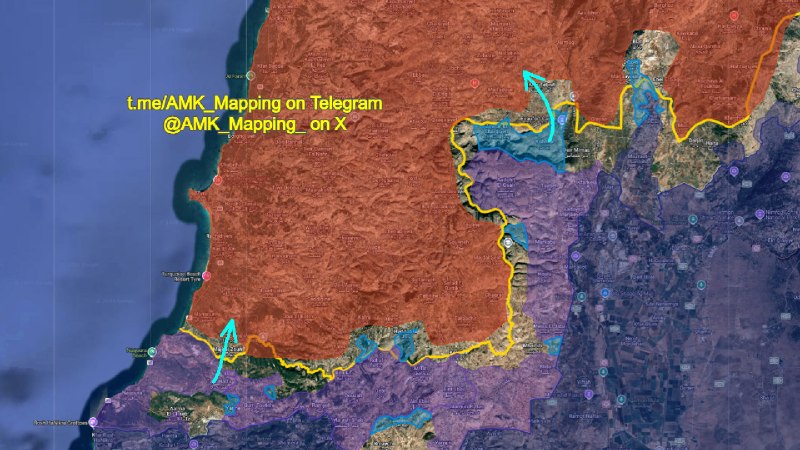
At 18:22 UTC on 25 May 2026, air raid sirens pierced the silence across several communities in northern Israel. The IDF Spokesperson Unit confirmed within minutes that an explosive drone launched by Hezbollah had entered Israeli airspace, triggering the defensive alert network that has become a fixture of daily life along the border since the Gaza war began. The drone did not strike civilian infrastructure on this occasion, but the incident was part of a broader pattern of kinetic activity that has steadily eroded the truce arrangements governing the Lebanon front.
According to reporting carried by Hebrew-language media outlets and corroborated by regional wire services, a separate Hezbollah drone struck what was described as a military tanker operating in southern Lebanon. The target — a term that carries specific weight in military nomenclature, denoting a refuelling or logistics vehicle rather than a battle tank — was hit during an operation in an area where Israeli forces maintain a presence under the terms of a ceasefire agreement brokered in late 2024. The strike injured personnel and caused material damage, according to accounts citing the Hebrew media landscape.
The timing of the attacks drew immediate attention in Tel Aviv and Beirut alike. Channel 12, one of Israel's largest commercial broadcasters, reported that Hezbollah's escalation was designed to force Israel to halt operations inside Lebanon — a framing that posits the drone campaign as coercive pressure rather than opportunistic strike. The interpretation matters. If Hezbollah is acting from a position of strategic calculation rather than reactive retaliation, the implications for the ceasefire's durability are considerably darker.
The Strike Pattern and Its Arithmetic
The incidents of 25 May were not isolated. Hezbollah has maintained a cadence of drone launches against Israeli positions in southern Lebanon throughout the spring, varying altitude, payload, and target profile in ways that suggest real-time tactical learning rather than scripted escalation. Open-source analysts tracking the Lebanon frontier have noted that the group's drone programme has grown more capable since 2023, incorporating surveillance systems that feed targeting data to anti-tank and precision-strike assets. The drone that struck the military tanker in southern Lebanon appears to have operated in a coordinated pair — one to trigger the alarm infrastructure, one to prosecute the strike.
Israeli military bloggers and defence correspondents have characterised this as a qualitative shift. Earlier phases of the ceasefire saw Hezbollah prioritise political messaging over kinetic action — deliberate violations designed to probe Israeli responses without crossing thresholds that would trigger re-engagement. The strikes of May 2026 carry different signatures: higher precision, better timing relative to Israeli patrol patterns, and — critically — demonstrated willingness to accept risk of detection in order to achieve a direct hit on a military asset rather than a symbolic gesture.
The IDF has not disclosed the extent of damage to the targeted tanker or the casualty figures from the strike. Military spokespeople confirmed the inbound drone alert and the general character of the threat without providing operational details. Israeli ground forces in the sector were placed on elevated readiness following the strike, according to accounts from correspondents embedded near the border zone.
Israeli Operations and the Leverage Question
The Channel 12 framing — that Hezbollah escalates to compel a change in Israeli behaviour — invites a structural question that analysts in Jerusalem have been grappling with for months. What exactly is the Israeli operating posture inside Lebanon that Hezbollah finds intolerable?
Under the ceasefire framework, Israeli forces maintain a presence in southern Lebanon in specified areas, with rights of overflight and limited ground operations permitted under provisions designed to prevent Hezbollah from re-establishing offensive infrastructure within striking distance of Israeli communities. Hezbollah, for its part, is required to withdraw heavy weapons and precision-guided missile systems north of the Litani River. Neither side has fully complied with the arrangement's terms, and both have developed institutional knowledge of how to exploit the ambiguities.
Israeli operations inside Lebanon — intelligence-driven strikes, limited ground patrols, and signal activities — are presented by Tel Aviv as enforcement of the agreement's self-defence provisions. From Hezbollah's perspective, they are provocations that justify kinetic response without constituting outright ceasefire violations. The drone strikes of 25 May appear to function within this interpretive grey zone: not a wholesale assault on the arrangement's architecture, but a targeted message that the cumulative weight of Israeli activity is not being absorbed without cost.
The question of whether this pressure strategy will succeed in altering Israeli behaviour depends on calculations inside the Israeli political and military establishment that remain opaque to outside observers. Defence officials have said publicly that the ceasefire holds, while simultaneously authorising expanded rules of engagement for responding to perceived provocations. The contradiction is real but manageable — until it isn't.
Hezbollah's Strategic Posture and the Iran Nexus
Hezbollah's media arm confirmed the drone strikes without elaborating on strategic intent, a pattern consistent with the group's communication discipline around operations it wants to claim without making unnecessarily escalatory. The organisation has been navigating a complex position since the Gaza war, having committed to a front with Israel that drained its resources and exposed its command-and-control vulnerabilities while failing to materially alter the trajectory of the southern theatre.
Iranian state-adjacent media outlets framed the strikes as part of a broader resistance axis posture, positioning Hezbollah's actions as connected to the ongoing conflict in Gaza and the perceived failure of ceasefire negotiations to address core Palestinian demands. This framing is not trivial — it signals to domestic audiences in Lebanon and Iran that the resistance axis remains cohesive and active — but it also carries risks for Hezbollah's own calculations. The group has finite stockpiles of capable drones and experienced operators, and a sustained campaign of precision strikes against Israeli military assets risks depleting capabilities that Tehran has invested years in developing.
The Iran connection is structural rather than mechanical. Hezbollah receives material and technical support from Iran, and its strategic calendar is informed by assessments made in Tehran. But the group also has its own institutional interests and its own risk calculations regarding Lebanese sovereignty, domestic political pressure, and the durability of its own military infrastructure under Israeli intelligence pressure. The strikes of 25 May are as much about Hezbollah's relationship with its own constituency as they are about signalling to Israel.
The Ceasefire Architecture Under Stress
The ceasefire between Israel and Hezbollah was always a political arrangement more than a military one. It was brokered under conditions of exhaustion — Israel had sustained significant casualties during the ground operations of late 2024, and Hezbollah had absorbed its own losses while failing to prevent the degradation of Hamas's command infrastructure in Gaza. Neither side wanted a war without end, and the arrangement provided both with a face-saving exit.
But the arrangement's survival depends on both sides finding the boundaries of the permissible acceptable — or at least tolerable. Israeli operations inside Lebanon, however legally defensible under the ceasefire's terms, cumulatively erode Hezbollah's political capacity to accept them without response. The drone campaign is Hezbollah's answer to that pressure: a method of imposing costs that stays below the threshold of full re-engagement while demonstrating that the arrangement's asymmetry is not permanent.
Whether this dynamic stabilises or collapses depends on decisions yet to be made in Tel Aviv, Beirut, and Tehran. Israeli military planners face pressure to respond to the tanker strike in ways that deter future attacks without triggering the very escalation they are trying to avoid. Hezbollah's leadership faces pressure to demonstrate continued capability and willingness to fight, without being drawn into a conflict it cannot win on its own terms.
The ceasefire did not fail on 25 May 2026. But it demonstrated, again, that its survival requires constant management of tensions that the arrangement's language was never precise enough to resolve. The drone that crossed into northern Israel carried no warheads that reached civilian targets on this occasion. The one that struck the military tanker in southern Lebanon carried enough to matter.
The management of that difference — between a warning shot and a casus belli — is where the next phase of this conflict will be decided.
Wire provenance
This editorial synthesis draws on the following public wire/social posts:
- https://t.me/idfofficial/12345
- https://x.com/sprinterpress/status/18912345678901234567
- https://t.me/alalamarabic/67890
- https://t.me/FarsNewsInt/54321