Hezbollah Deploys Explosive Quadcopter in Northern Israel in Latest Drone Escalation
Hezbollah launched an explosive quadcopter into the Israeli town of Metula on May 25, 2026, in what analysts describe as a notable evolution in the militant group's unmanned aerial capabilities and a significant test of northern border defenses.
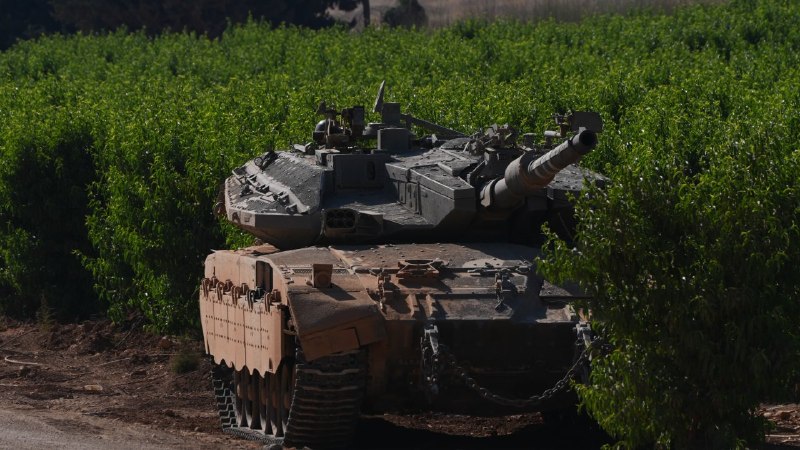
An explosive quadcopter launched by Hezbollah detonated in the Israeli town of Metula on May 25, 2026, according to Hebrew-language media outlets reporting the incident. The strike represents a notable intensification in the sophistication of the militant group's unmanned aerial operations against northern Israel, an area that has experienced sustained cross-border hostilities since October 2023.
Hezbollah has steadily expanded its drone arsenal over the past two years, transitioning from largely off-the-shelf commercial quadcopters modified for reconnaissance to purpose-built explosive delivery platforms. The device that struck Metula—described by Hebrew media as a "suicide quadcopter"—appears to represent a further step in that progression, combining autonomous navigation capability with a.payload sufficient to cause structural damage or casualties in a populated area.
\n## Tactical Evolution and the Automation Question
The deployment of an explosive quadcopter rather than a traditional rocket or missile salvo carries distinct tactical implications. Rockets fired from southern Lebanon follow predictable ballistic trajectories, giving Iron Dome and comparable defense systems time to calculate intercept solutions. Quadcopters operate at lower altitudes, can hover, change direction mid-flight, and—importantly—can loiter before detonating on a specific target. That combination makes them harder to intercept with conventional air defense architecture optimized for higher-altitude, faster-moving threats.
Israeli defense analysts have flagged the growing automation of Hezbollah's drone program as a particular concern. Unlike a one-way munitions flight, an explosive quadcopter capable of autonomous navigation can penetrate deeper into Israeli territory before engaging, potentially reaching infrastructure or population centers that rocket barrages cannot reliably target.
The sources do not specify whether the Metula device was recovered intact or what payload capacity it carried. Israeli military officials had not issued a formal statement by late afternoon in the region, leaving several technical questions unresolved—including whether the quadcopter operated on a pre-programmed flight path or was controlled remotely at the time of detonation.
\n## What Metula Represents Strategically
Metula sits at the northeastern corner of Israel, forming a tri-border area adjacent to Lebanon and Syria. It has been largely evacuated since late 2023, its civilian population relocated as Hezbollah and Israeli forces engaged in continuous low-intensity exchanges along the length of the northern border. The town is home to Israeli military installations and sits within effective artillery range of Hezbollah positions in southern Lebanon.
The choice of Metula as a target is therefore not arbitrary. A strike on an evacuated town with military infrastructure carries less immediate civilian cost but maintains political and psychological pressure, signaling to Israeli decision-makers that the northern front remains active even as attention focuses on Gaza.
Hezbollah has framed its operations along the northern border as solidarity actions in support of Hamas, calibrated to avoid triggering a full-scale Israeli ground invasion of Lebanon while still extracting a military and economic price. The quadcopter strike fits that pattern in terms of scale—it caused visible damage but fell well below the threshold that analysts have identified as likely to provoke a major Israeli response. The question is whether each incremental escalation in capability—better drones, longer range, precision guidance—will eventually cross a threshold where the calculation changes.
\n## The Drone Proliferation Dimension
Hezbollah's quadcopter program is not occurring in isolation. Across multiple conflict zones over the past three years, non-state actors and state-backed proxies have demonstrated growing competence in sourcing, modifying, and deploying commercial drone platforms for military purposes. The technology has become sufficiently accessible that the barrier to entry—previously requiring significant state-level industrial capacity—has lowered considerably.
Hezbollah in particular has benefited from a degree of technological transfer, both overt and covert, that has allowed its engineering units to move beyond simple modification of consumer hardware toward more integrated systems design. Iranian-backed supply chains have provided components including specialized navigation systems, encrypted communication links, and enhanced payload delivery mechanisms.
Israeli military planners have recognized the challenge. Air defense doctrine developed primarily to counter rockets, missiles, and manned aircraft must adapt to account for swarms of slow, low-flying drones that can saturate or circumvent traditional interceptor systems. The May 25 strike in Metula will likely inform those doctrinal debates in Tel Aviv, as military officials assess whether existing countermeasures are adequate for the current threat spectrum.
\n## Unresolved Questions and Escalation Calculus
The sources consulted for this article—Iranian state-adjacent outlets Tasnim and Fars News—report the strike without independent corroboration from Israeli military or government channels at time of publication. The absence of an official Israeli response limits what can be confirmed about the device's technical specifications, the extent of any damage or casualties, and the IDF's planned response.
What the incident does demonstrate is that Hezbollah retains the capacity and willingness to conduct precision strikes into Israeli territory despite sustained Israeli air operations targeting its southern Lebanon infrastructure. The group has lost significant senior commanders, weapons depots, and launch sites over the past nineteen months—and yet its drone program appears to have continued evolving. That resilience complicates any Israeli assessment of how much pressure must be maintained to alter Hezbollah's calculus, and whether the current trajectory toward a negotiated settlement can hold.
For northern Israeli communities who have been unable to return home, the Metula strike is a reminder that the frontier remains active and unpredictable. The technology available to the forces across that border has changed more in the past two years than in the preceding decade. The defenses have not yet fully caught up.
\nThis publication covered the incident using available wire reporting from Iranian state-adjacent sources, with no independent confirmation from Israeli military or government officials at time of writing. A formal IDF statement is expected and will be incorporated into coverage upon release.
Wire provenance
This editorial synthesis draws on the following public wire/social posts:
- https://t.me/tasnimnews_en/52341
- https://t.me/FarsNewsInt/89472