Hormuz, Hormuz, Hormuz: The Chokepoint Diplomacy Reshaping the Middle East War
A reported US-Iran understanding to reopen the Strait of Hormuz within 30 days of a ceasefire exposes how a single maritime corridor has become the hinge on which regional war and global economic stability balance.
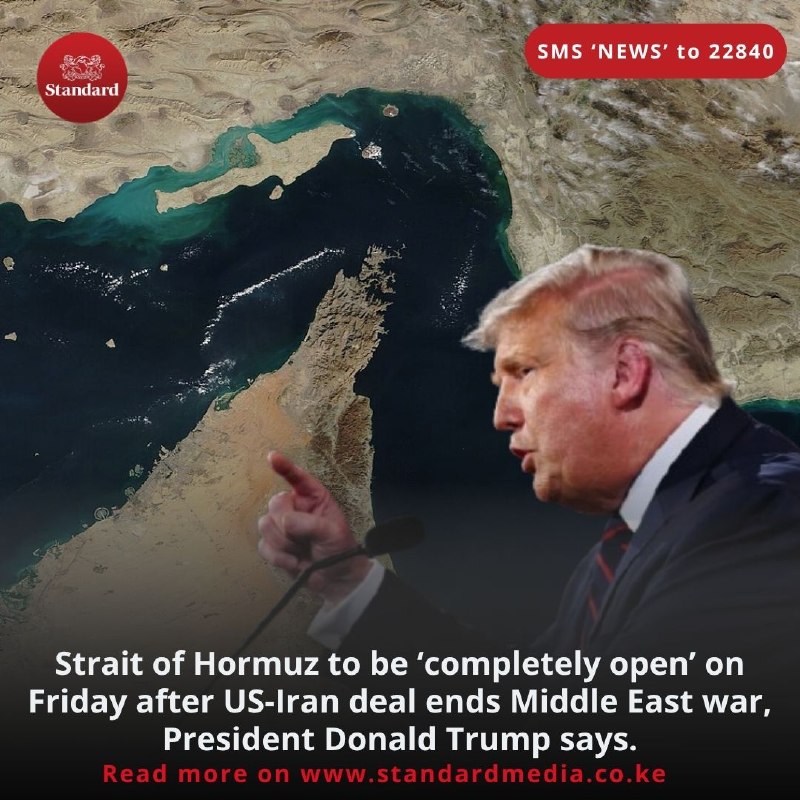
The war between the United States and Iran has entered a phase where the battlefield and the negotiating table have become indistinguishable. On 25 May 2026, Nikkei Asia reported that Washington and Tehran are discussing a framework under which the Strait of Hormuz — the narrow Persian Gulf passage through which roughly one-fifth of the world's daily oil output flows — would reopen approximately thirty days after a ceasefire agreement is reached. The timing of the disclosure, surfacing on the same day that Toyota Motor Corporation announced further production cuts driven by the conflict's duration, crystallises a dynamic that has been building for months: the economic costs of Hormuz's partial or symbolic closure have reached a threshold that is pushing both governments toward accommodation, regardless of the battlefield outcome.
The substance of the reported understanding, as outlined by sources familiar with the discussions, is straightforward in its architecture but freighted with geopolitical implication. A thirty-day lag between a ceasefire declaration and the restoration of free passage through Hormuz would give both sides a structured interval to demobilise naval assets, establish monitoring arrangements, and — critically — exchange hostages and detained nationals. The chokepoint itself becomes the leverage. Iran's ability to threaten or restrict transit has proven valuable as a negotiating instrument; the United States' ability to enforce a naval interdiction or a sanctions-linked financial squeeze on Iranian oil exports has proved equally potent. The proposed framework does not resolve those underlying tensions. It shelves them, temporarily, in exchange for a period of economic respite that benefits oil consumers globally and gives both governments room to claim partial victory to domestic audiences.
The Production Line Speaks
Toyota's announcement on 25 May provides a concrete measure of the war's economic toll. The automaker disclosed plans to reduce overseas production by approximately 83,000 vehicles by November 2026, expanding on previously announced cuts. The company attributed the reduction directly to the prolonged nature of the conflict — a conflict that has disrupted supply chains, elevated freight costs, introduced regulatory uncertainty in key markets, and forced manufacturers with exposure to Middle Eastern energy markets to reassess production scheduling. Toyota is not uniquely affected; other manufacturers with significant overseas operations have made similar adjustments. But the scale of Toyota's cuts — a company with global production footprints that span multiple continents and supplier networks — signals that the disruption is not a short-term logistics inconvenience but a structural pressure requiring genuine operational adjustment.
The automotive sector is an indicator, not an exception. Energy-intensive industries across Asia and Europe have been absorbing elevated input costs since the conflict escalated. The Hormuz passage is not merely a transit corridor; it is a price-setter for global oil markets. Disruption or perceived disruption at that chokepoint ripples through commodity exchanges, affects shipping insurance rates, and introduces risk premiums into long-term supply contracts. When manufacturers like Toyota respond by cutting production, they are transmitting market signals that the conflict has moved from a geopolitical abstraction to a line item on corporate balance sheets. The sources do not specify the precise mechanisms through which the Iran war has affected Toyota's supply chain — whether through energy input costs, component shortages, shipping delays, or consumer demand shifts in affected markets — but the company's own disclosure links the production cuts explicitly to the conflict's duration.
What a Hormuz Agreement Does Not Resolve
It is worth being precise about what the reported thirty-day reopening framework would and would not accomplish. If concluded as described, it would restore the physical passage of oil tankers through Hormuz. It would not end the conflict between the United States and Iran. It would not lift sanctions regimes that Washington has constructed to constrain Tehran's nuclear programme and regional activities. It would not resolve the underlying competition for influence across the Persian Gulf, Iraq, Syria, and Yemen that has defined US-Iran relations since the 1979 revolution. The framework, as reported, is a ceasefire mechanism attached to a specific maritime normalisation — not a peace settlement, not a grand bargain, not a resolution of the structural rivalry that has produced multiple rounds of escalation over four decades.
There are plausible reasons to be sceptical about the durability of any ceasefire anchored to Hormuz alone. Iran's negotiating posture has historically sought sanctions relief as a condition for any normalisation; the United States has historically refused to link sanctions relief to confidence-building measures that do not address the nuclear programme directly. The thirty-day interval may itself be an area of contention — whether thirty days is sufficient for the verification arrangements both sides would require, or whether it represents a rushed timeline that leaves unresolved disputes as flashpoints. The sources do not specify which party proposed the thirty-day interval, nor whether it reflects a compromise position or an opening gambit. What is clear is that both governments are discussing it, which signals a shared recognition that the status quo — a war with Hormuz either closed, threatened, or operating under implicit constraints — has become economically untenable.
There is also the question of regional third parties. Israel, Saudi Arabia, the UAE, and other Gulf states have equities in any US-Iran arrangement that affects Hormuz transit. Saudi Arabia and the UAE have sought to diversify their own export routes — the East-West Crude Oil Pipeline and the Abu Dhabi Crude Oil Pipeline offer partial alternatives to Hormuz — but neither provides sufficient capacity to fully substitute for the strait's throughput. A US-Iran ceasefire that restores Hormuz transit may be welcomed in Riyadh and Abu Dhabi as a stabilising development, but those capitals will be watching the verification arrangements closely. If Tehran appears to be using the ceasefire period to reposition military assets or to extract economic concessions without making reciprocal moves, the regional response will complicate the reopening timeline.
The Structural Logic of Chokepoint Diplomacy
The Hormuz framework sits within a longer pattern of maritime chokepoints functioning as sites of coercive diplomacy and negotiated accommodation. The strait has been a source of US strategic attention since the Carter Doctrine established that the United States would treat any attempt by a foreign power to gain control of the Persian Gulf region as an attack on American vital interests. That doctrine was formulated in 1980, in the immediate aftermath of the Soviet invasion of Afghanistan, and it reflected a Cold War calculus about superpower competition for energy resources. The current conflict between Washington and Tehran operates under different dynamics — it is a contest between a longstanding adversary and a regional power that has developed asymmetric capabilities specifically to deny the United States the comfortable dominance it exercised throughout the 1990s and 2000s — but the underlying logic of chokepoint control remains consistent. Whoever controls or threatens Hormuz holds leverage over the global energy system, and that leverage is most valuable precisely when it is not fully exercised.
Iran's strategy has historically combined overt military posturing around Hormuz — Revolutionary Guard naval exercises, threats to close the strait entirely, mining of approaches — with careful calibration to avoid triggering the kind of US military response that would destroy those capabilities. The current conflict appears to have moved beyond that calibrated approach, producing actual disruption to transit rather than the symbolic threat. The economic damage this has caused — visible in Toyota's production cuts, in elevated global oil prices, in the freight and insurance adjustments — has created the conditions under which both governments face domestic pressure to find an exit. The thirty-day reopening framework is the diplomatic expression of that shared interest. It does not resolve the underlying rivalry, but it provides a structured interval during which the rivalry is placed on hold in exchange for economic relief.
The global energy architecture has been adapting to this uncertainty. European buyers have been diversifying supply sources, accelerating the shift away from Middle Eastern crude that was already underway following the Russia-Ukraine war. Asian refiners — particularly in China, Japan, and South Korea — have been building strategic petroleum reserves and renegotiating long-term supply contracts to reduce Hormuz dependency. These adaptations are not complete, and they cannot fully substitute for the strait's throughput in the short term, but they suggest that the current conflict has accelerated a structural trend that will reduce the leverage of Hormuz closure as a geopolitical instrument over the medium term. The thirty-day framework, if implemented, buys time for that adaptation to continue — and for both governments to claim, domestically, that they have managed the crisis without conceding their fundamental positions.
What Comes After the Thirty Days
The immediate stakes are clear. If the ceasefire framework holds and Hormuz reopens within thirty days of an agreement, global oil markets will receive a significant supply signal, freight costs will normalise, and manufacturers like Toyota will have a clearer operating environment for planning production into 2027. If the framework collapses — if either side uses the thirty-day interval to reposition forces, if verification disputes derail the arrangement, if regional third parties introduce complications — the economic disruption will deepen and the diplomatic space for a subsequent agreement will narrow. The conflict has already lasted longer than many initial assessments projected; the costs have accumulated beyond what most corporate planning scenarios anticipated. A ceasefire with a Hormuz normalisation clause represents the path of least resistance for both governments, but the path is narrow and the margin for error is thin.
The longer-term question is what the Hormuz framework tells us about the shape of a post-war settlement between the United States and Iran. A ceasefire that restores transit is not a peace treaty. It is an pause. The underlying tensions — over Iran's nuclear programme, its regional proxy networks, the US military presence across the Gulf, the sanctions architecture, and the broader competition for influence from Beirut to Baghdad — remain unresolved. But the fact that both governments are discussing Hormuz normalisation as a discrete, verifiable, time-bounded step suggests a recognition that a phased approach, in which specific issues are addressed separately rather than bundled into a comprehensive agreement, may be more achievable than a grand bargain. The thirty-day interval is a test of that proposition. If it succeeds, it opens space for subsequent agreements on more difficult questions. If it fails, the economic pressure that produced it will intensify, and the diplomatic options available to both governments will narrow further.
Toyota's production cuts and the Hormuz negotiations are not separate stories. They are two facets of the same dynamic: a conflict that has imposed costs significant enough to push adversaries toward negotiation, but not significant enough to produce a decisive battlefield outcome that would make negotiation unnecessary. The strait is the hinge. What happens to it in the next thirty days — and in the thirty days after that — will shape the regional order and the global energy market for years to come.
This publication's thread focused on the Hormuz negotiations as a bilateral US-Iran diplomatic development, with the Toyota production cuts used as a measure of economic cost. The dominant wire framing, drawing on initial Nikkei reporting, presented the thirty-day framework as a breakthrough moment. Monexus attempted to contextualise the agreement within the structural rivalry that produced the conflict and to foreground the domestic economic pressures — visible in Toyota's disclosure — that are driving both governments toward accommodation. The sources do not confirm whether the thirty-day interval was a US or Iranian proposal, nor do they indicate the current status of hostage exchange discussions or verification arrangements, which remain the most fragile elements of any ceasefire framework.
Wire provenance
This editorial synthesis draws on the following public wire/social posts:
- https://t.me/NikkeiAsia/28456
- https://t.me/NikkeiAsia/28455
- https://t.me/NikkeiAsia/28431
- https://t.me/NikkeiAsia/28430
- https://t.me/wfwitness/28457
- https://t.me/nikkeiasia/28454