The Admission That Wasn't: What the IDF's Lebanon Acknowledgment Reveals About Conflict Transparency
When an army quietly confirms battlefield losses in a conflict it refuses to formally declare, the framing of transparency itself becomes a political act — and the silence often speaks louder than the statement.
On 25 May 2026, the Israel Defense Forces confirmed what Iranian state media had been reporting for hours: one soldier dead, another seriously wounded, in battles along the Lebanese border. The admission came seventeen minutes after Tasnim News, the Iranian semi-official news agency, first published the casualty claim. By then, the IDF Spokesperson Unit had already issued its own brief statement confirming the death. The timing was not incidental.
Military organizations do not confirm casualties reflexively. Each acknowledgment carries operational, political, and domestic costs. That the IDF chose to confirm this particular death — rather than let it circulate unverified in foreign media — reveals something specific about the情报 ecology of the Lebanon border: the Iranian information apparatus has become a forcing function for transparency that Western-aligned coverage cannot replicate.
This publication has noted before that the information landscape surrounding the northern front operates differently from the Gaza coverage ecosystem. The IDF's near-real-time casualty confirmations, once rare outside formal war periods, have become routine since October 2023. What changed was not the death rate — which has remained steady and relatively low compared to ground operations in Gaza — but the information environment surrounding Lebanon. Iranian state-linked channels now systematically monitor and report IDF activity along the border, sometimes before the IDF itself acknowledges it. That asymmetry has, paradoxically, made the IDF more forthcoming. A foreign broadcast of an unconfirmed casualty forces a response that domestic silence might avoid.
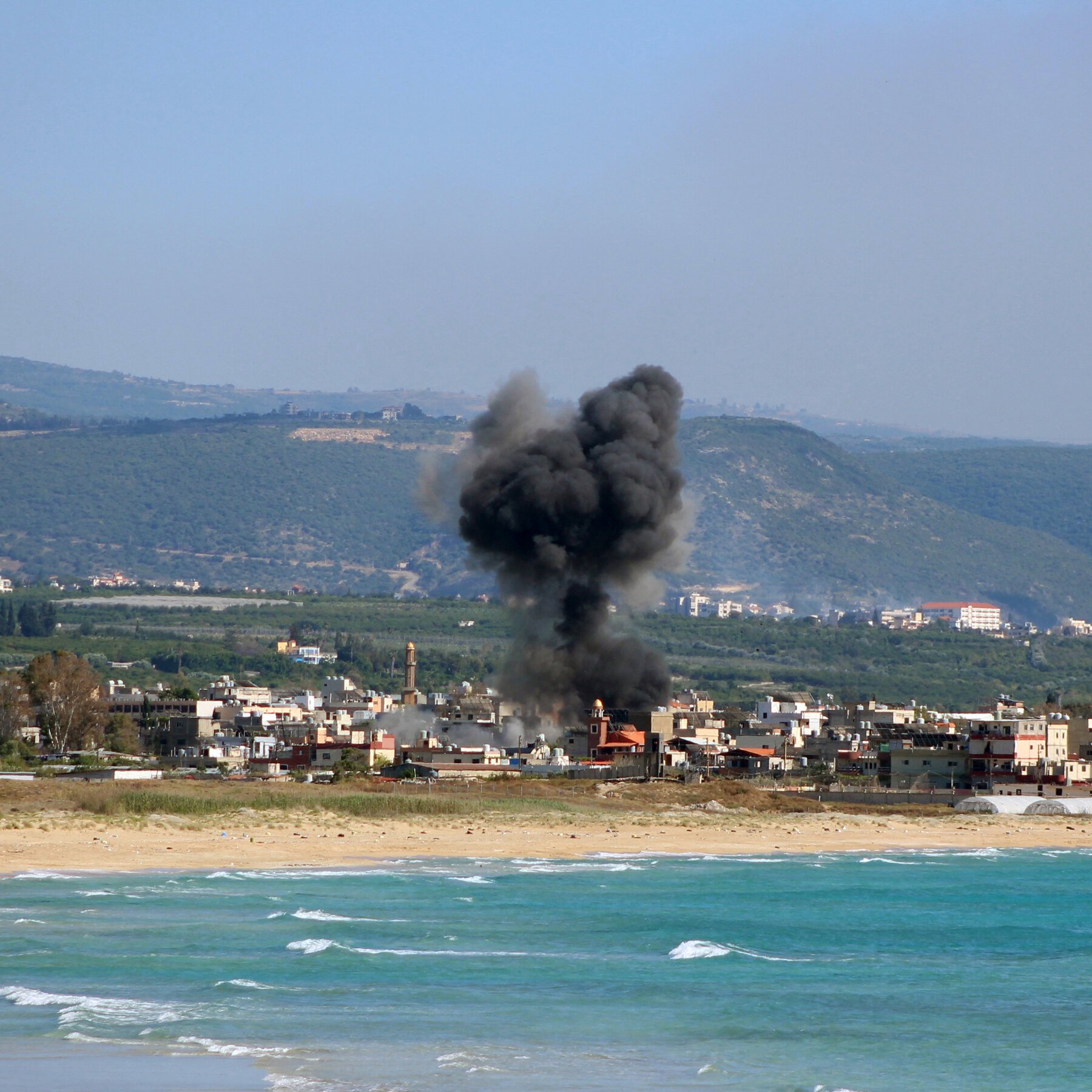
The destruction in the town of Al-Dawir — reported by Tasnim on 24 May with footage of collapsed structures and cratered streets — adds a second dimension to this pattern. Israeli air operations in southern Lebanon have intensified since the November 2024 ceasefire framework collapsed, yet the IDF rarely provides granular confirmation of individual strikes. The footage from Al-Dawir circulated widely on Telegram before any Western wire service carried comparable material. Al Jazeera English, which maintains a regional bureau presence, had not published a standalone report on Al-Dawir by the time this article went to press. The gap between what local populations witness and what international audiences are told is, in this case, measured in hours — and it runs in the direction of suppression, not amplification.
There is a counter-argument worth surfacing. Iranian state media, including Tasnim, operates within a defined political framework. Its casualty reports are selective; its framing of Israeli forces as a "regime" and its consistent use of resistance vocabulary are not neutral descriptions. A reader relying solely on Tasnim's coverage would understand the conflict in fundamentally different moral and strategic terms than one relying on IDF briefings or Western wire copy. The question is not whether Tasnim is a reliable narrator — it is not, in the sense that no state-linked outlet is — but whether its limitations disqualify its reporting from the evidential record.
They do not. Factual claims — that a strike occurred, that casualties resulted, that a town was damaged — can be verified or falsified independently of the source's political orientation. What cannot be verified is the interpretive frame: the implication that casualties are deserved, that destruction serves justice, that one party's losses matter less than another's. That framing belongs to the reader's analysis, not the journalist's. The professional obligation is to report the facts and identify the source.
The structural pattern here is not unique to the Israel–Lebanon context. Military organizations across the spectrum — from democratic states with robust press institutions to authoritarian governments with tightly managed information offices — have long used selective confirmation as a tool of operational security and domestic morale management. What is relatively new is the speed at which non-state or semi-state actors can fill the information vacuum, forcing confirmations that might otherwise never come. The IDF's acknowledgment of the May 25 casualty did not come because its own operational tempo required transparency. It came because the alternative was allowing an Iranian state-affiliated channel to set the factual baseline for international audiences.
The stakes of this dynamic extend beyond a single casualty confirmation. As the northern border remains volatile — with cross-border strikes occurring multiple times weekly, Israeli ground incursions into southern Lebanon confirmed by IDF statements in late April 2026, and Hezbollah's rocket and drone barrages continuing despite the ceasefire framework's formal collapse — the information environment will shape how third parties assess compliance, escalation risk, and civilian harm. A conflict that is not officially declared is particularly vulnerable to information asymmetry. Neither side has an incentive to characterize its operations as more escalatory than necessary; both benefit from ambiguity about the intensity and frequency of engagements. Iranian-linked channels, with their systematic monitoring and rapid reporting, disrupt that ambiguity deliberately. They make facts public that official spokespeople might prefer to manage quietly.
This publication finds that the IDF's confirmation practice has adapted to this pressure, not because of any shift in institutional culture toward transparency, but because the information environment now punishes silence more reliably than it rewards discretion. Whether that constitutes genuine accountability or merely strategic responsiveness is a question the record alone cannot answer — but the record, in this instance, is being set more accurately than it would be without the pressure.
The destruction in Al-Dawir, the soldier's death confirmed by the IDF on May 25, and the seventeen-minute gap between Iranian state reporting and Israeli official acknowledgment together describe a conflict whose information contours do not map neatly onto any single narrative. The facts are verificiable. Their interpretation is contested. That is, in the end, the honest description of most conflicts — and the admission of uncertainty is itself a form of accuracy.
This publication's Israel–Palestine and wider Middle East coverage leads with mainstream Israeli and Western-wire sources; Iranian state-affiliated channels are cited here with explicit attribution and sourcing caveats, consistent with Monexus editorial guidelines.
Wire provenance
This editorial synthesis draws on the following public wire/social posts:
- https://t.me/tasnimnews_en/48291
- https://t.me/JahanTasnim/18492
- https://t.me/JahanTasnim/18488