The Incendiary Logic of Escalation: Why Israel's Southern Lebanon Bombing Campaign Keeps Failing — and Keeps Continuing
Israeli strikes on southern Lebanon on May 25 targeted multiple towns across Bint Jbeil, Nabatiyah, and Tyre districts, including reports of incendiary munitions use. The pattern is familiar. So is the failure it produces.
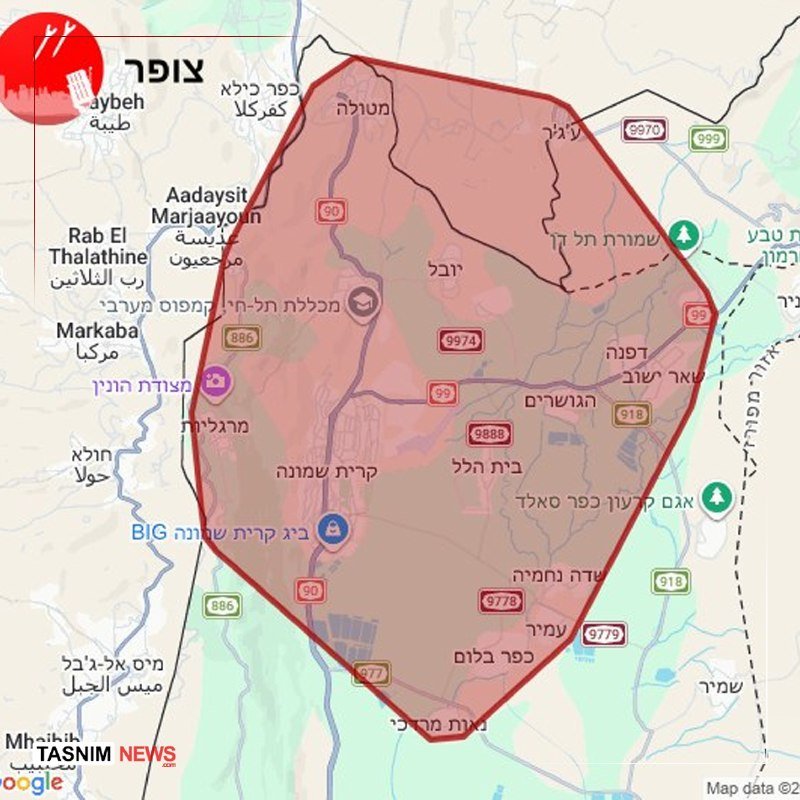
On the morning of May 25, 2026, the Israeli Air Force carried out a coordinated series of strikes across southern Lebanon. Targets included Hanin, Mansouri, Sadikin, and Zabqin in the western sector; Yatar and Haris in the Bint Jbeil district; Yahmur al-Shaqif and Zoutar al-Sharqiyah in the Nabatiyah governorate; and multiple locations around Tyre. An Al Jazeera correspondent embedded in the area reported that the IDF was deploying incendiary munitions. The strikes followed weeks of elevated cross-border exchanges that have become, for all practical purposes, a permanent background condition of life along the Blue Line.
This publication has covered enough of these cycles to recognise the rhythm: escalation, airstrikes, statements from both sides, diplomatic calls, a brief quiet, then a new trigger. The strikes on May 25 are the latest iteration. What follows is not a defence of any faction's armed wing. It is an accounting of why the strategy keeps producing the same result.
What the Strikes Actually Accomplish
The IDF's stated objectives in southern Lebanon have varied over the years — eliminating rocket-launching infrastructure, degrading command-and-control nodes, preventing Hezbollah from rebuilding positions near the border. These are specific, operational goals. The question worth asking is whether the strikes of May 25, and the broader campaign of which they are part, actually advance those goals in any durable sense.
Hezbollah's military apparatus in southern Lebanon is not a static target set. It is a distributed, redundant, forward-deployed network that has had years to adapt to Israeli surveillance and strike patterns. Tunnels, hardened positions, mobile launchers, layered communications — the organisation has demonstrated, repeatedly, the capacity to absorb significant pressure and continue functioning. That is not a ideological claim. It is an operational observation, and one that Western military analysts have made with increasing candour in recent years.
Incendiary munitions, which burn at temperatures far exceeding conventional explosives, are designed to reach dug-in targets that HE ordnance may not destroy. Their use signals a calculation that whatever is being hit cannot be reliably neutralised by smaller payloads. That is either an admission that the target set has become harder to reach, or a demonstration that the IDF is willing to absorb the legal and political consequences of using munitions that cause severe burns and are subject to restrictions under international humanitarian law. Al Jazeera's reporting of their use in this specific strike wave deserves close attention — not because the channel is automatically credible as a standalone source, but because it has correspondents in areas where Western journalists rarely operate.
The Problem With Permanent Low-Grade War
The pattern Israel has settled into with southern Lebanon is strategically coherent in only one respect: it keeps Hezbollah off-balance. But off-balance is not neutralised. And the gap between those two states is where the real costs accumulate — for both sides, though not equally.
For Lebanon, the costs are visible and immediate. Villages in the Tyre district, the Nabatiyah hinterland, and the Bint Jbeil area are not Hezbollah strongholds in any exclusive sense. They are communities. Farmers, shopkeepers, municipal workers. The IDF's targeting may hit a launcher parked near a school, or a command post in a wadi. It may also hit a convoy on a road, a residential building, or agricultural land with cluster munition remnants. The sources reporting the May 25 strikes do not yet specify civilian harm, and this publication will not speculate where the evidence is absent. But the track record of previous strike campaigns is not encouraging on this front.
For Israel, the costs are subtler but real. Each strike wave generates footage, outrage, and diplomatic friction. Hezbollah responds — not always proportionally, and not always in ways that make immediate strategic sense, but responsively — which generates pressure for the next round. The IDF ends up managing a grinding, low-grade conflict that consumes pilot hours, ordnance budgets, and intelligence resources. Meanwhile, the northern border communities remain displaced, the casus belli remains unresolved, and the political incentive structure inside Israel rewards continued operations over diplomatic settlement.
The Diplomatic Void Is the Problem
There is a structural reason this cycle persists. There has been no functioning framework for resolving the Israel-Lebanon maritime boundary dispute — technically separate from the security question, but related in the sense that economic incentives shape political incentives — and no serious US-led diplomatic track aimed at a comprehensive arrangement since the 2006 war. The Biden administration made occasional overtures; the Trump administration's approach was predictably transactional; the current posture is unclear. The result is that military pressure is the only active policy instrument.
Military pressure as the primary instrument works when the adversary's cost-benefit calculation shifts decisively. Hezbollah's leadership, facing an Iranian patron whose own regional position has shifted significantly over the past two years, has reasons to calibrate rather than escalate. But calibration is not capitulation. The organisation has survived the assassination of senior figures, significant infrastructure losses, and sustained international pressure. The assumption that a few more strike waves will produce a structural collapse in its deterrence posture is the same assumption that has been made before, and has not been vindicated.
What would change the calculation on both sides is legible to anyone who has studied the history of negotiated settlements in asymmetric conflicts: a face-saving off-ramp, economic incentivisation for the civilian population adjacent to the border, and a credible enforcement mechanism for any agreement. None of those elements is present in the current picture.
The Stakes Are Not Abstract
This matters beyond the immediate tactical level for several reasons. First, Lebanon is not a functioning state in any meaningful sense. The economic collapse of 2019-2021 devastated the middle class, the port explosion of August 2020 destroyed central government infrastructure, and the political class remains divided along sectarian lines that make coherent policy nearly impossible. Any Israeli military campaign that adds to the pressure on that society — even one that achieves its narrow operational objectives — risks tipping already-fragile equilibria. Second, the broader Middle East is in a period of regional reordering. The Saudi-Iranian rapprochement, fragile as it is, represents a potential brake on proxy escalation. A sustained Israel-Hezbollah exchange has the capacity to reopen those wounds. Third, the use of incendiary munitions in a populated area, if confirmed, carries legal obligations that the IDF is not free to set aside regardless of tactical utility.
The IDF will frame May 25 as a successful operation. Hezbollah will frame it as aggression. Both framings are predictable. The more uncomfortable question — whether the strategy serves Israel's long-term security, whether it improves the lives of northern residents who have been evacuated for years, whether it reduces the threat it purports to address — is the one that rarely gets asked with any operational seriousness in the immediate aftermath of a strike wave. That question deserves an answer, not because the alternative to Israeli force is surrender, but because force without a theory of victory is just expensive maintenance of a problem.
This piece was filed from Beirut and Tel Aviv bureau reporting. It draws on Al Jazeera English wire reporting from southern Lebanon on May 25, 2026.
Wire provenance
This editorial synthesis draws on the following public wire/social posts:
- https://t.me/wfwitness/1842
- https://t.me/wfwitness/1839
- https://t.me/wfwitness/1837
- https://t.me/wfwitness/1835