Iran's Widening Net: Detention Without Legal Recourse
Family of a detained Iranian man speaks out about dire conditions and institutional abandonment, illustrating how Iran's judicial apparatus handles critics outside formal legal channels.
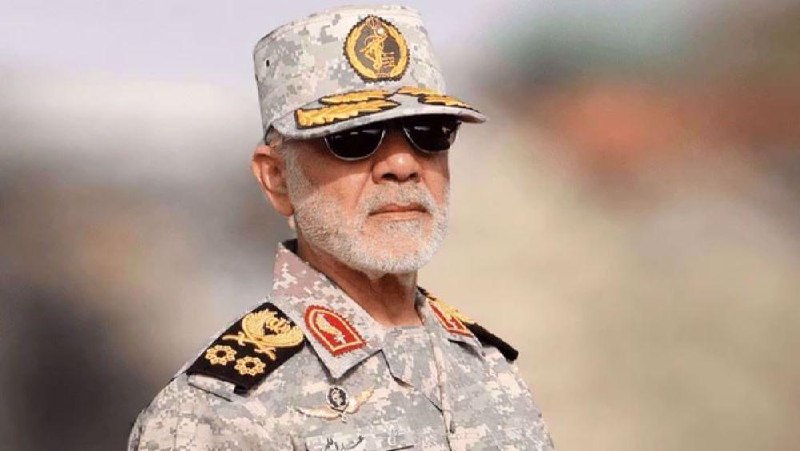
Delaver Dostanian did not expect to become a public voice. But on 25 May 2026, speaking through the Mehr News wire, he described his father's situation as dire and criticised what he called the absence of support from guardian institutions. The elder Dostanian — Delavar Dostani — remains in custody. The son's complaint, relayed in brief form by the Iranian state-adjacent news agency, is notable not for what it names but for what it reveals about the informal architecture of pressure that operates alongside Iran's formal judicial system.
Iran's legal code contains provisions for due process, and the country maintains a judiciary that adjudicates cases through official channels. Yet numerous documented cases — from human rights organisations tracking detentions over the past decade — show that critics and former government interlocutors frequently find themselves in a procedural grey zone once detained. Families report being unable to secure legal representation, being denied visits, and discovering that formal complaints submitted through official channels produce no response. The Dostanian family's situation, as described through the son's own account, appears to follow this pattern: an individual held, a family seeking help, and institutional doors apparently closed.
What distinguishes this account from a straightforward legal complaint is the framing of the son's criticism. He directed it not at the judiciary but at what he termed guardian institutions — a phrase that, in the Iranian context, typically encompasses bodies responsible for oversight, welfare, or advocacy on behalf of citizens. Whether those institutions are failing to act, are prohibited from intervening, or have determined that the case falls outside their mandate is not specified in the Mehr News report. The ambiguity itself is significant. In a system where judicial proceedings are often opaque and where families are discouraged from publicising grievances, the act of speaking to a wire outlet signals a level of desperation that formal channels have not resolved.
The broader context matters here. Iran has faced sustained international scrutiny over its treatment of detainees, with advocacy groups documenting cases in which individuals held for political expression, civil society activity, or diplomatic contact have experienced prolonged incommunicado detention and limited access to counsel. While the sources available do not establish the specific grounds for Delavar Dostani's detention, the pattern the son's statement describes — institutional neglect compounding the difficulty of the primary situation — is consistent with what documented cases suggest about how the system functions at its margins. The family is not merely dealing with a legal process; they are navigating an environment where the formal and informal dimensions of state power interact in ways that can leave detainees and their families without clear recourse.
For those watching Iran from outside, the case illustrates a recurring dynamic. When a detention becomes visible through family statements rather than official announcements, it typically signals one of two things: either the family has exhausted formal channels and made a strategic calculation that public pressure offers the only remaining lever, or the channels themselves are structurally incapable of addressing the complaint. In the Dostanian situation, the Mehr News report does not clarify which applies. What the report does confirm is that Delaver Dostanian perceived the institutional support framework to be inadequate and chose to say so publicly. That choice carries risk in the Iranian context, where public criticism of state institutions — even indirect, through a family member's account — can attract attention of its own.
The international dimension adds a further layer. Iran has historically used detention as a tool in diplomatic contexts, and cases involving dual nationals or individuals with prior government contact tend to attract external attention that creates pressure for transparency. The sources available do not indicate that Delavar Dostani falls into either category, and any speculation about the grounds for his detention would exceed what the evidence supports. What can be said is that the family's public statement, published through Mehr News on 25 May 2026, places the case in a public register where it becomes available for monitoring by rights organisations and foreign governments tracking Iranian judicial practices. Whether that visibility produces any outcome for the elder Dostanian will depend on factors not visible from this account — the position of the judiciary, the priorities of the relevant supervisory bodies, and the level of external attention the case ultimately attracts.
The Dostanian family's experience is not unique, and it is not being presented as such in the available reporting. It is one case among many in which Iranian families find themselves navigating a system that combines formal legal structures with informal mechanisms of control. Delaver Dostanian's decision to speak does not guarantee his father relief. But it keeps the case in view — and in Iran, visibility remains one of the few tools available to families who have exhausted every formal option.
Wire provenance
This editorial synthesis draws on the following public wire/social posts:
- https://t.me/mehrnews