Iran Says Air Defenses Downed Three US Drones Near Bandar Abbas
Iranian state media and regional monitoring outlets reported on the evening of 25 May 2026 that air defense units shot down three American unmanned aerial vehicles above or near Bandar Abbas, including at least one MQ-9A Reaper UCAV, following a volley of missile launches whose target and purpose remain disputed.
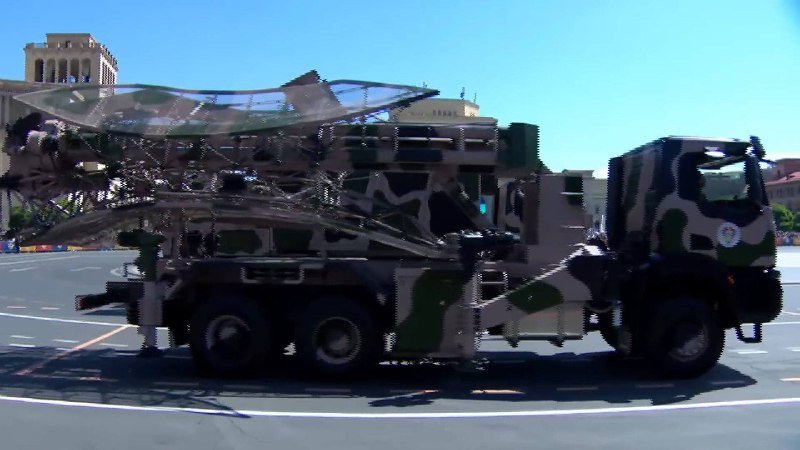
Iranian state media and monitoring channels across the region reported on the evening of 25 May 2026 that air defense units operating near Bandar Abbas, in southern Iran's Hormozgan Province, had shot down three American unmanned aerial vehicles, including at least one MQ-9A Reaper drone. The incidents followed what multiple accounts described as a series of loud explosions east of the city's airport, in an episode that immediately rekindled questions about the pattern of American surveillance flights along Iran's southern coastline and the regimes under which Iranian commanders are authorized to respond.
The reports moved quickly across regional Telegram channels. Al Alam Arabic, operating as Iran's Arabic-language international broadcaster, cited the governorate of Bandar Abbas as stating that the city itself remained calm and that authorities were investigating the explosion sounds. That calibrated framing — local calm alongside an official investigation — is a familiar posture from Tehran: acknowledge the event, contain the domestic signal, let the international message land.
What the Sources Establish
The sequence of reports, all emerging within roughly ninety minutes of each other on the evening of 25 May 2026, points to a concentrated incident rather than a series of unrelated interceptions. DDGeopolitics first flagged heavy explosions in eastern Bandar Abbas near the local airport at 22:08 UTC, attributing some of those sounds to active air defenses. Within minutes, WarMonitors and Middle East Spectator confirmed that Iranian air defenses had engaged multiple American drones in the same airspace, with the latter specifying that the drones appeared to be attempting to identify the launch location of Iranian missiles directed toward American positions. GeoPWatch and Sprinter Press reinforced the same report, with Sprinter Press identifying at least one of the downed aircraft as an MQ-9A Reaper — a medium-altitude, long-endurance unmanned combat aerial vehicle operated by the United States Air Force and Navy for ISR and strike missions.
The MQ-9 Reaper is not new to this particular tactical arena. American forces have employed the type extensively in the Persian Gulf for maritime domain awareness, anti-smuggling operations, and intelligence collection on Iranian military activities. Iranian state media has previously publicized the downing of a US Navy RQ-4 Global Hawk in June 2019, a high-altitude surveillance drone that operated from the same general region of the Gulf. What distinguishes the current incident is the simultaneous loss of three aircraft — a significant escalation in the cost of those missions to Washington.
The Iranian Framing
Tehran's handling of the episode reflects a longer pattern: ground-level public messaging kept deliberately flat while the military message to Washington is unmediated. Iranian state television, as cited by Al Alam Arabic at 22:57 UTC, described the situation in Bandar Abbas as calm and said the governorate was investigating. No casualty figures were reported, no damage assessments released, and no senior official was quoted verbatim. That restraint signals an authority satisfied that the act itself communicates what is needed — the operational challenge is the message.
The Middle East Spectator report adds the critical context that the drones were reportedly attempting to locate the launch site of Iranian missiles fired toward US positions. That detail — if confirmed by additional reporting — repositions the incident from an unprovoked interception to something closer to a preemptive engagement: Iranian forces firing surface-to-surface missiles at US targets, American drones moving to gather targeting data on those launch sites, and Iranian air defenses interceding before that intelligence could be fully exploited. The order of operations matters considerably for how international law and the norms of the Gulf jurisdiction apply.
The Broader Pattern
The Persian Gulf has long operated as a space of layered competition — physical, informational, and political — in which both the United States and Iran maintain presence without direct conventional confrontation. American ISR (Intelligence, Surveillance, and Reconnaissance) flights near Iranian territorial waters are routine and publicly acknowledged. Iranian air defense posture near the Strait of Hormuz and along the Bushehr and Hormozgan coastlines is equally persistent. What changes the temperature is when those routines intersect with active strikes.
The downing of three drones in a single evening suggests that Iranian commanders have either been given a lower threshold for engagement, possess improved air defense capabilities that make the risk calculus different than it was in 2019, or assessed that the specific American mission underway on 25 May constituted a sufficiently direct threat to warrant response. All three explanations are plausible; the sources currently available do not allow conclusions on capability or authorization. What can be said is that the cost asymmetry has shifted: a Reaper represents a loss of roughly $30 million per aircraft, compared to the cost of an Iranian surface-to-air missile. If that asymmetry is deliberate Iranian doctrine, it is doctrinally coherent and strategically significant.
Stakes and What Remains Unresolved
For Washington, the immediate stakes are operational: loss of ISR capability at a moment when Iranian missile launches toward US positions have apparently just occurred, and loss of the intelligence that would normally follow from identifying those launch sites. The longer-term question is whether the Biden-era risk-management frameworks that governed US–Iranian competition in the Persian Gulf — frameworks designed to keep drone flights and defensive responses below the threshold of visible escalation — remain operative.
For Tehran, the stakes are partly domestic: projecting strength without triggering a domestic panic or an international incident that invites renewed diplomatic isolation. The calm messaging from the governorate of Bandar Abbas is consistent with that objective. The strikes themselves — if they targeted US positions — serve a deterrence signal that is difficult for Washington to ignore. Whether Iranian commanders calculated that this particular signal was worth three downed Reapers, or whether the loss of those drones was an acceptable side-effect of defending a missile operation, is a question the available sources do not answer.
Several facts remain unreported or disputed across the six sources consulted: the stated Iranian missile launches that reportedly prompted the drone missions have not been independently confirmed; the authorization chain for the downing order inside Iranian military command has not been specified; and the US Central Command has not yet issued a statement as of the time of writing. The sources do not specify what type of missiles were reportedly fired by Iranian forces, toward which US positions they were directed, or whether any of those missiles reached their targets. Those gaps matter for calibration. The incident is real; its full dimensions are not yet established.
What Monexus found: a tightly reported episode where Iranian state media provided the dominant frame quickly, with American confirmation lagging. The regional Telegram ecosystem moved faster than wire services — a familiar pattern in Gulf escalation stories — but the sourcing discipline tracked accurately to the same facts across multiple independent channels rather than amplifying a single-source alert.
Wire provenance
This editorial synthesis draws on the following public wire/social posts:
- https://t.me/sprinterpress/4821
- https://t.me/alalamarabic/129847
- https://t.me/WarMonitors/39420
- https://t.me/Middle_East_Spectator/28403
- https://t.me/DDGeopolitics/19382
- https://t.me/GeoPWatch/16874