Iran's Environmental Fee Gambit Complicates US Diplomatic Victory on Hormuz
Iran's pivot from tolls to environmental fees preserves leverage while accepting a US-Iran deal framework — and markets are pricing the diplomatic thaw accordingly.
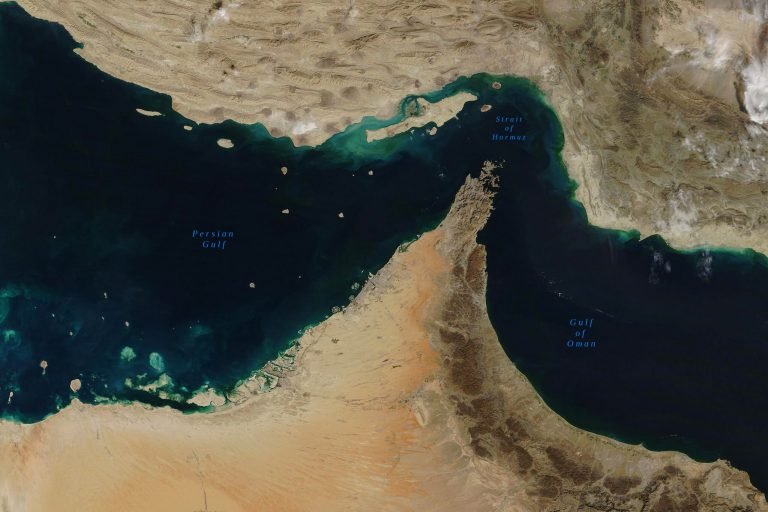
When the White House confirmed on 24 May 2026 that the United States and Iran had reached agreement in principle on reopening the Strait of Hormuz, oil markets responded within hours. Brent crude fell nearly five percent, touching a two-week low, according to energy pricing data reported by Cointelegraph. The market's rapid discounting of a geopolitical risk premium reflects a straightforward calculus: if Hormuz — the narrow passage through which roughly a fifth of the world's oil flows — normalizes as a transit corridor, the supply threat embedded in recent crude prices evaporates.
That calculation may be premature.
Within a day of the announced framework, Iranian officials unveiled what amounts to a parallel pricing mechanism for the strait. Tehran will not charge tolls — a formulation Washington can present as a concession — but will instead levy "environmental protection fees" on vessels transiting the waterway. The distinction matters. A toll signals sovereignty contested; an environmental fee signals sovereignty asserted through a different legal door. Iran's foreign minister, currently in Doha for talks with Qatar's prime minister, is delivering a consistent message through regional capitals: the deal has been done, but its implementation will follow Tehran's terms.
The Anatomy of a Frame
The agreement-in-principle, confirmed by a US official to the New York Times on 24 May, was framed by President Trump the same day as a straightforward reopening. "A deal would include the reopening of the Strait of Hormuz," he said, without elaborating on the mechanics. That phrasing is diplomatically useful for Washington: it positions the United States as having restored a strategic chokepoint to global commerce. But the Iranian framing — already circulating through official channels in Tehran and being tested in Doha — suggests a different hierarchy of interests.
For Iran, Hormuz's importance has always been dual. The strait is both a revenue vector and a geopolitical asset. Ceding the ability to disrupt transit in exchange for sanctions relief is the stated bargain; extracting ongoing income through environmental levies preserves the revenue logic without triggering the provocation that would unmake the diplomatic opening. It is a mechanism that converts a Western-defined normalization into something closer to an Iranian-managed equilibrium.
The timing of the foreign minister's Doha visit reinforces the pattern. Qatar hosts the Iran Nuclear Talks secretariat and maintains back-channel access to both Washington and Tehran. Its prime minister is a natural mediator for the fine print — the environmental fee schedule, verification protocols for Iranian compliance with nuclear limits, and the sequencing of sanctions removal. The visible diplomacy is being conducted in public; the substantive negotiations are happening in the margins.
What the Market Is Pricing
The five-percent oil decline is real, but it reflects conditional optimism rather than resolved certainty. Traders are reacting to the headline — Hormuz reopening — not to the implementation detail that will determine whether the headline holds. Environmental fees are not yet priced in because their quantum is unknown. If Iran sets those fees at levels that effectively tax transit, shipping companies will embed the cost into freight rates, and the net effect on crude prices will depend on how Saudi Arabia and UAE respond with their own production decisions.
The structural logic runs in both directions simultaneously. A stable, feecollecting Hormuz is better for global energy markets than a disrupted one; it removes the tail risk that has propped up a geopolitical risk premium in Brent and WTI for years. But a Hormuz that operates on Iranian administrative terms — even benign ones — normalizes Tehran's role as a de facto gatekeeper. The United States secures the reopening; Iran secures the ongoing relationship.
This is not an anomalous outcome. It mirrors the architecture of other US-Iranian engagements, where formal concessions are paired with informal continuities that preserve Iranian leverage in adjacent domains. The nuclear deal of 2015 — JCPOA — followed a similar pattern: sanctions lifted, Iranian nuclear activity paused, but the structural footprint of Iranian regional influence undiminished. Whether this framework produces a more durable equilibrium depends entirely on what the Doha talks produce on the fee question.
The Regional Geometry
Qatar's role in hosting the foreign minister's consultations is itself significant. Doha has spent the better part of a decade navigating a bifurcated relationship: host to a US military base, recipient of Iranian gas via the shared North Dome field, and intermediary for American outreach to Tehran. That triangulation has costs — Saudi Arabia and the UAE have long viewed Qatar's Iranian proximity with suspicion — but it also gives Doha credibility that no other Gulf capital currently enjoys.
Israeli officials have not publicly commented on the framework as of publication, but regional reporting suggests Tel Aviv views any normalization of Iran's Hormuz posture with deep skepticism regardless of the formal terms. The stated logic — that Iran's presence in international waters, even regularized, remains a latent threat — reflects a security posture that pre-dates the nuclear question and will outlast any single diplomatic arrangement.
Saudi Arabia's reaction will be calibrated to oil market realities rather than ideological preference. Riyadh has absorbed two years of elevated crude prices sustained partly by Hormuz disruption risk. A stable strait removes that floor; the kingdom's response will likely be to adjust production targets rather than contest the deal's legitimacy. The GCC-wide interest in functioning energy infrastructure is consistent enough that the environmental fee mechanism, if reasonably priced, will not trigger coordinated pushback.
The Road to Implementation
The sources do not specify a timeline for formalizing the environmental fee schedule, nor do they indicate whether the United States has accepted Iran's fee framework as consistent with the deal-in-principle. What is clear is that the diplomatic ground has shifted. The question is no longer whether Hormuz reopens but on whose terms and under whose administrative authority.
The market's immediate reaction — price down, risk premium out — is appropriate for the headline. It is premature for the implementation phase that begins now. If Doha produces a fee structure that Iran characterizes as sovereignty-affirming and Washington characterizes as normalized transit, the five-percent oil decline could extend further. If the fee question produces new friction — disputes over quantum, accusations of fee-gouging, or Iranian ships demanding payment in non-dollar instruments — the risk premium reappears.
The next 72 hours of Doha consultations will determine which trajectory holds. Markets have priced the optimistic case; the diplomatic record suggests the pessimistic case remains within reach.
This publication's reporting on the Strait of Hormuz framework centred on the US official confirmation and market reaction rather than the earlier stages of back-channel negotiation. Wire reporting at this stage reflects what principals are willing to attribute on record; the fuller picture of how the terms were reached will emerge in coming weeks.
Wire provenance
This editorial synthesis draws on the following public wire/social posts:
- https://x.com/unusual_whales/status/1924587349019533741
- https://t.me/Cointelegraph/284582
- https://x.com/polymarket/status/1924698231450951985
- https://x.com/polymarket/status/1924687231285043458