Iran Excludes U.S. from Hormuz Management in Provisional Deal, Reopening Waterway to Oil Traffic
Tehran has carved American participation out of any Hormuz management arrangement in a provisional nuclear agreement, even as both sides signal the strategic waterway will reopen to oil traffic — a tension at the heart of the emerging deal.
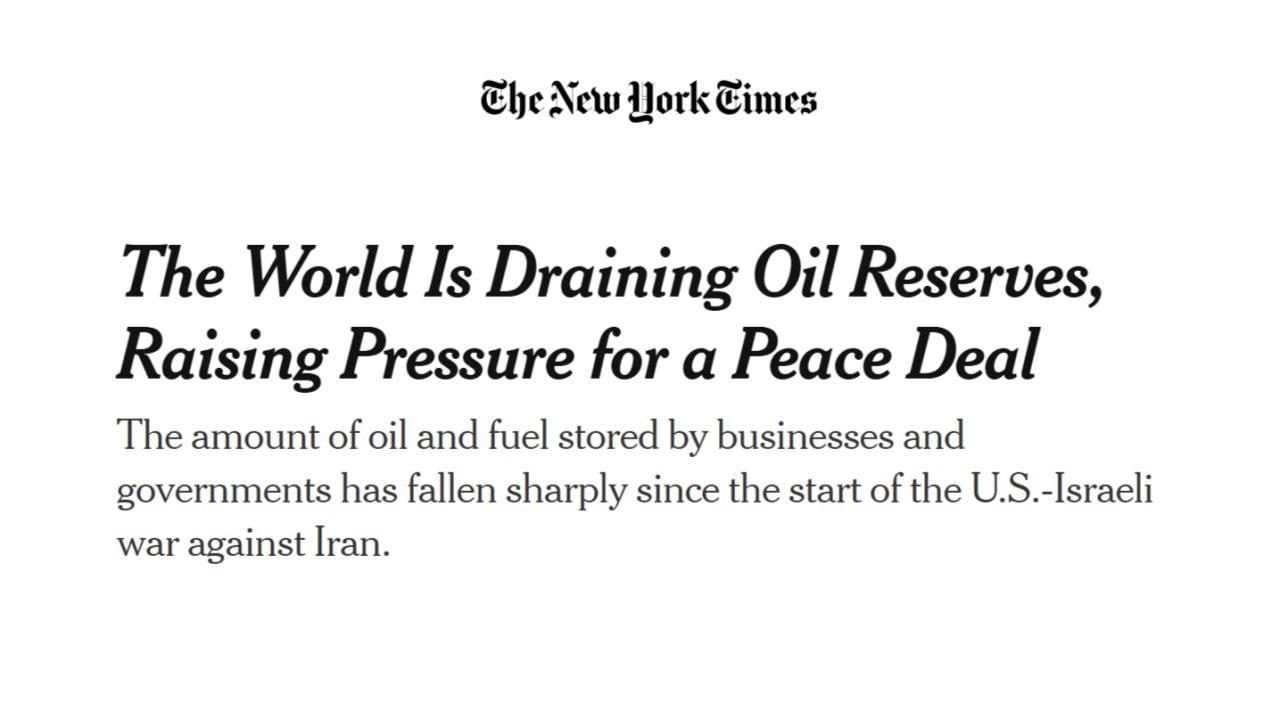
When President Donald Trump announced on 24 May 2026 that significant progress had been reached on a peace agreement with Iran, the central selling point was narrow and concrete: the Strait of Hormuz would reopen. The strategic waterway, through which approximately one-fifth of the world's oil shipments pass, has been a pressure point in the broader standoff between Washington and Tehran since the last round of maximum-pressure sanctions. Within hours of the announcement, initial market euphoria gave way to a more complicated picture — one that Iran-watchers had largely anticipated.
Intelligence outlet Intelslava reported on 25 May 2026 that Tehran has, once again, refused to allow American personnel to participate in the management of the Strait of Hormuz under the provisional framework. The clause permitting U.S. involvement has been excluded from the agreement text entirely. The development places two competing realities side by side: the deal Trump described as a breakthrough will reopen the waterway to traffic, yet the governance arrangement underpinning that reopening explicitly excludes the American presence that Western strategists consider non-negotiable.
The Core Disagreement at the Negotiating Table
The question of who controls or co-manages Hormuz has been a structural obstacle for years. The strait is a chokepoint with enormous leverage — whoever has operational access can monitor, restrict, or tax the oil traffic on which global energy markets depend. American naval dominance in the Persian Gulf has historically been the guarantor of freedom of navigation, a role Washington views as vital to global energy security. Tehran, for its part, has consistently framed any permanent American presence in the waterway as an act of encirclement.
The provisional agreement resolves the immediate question of transit — oil tankers will move again — but it sidesteps the governance question that produced the standoff in the first place. The United States, per reporting by Axios, had sought a clause that would permit American personnel to participate in a multinational monitoring regime for the strait. Iran refused, mirroring refusals from previous negotiating cycles. The exclusion of that clause does not collapse the deal; it does mean the agreement, at this stage, is narrower than the White House's public framing suggests.
The markets registered the nuance quickly. Oil prices fell on 24 May 2026 as traders processed the announcement, with Reuters and Bloomberg reporting that a Hormuz reopening — even on provisional terms — signals a meaningful supply expansion on the horizon. Brent crude moved lower on the day as the initial hope of a comprehensive deal gave way to price calculations rooted in partial relief.
What the Agreement Actually Contains
Public statements from both capitals have been measured in detail. Trump, speaking on 24 May 2026, confirmed the reopening of the Strait of Hormuz as a core element of the deal but offered no specifics on the governance architecture beneath that commitment. The New York Times, cited by Unusual Whales reporting the same day, described the agreement as one reached "in principle" by a U.S. official — language that leaves significant room for renegotiation before a final text is produced.
Iranian state media has framed the arrangement as a concession extracted from Washington rather than a gift granted to it. The explicit exclusion of American personnel from Hormuz management is being presented domestically as a diplomatic win: Tehran has held the line on a sovereignty red line while securing sanctions relief on the nuclear track. Whether that framing survives contact with the agreement's fine print will depend on whether the monitoring regime that does get stood up includes — or pointedly excludes — Western naval personnel.
The nuclear dimensions of the deal remain under negotiation. Hormuz is the most visible pressure point, but it is one element of a broader architecture that includes uranium enrichment limits, International Atomic Energy Agency access, and the sequencing of sanctions removal. A provisional Hormuz agreement buys time on all of those fronts.
The Regional Context Tehran Cannot Ignore
It is impossible to read Iran's negotiating posture on Hormuz without accounting for the map west of the Persian Gulf. Tehran's network of allied forces — across Iraq, Syria, Lebanon, and Yemen — has been under significant pressure from American and Israeli operations throughout 2025 and into 2026. The Hormuz concession, if it holds, arrives at a moment when that network has absorbed real losses. A reopened strait, with management left to Gulf Cooperation Council states and non-American international monitors, may be the arrangement Tehran can accept without appearing to have capitulated under external duress.
The Gulf states — Saudi Arabia, the UAE, Qatar, and Kuwait — have their own interests in a stable Hormuz regime that does not become a flashpoint for great-power competition on their doorstep. They have broadly supported the U.S. presence as a security guarantor, but they have also navigated carefully between Washington and Tehran as the region has fractured along competing axes. A deal that reopens the strait without creating a permanent American foothold gives those states room to accommodate both parties.
For Israel, the calculus is colder. A U.S.-Iran agreement of any kind — even a narrow one focused on Hormuz and nuclear thresholds — reshapes the threat environment in ways Jerusalem did not choose. The provisional nature of the deal offers Tel Aviv little to celebrate and nothing to celebrate publicly.
What Comes Next and Who Is Exposed
The provisional agreement, if it holds, benefits several parties simultaneously. Tehran gets sanctions relief without conceding the Hormuz governance question. Washington gets a reopened waterway it can market as a diplomatic win without the troops-on-the-ground exposure that would have been a hard sell domestically. The oil markets get relief from the premium priced into the geopolitical risk of a closure that never fully materialised. Brent has already moved on that expectation.
The risks are equally distributed. If the monitoring regime that emerges is toothless — if sanctions removal proceeds while Tehran continues to advance its nuclear programme in the gaps — the agreement will collapse under its own contradictions. If Iran tests the limits of the provisional arrangement in the strait itself, the U.S. will face a choice between accepting a fait accompli or re-imposing the pressure that produced the deal in the first place. Neither option is clean.
The sources do not specify the timeline for finalising the full agreement, nor whether the Hormuz clause will be renegotiated before a broader nuclear deal is concluded. What is clear is that the provisional framework has exposed a durable fault line — not between the United States and Iran on the question of oil transit, but on who gets to manage the world's most important maritime chokepoint. That question has not been answered. It has been deferred.
This publication's coverage of the Hormuz question has led with the Strait's strategic significance to global energy markets rather than with the White House framing of diplomatic victory — a structure that reflects the deal's actual substance rather than its announcement.
Wire provenance
This editorial synthesis draws on the following public wire/social posts:
- https://t.me/Intelslava
- https://x.com/unusual_whales/status/1923312584699248653
- https://t.me/LiveMint