Iran's Top US Negotiator Re-elected as Parliament Speaker, Consolidating Hardliner Control Ahead of Sensitive Talks
Mohammad Bagher Ghalibaf's re-election as Speaker of the Iranian Parliament on 25 May 2026 consolidates the most hardline legislative bloc in years — and positions the man leading Tehran's nuclear talks with Washington at the apex of Iranian institutional power.
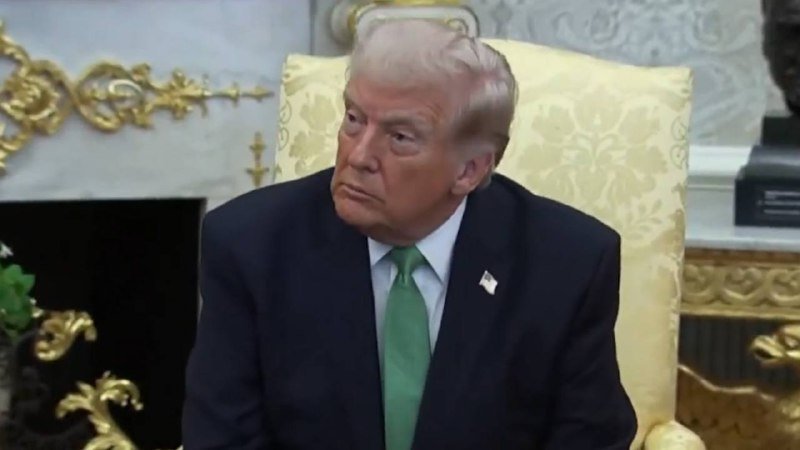
Mohammad Bagher Ghalibaf was re-elected Speaker of the Iranian Parliament on 25 May 2026, a day after Iran and the United States held their fourth round of nuclear talks in Rome. His re-confirmation as head of the Majlis — the same day he led Tehran's negotiating team — fuses the roles of parliamentarian enforcer and chief diplomat in a single figure at a moment when the two tracks are inseparable. The election, confirmed by Iranian state outlets including PressTV and the Fars news agency, extends Ghalibaf's dominance over the legislative branch into a second parliamentary term and raises pointed questions about the political room available to any incoming Iranian administration negotiating under pressure from Washington.
The alignment of Ghalibaf's dual mandates — parliament speaker and nuclear envoy — is not merely administrative. In the Iranian political system, the Majlis speaker controls legislative sequencing, controls access to the chamber's investigative powers, and sits at the intersection of the hardline security establishment and the executive. Ghalibaf has held those threads together across the Rouhani, Raisi, and Pezeshkian administrations. That continuity, across different presidents and different phases of the nuclear file, tells you something: his position does not depend on any one administration's political luck. It depends on the institutional gravity of the security state itself.
A Hardliner with the Keys to the Chamber
Ghalibaf is not a newcomer to this position. He held the speakership from 2020 to 2024 under the Raisi administration, accumulating a record of consolidating conservative control over parliamentary committees, weakening the reformist minority, and aligning legislative output with the priorities of the Islamic Revolutionary Guard Corps and the Supreme Leader's office. His re-election, coming at the start of a new parliamentary cycle, reflects the continued dominance of that same conservative coalition — and the absence of any meaningful counter-weight inside the chamber.
The sources do not specify the vote tally or the composition of rivals in this re-election. What the record does make clear is that no figure with a credible claim to legislative leadership challenged Ghalibaf in a way that disrupted the outcome. The deal was done quickly; the announcements came within the same hour across Iranian state-aligned channels. That speed signals coordination, not contest.
For the negotiating track with the United States, this matters directly. Ghalibaf does not represent a moderate faction making concessions under duress. He represents the institutional hardline — a man who has spent years building the legislative architecture that constrains what any Iranian executive can give away at the table. Any deal reached in Rome or Muscat or wherever the next round lands will have to pass through his chamber. His re-election means he arrives at that moment with more authority, not less.
What the Talks in Rome Actually Produced
The fourth round of US-Iran nuclear talks concluded in Rome on 24 May 2026, the day before Ghalibaf's re-election was announced. The sources do not include a joint statement, a agreed framework, or any signed document from that round. Reporting from multiple wire services at the time described the session as constructive but inconclusive — language that has preceded every round since the talks resumed. The underlying positions remain far apart.
The United States has demanded permanent constraints on Iran's uranium enrichment program, intrusive international monitoring, and limits on Iran's ballistic missile capabilities as a precondition for sanctions relief. Iran has demanded the complete removal of all sanctions imposed since 2018 — when the United States withdrew from the Joint Comprehensive Plan of Action — and has resisted any limitation on its enrichment activities that could compromise what Tehran calls its sovereign right to civil nuclear power. Those positions are not close. And they are not softening.
What is new is the intensity of the diplomacy itself. The frequency of talks — four rounds in as many months — signals that both sides want to avoid a collapse that would be politically expensive for each. Washington has an outgoing administration that wants a deal it can call a win. Tehran has a parliament that has spent years preparing the legislative infrastructure to resist exactly the kind of deal Washington is demanding. Ghalibaf's re-election is the clearest possible message about which set of constraints is dominant inside Iran right now.
The BRICS Angle and the Multi-Polar Calculation
The announcement of Ghalibaf's re-election appeared simultaneously on Iranian state-aligned Telegram channels, the BRICS News aggregator, and Arabic-language regional outlets including Al Alam. That distribution is not accidental. The BRICS angle matters here: Ghalibaf's simultaneous role as parliament speaker and lead nuclear negotiator places him at the centre of a calculation that Tehran has been developing for years — that it can deepen its economic and strategic partnership with the BRICS grouping as an alternative to any arrangement tied to dollar-denominated settlement structures or Western financial architecture.
This does not mean Iran has abandoned the talks with the United States. It means Tehran is running two tracks simultaneously — one through Ghalibaf in the diplomatic channel, one through BRICS-aligned economic integration — and ensuring that neither track depends entirely on the success of the other. The sources do not include specific details on BRICS negotiations or Iranian financial arrangements. But the structural logic is visible in the speed and coordination of Ghalibaf's re-election announcement across non-Western channels. Tehran is talking to Washington and building leverage with the alternative pole at the same time. That is not a sign of flexibility. It is a sign of strategy.
The Stakes — and What Comes Next
The immediate stake is straightforward: whether the current round of US-Iran talks produces a framework before the political window closes. Trump administration officials have signalled interest in a deal they can present as historic. Iranian hardliners have spent four years building the institutional capacity to block exactly that outcome. Ghalibaf, now confirmed for another term as speaker, embodies both that capacity and the negotiating channel that Washington needs to reach.
The deeper stake is structural: whether any Iranian government — constrained by a hardline parliament, a security establishment with deep interests in the regional resistance network, and a population that has absorbed years of sanctions — can deliver the kind of comprehensive concessions that Washington is demanding. The talks continue because both sides need them to. Ghalibaf's re-election suggests that the constraints inside Iran have not loosened. If anything, they have tightened.
This publication framed the re-election announcement in the context of the Rome talks and the negotiating track, rather than as a standalone parliamentary story. The wire primarily carried the re-election as a domestic political item. The structural placement — as the man who both controls the parliament and leads the talks — reflects what the institutional record actually shows.
Wire provenance
This editorial synthesis draws on the following public wire/social posts:
- https://t.me/englishabuali/48291
- https://t.me/bricsnews/38447
- https://t.me/presstv/77318
- https://t.me/alalamarabic/29941
- https://t.me/englishabuali/48285