Iran's Hormuz Drills Revive the Narrowest Chokepoint in Global Energy
Iran announced live-fire exercises near the Strait of Hormuz on 24 May 2026, in a move that reasserts the waterway's centrality to Tehran's leverage calculus as nuclear talks with Washington remain stalled.
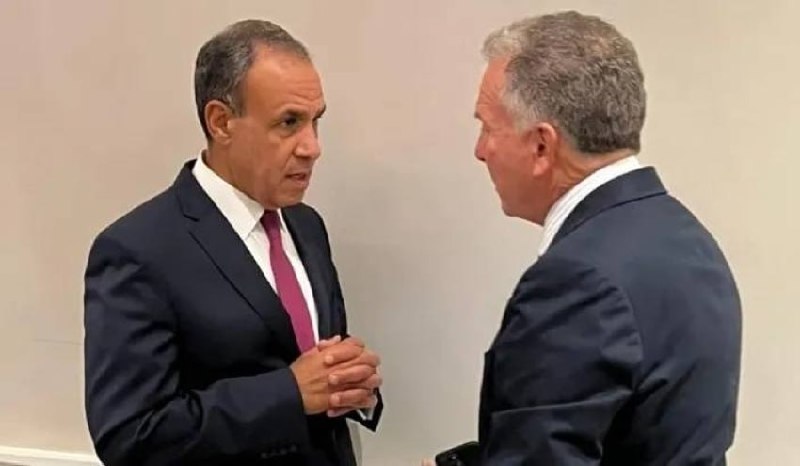
Iran's Islamic Revolutionary Guard Corps announced live-fire military exercises near the Strait of Hormuz on 24 May 2026, according to reports compiled from regional wire services. The drills — the third set in the waterway this year alone — took place amid stalled nuclear negotiations with the United States and amid ongoing disputes over Iran's frozen overseas assets and its regional posture. The announcement immediately pushed energy traders into a familiar posture of watchfulness: the Hormuz passage handles roughly one-fifth of the world's oil and 20 percent of global liquefied natural gas, and any credible disruption signal sends a disproportionate tremor through markets.
The exercises arrive at a moment when several parallel negotiations are running simultaneously, with no single track clear of obstruction. According to an Al Jazeera analysis cited in Iranian state-adjacent reporting, two issues remain the primary obstacles to a broader Iran-US agreement: the question of Iran's blocked foreign assets — funds held abroad that Tehran argues should be unfrozen as part of any sanctions relief framework — and Iran's support for Lebanese armed groups, which Western capitals continue to cite as incompatible with any normalisation arrangement. Neither issue has a near-term resolution path, and the Hormuz drills function, at minimum, as a reminder that Tehran possesses the capacity to make both tracks more expensive to ignore.
The Chokepoint Nobody Can Reroute Around
The Strait of Hormuz is not merely a shipping lane. It is a 33-nautical-mile pinch point between the Arabian Peninsula and the Iranian coast through which vessels must pass to move from the Persian Gulf to the Gulf of Oman and onward to the Indian Ocean. Tankers departing from Saudi Arabia, the UAE, Kuwait, Iraq, and Iran itself have no viable detour: the alternative — transiting around the Arabian Peninsula via the Cape of Good Hope — adds between 10 and 15 days to any voyage and a correspondingly large cost to every barrel moved. Pipeline capacity from Gulf producers to Red Sea or Mediterranean terminals exists but falls far short of total output. The strait is, in engineering and economics terms, nearly impossible to substitute at scale.
Iran has long understood this asymmetry. Previous periods of elevated tension — including in 2019, when Iranian forces shot down a US surveillance drone and the US nearly launched retaliatory strikes, and in 2022, when a tanker was seized in contested circumstances — produced immediate price spikes that reached deep into consumer economies across Asia and Europe. The IRGC's exercise announcement on 24 May was careful enough not to promise closure; the effect on futures markets was nonetheless measurable within hours.
What the Negotiations Actually Have in Them
The Al Jazeera reporting cited by FarsNewsInt describes the remaining sticking points in terms that complicate any simple reading of the talks as either close to breakthrough or on the verge of collapse. The frozen assets issue is not merely financial — it is structural. Billions of dollars in Iranian sovereign assets have been restrained under successive rounds of sanctions, and Tehran has consistently argued that sanctions relief must include meaningful, verifiable asset unfreezing, not just export-authorisation carve-outs. Western negotiators, for their part, have flagged Iran's regional activities — and specifically its relationship with Lebanese armed groups — as red lines that cannot be excused by a nuclear compliance framework alone.
The net effect is that neither side has a clean exit ramp. Iran signals military readiness without crossing the threshold into outright provocation. The United States and its partners maintain maximum-pressure architecture in part because the domestic politics of any Iran accommodation are treacherous in Washington, London, and several European capitals. The drills sit inside that political space, legible as a pressure signal rather than a casus belli.
There is a secondary calculation that the exercises illuminate: China's position. Beijing is Iran's largest trading partner and has a structural interest in Gulf stability, both for energy supply and for the broader Belt and Road infrastructure that threads through the region. Chinese state media has framed previous periods of elevated US-Iran tension as evidence of American overreach; whether that framing produces actual diplomatic mediation or merely editorial solidarity depends on how directly Chinese interests are implicated. The Strait of Hormuz, in the final accounting, matters to Beijing as much as to Tehran.
What Remains Uncertain
The sources reviewed for this article do not specify the exact duration, scale, or assets committed to the 24 May drills, nor do they confirm whether the exercises were pre-scheduled or represented a deliberate escalation in response to a specific negotiating development. Iranian state media framed the exercises as routine; Western analysts have noted that timing choices around military demonstrations in the Gulf rarely lack intention. The gap between those two readings cannot be resolved without access to the internal deliberation of the IRGC command — information the available sources do not provide.
On the substance of the Iran-US talks, the Al Jazeera framing identifies the two headline obstacles but offers limited granularity on the specific proposals each side has tabled. Whether the asset-frozen question involves a specific dollar figure, a release mechanism, or a sequencing dispute — and whether that dispute has narrowed or widened in recent weeks — is not established by the wire material reviewed here.
The Underlying Geometry Hasn't Changed
What the Hormuz drills confirm, yet again, is that the passage's geopolitical significance is结构性 embedded in the architecture of Gulf security and cannot be priced out. Every major actor in the region — Iran, Saudi Arabia, the UAE, the United States, China — has a reason to keep the strait open and a different reason to signal the capacity to close it. That combination produces exactly the kind of ambiguous, calibrated demonstration announced on 24 May. It is not a crisis. It is not a breakthrough. It is the,维持 a pattern that has defined Gulf politics for four decades, and that any deal between Washington and Tehran will have to navigate rather than eliminate.
The risk is that calibrated signals accumulate. Each exercise raises the floor of what is considered normal tension. Each round of sanctions-relief negotiations that fails to deliver adds to the incentive structure for more visible demonstrations. The strait remains open today; the logic that makes it a pressure valve remains very much intact.
Wire provenance
This editorial synthesis draws on the following public wire/social posts:
- https://t.me/Farsna/
- https://t.me/FarsNewsInt/
- https://en.wikipedia.org/wiki/Strait_of_Hormuz
- https://en.wikipedia.org/wiki/Islamic_Revolutionary_Guard_Corps