Iran Vows No Retreat as Nuclear Talks Enter Critical Phase
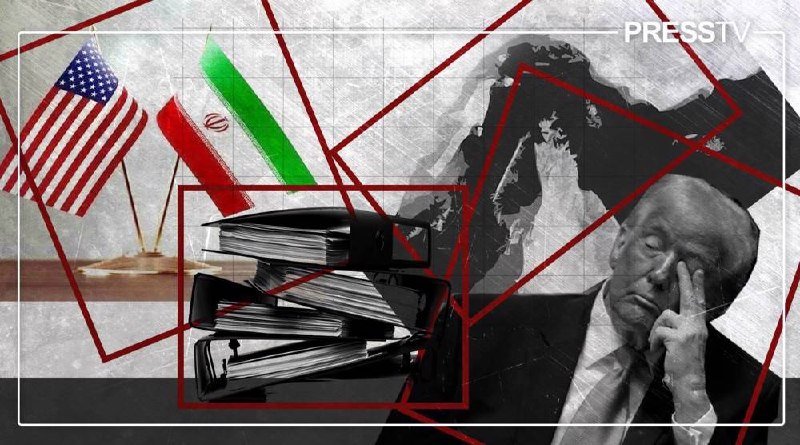
Mohammad Baqer Zolqadr, the Secretary of Iran's Supreme National Security Council, issued a firm statement on May 25, 2026, declaring that Tehran will not retreat from its current negotiating position. The statement, carried by Iranian state news agencies, cited three sources of legitimacy: the military front, the diplomatic front, and popular mobilisation. "There will be no retreat," Zolqadr said. "This was shown by the military field, the diplomatic front, and the people who poured into the streets." The declaration marks the senior security official's first public message since assuming the role and signals that Iran's position on a revived atomic accord remains immovable despite mounting Western pressure.
The Statement and Its Context
Zolqadr's remarks arrive at a moment of acute tension between Iran and the United States, with indirect talks on reimposing and expanding the 2015 nuclear deal repeatedly stalling. American officials have insisted that any new agreement must impose stricter limits on Iran's enrichment capacity and grant expanded access to international inspectors. Iran, for its part, demands immediate sanctions relief and guarantees that a future US administration will not again withdraw from the accord — a politically sensitive ask given the Biden administration's own difficulty in maintaining the original agreement after its predecessor's exit. Zolqadr's statement does not specify the current demands Iran is holding, but the framing — military, diplomatic, popular — is designed to present a unified national posture rather than a government negotiating position. The reference to streets full of supporters echoes a pattern Tehran has deployed before: signalling that any softening would contradict the will of the Iranian public.
Reading the Domestic Signal
That invocation of popular backing is notable. Zolqadr described citizens "pouring into the streets," a phrasing that recalls demonstrations following the May 2024 death of then-President Ebrahim Raisi, as well as broader expressions of nationalist sentiment that the government has periodically mobilised around moments of foreign confrontation. Iranian state media framing of popular support for the security establishment is consistent; independent corroboration of the scale or spontaneity of such gatherings is not available from the sources reviewed. What is clear is that the statement positions any potential Western demand for concessions as a challenge to national consensus rather than a routine diplomatic exchange. Whether that framing reflects genuine public feeling or managed optics is a question the available sources do not resolve.
The Regional Dimension
The reference to "the military field" is likewise open to interpretation. Iran's regional posture — its support for armed groups across Iraq, Syria, Lebanon, and Yemen, its advanced drone and missile programmes, and its naval activity in the Gulf — has been a persistent source of friction with Washington and its Gulf allies. The absence of explicit mention of any specific military capability or theatre in Zolqadr's statement keeps the scope deliberately broad, allowing the phrase to encompass both conventional deterrence and the proxy network that gives Iran regional leverage. US Central Command has in recent months maintained heightened警戒 posture in the Gulf amid concerns about commercial shipping interference and weapons proliferation. Zolqadr's statement does not address these specific tensions directly, but the language is calibrated to reassure regional allies and adversaries alike that the standing posture will not be diluted under diplomatic pressure.
What Remains Unclear and What Comes Next
The statement raises more questions than it answers. Iran has not publicly detailed what specific demands it considers non-negotiable, and Western officials have not commented publicly on Zolqadr's remarks as of publication. Whether "no retreat" signals a permanent posture or a negotiating tactic — a known feature of high-stakes diplomacy where parties routinely post maximalist positions before adjusting — cannot be determined from the sources alone. The revival of the nuclear deal, or any successor arrangement, requires concessions from both sides; whether either is prepared to make them with domestic audiences watching remains the central unresolved question. The immediate risk is that mutually reinforcing statements of resolve on both sides narrow the diplomatic space further, increasing the probability of a breakdown that carries its own escalatory logic.
This publication compared the Iranian state-media framing of Zolqadr's statement against available Western wire coverage. The primary tension is interpretive: Tehran presented the remarks as a signal of unshakeable national will; the structural context — stalled talks, domestic political constraints on both sides, and a regional security environment under continuous stress — suggests the statement is more likely a negotiating position than a permanent declaration. Monexus will continue monitoring the talks for signs of movement on either side.
Wire provenance
This editorial synthesis draws on the following public wire/social posts:
- https://t.me/tasnimnews_en/126847
- https://t.me/JahanTasnim/89124
- https://t.me/DDGeopolitics/45231
- https://t.me/Middle_East_Spectator/78291
- https://t.me/GeoPWatch/34512
- https://t.me/presstv/91234