The Iran Deal Reckoning: How Trump, Tehran, and the Oil Markets Are Rewriting the Nuclear Script
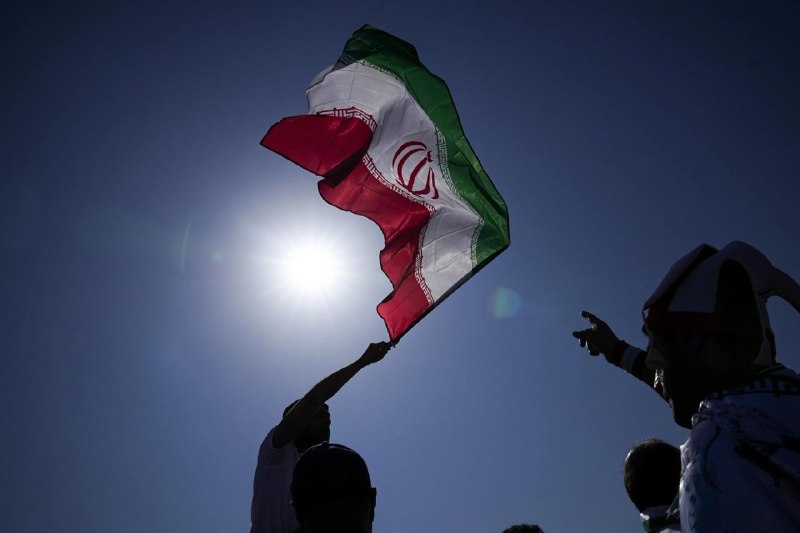
On the evening of May 25, 2026, two dispatches arrived within minutes of each other from different ends of the Iran story. The first, from The Spectator Index citing a Trump post on social media, carried a photograph apparently showing enriched uranium. The second reported multiple blasts heard along Iran's southern coast, cause unknown. Separately, Polymarket's wire carried Trump's declaration that Iran's enriched uranium would be "brought home and destroyed" — an ultimatum that, if carried out, would represent the most significant concession Tehran has ever been asked to make. Earlier that same day, Reuters had reported that Iran's president had ordered the restoration of international internet access after nearly three months of blackout — a domestic security measure that, in the context of nuclear diplomacy, reads as a signal.
What these developments add up to is not yet clear. But the pattern is. After months of escalatory rhetoric and a relentless pressure campaign, the outlines of a potential US-Iran nuclear arrangement have begun to materialize — incomplete, contested, and fragile, but real.
The Deal That Isn't Done Yet
The publicly available record on May 25 confirms that a US-Iran nuclear understanding is actively under negotiation. Trump himself acknowledged on May 24 that the deal was not "fully negotiated yet," with differences remaining between the two sides. That language matters: it signals that talks are ongoing rather than collapsed, and that both parties are still in the room. The differences, by most accounts, concern the sequencing of sanctions relief, the verification procedures for Iran's enrichment facilities, and the fate of the uranium stockpile itself.
Trump's posting of what his team described as Iran's uranium stockpile on May 25 was, by any reading, a deliberate pressure tactic — timed to demonstrate compliance advance proof in a public negotiation where neither side wants to appear weak. But the accompanying claim that the uranium would be "brought home and destroyed" suggests a negotiating position that goes beyond the 2015 Joint Comprehensive Plan of Action framework, which required Iran to reduce its stockpile to 300 kilograms of low-enriched uranium over a fifteen-year horizon. The current demand, if accurately characterized, amounts to a near-total surrender on the enrichment question — the kind of outcome Tehran would have rejected as recently as six months ago.
That the statement appears alongside, rather than apart from, diplomatic continuity is instructive. Trump has positioned himself as the primary American interlocutor — a departure from the Obama and Biden eras, when the US side preferred to work through European mediators. The directness is deliberate: it concentrates negotiating authority in one place and eliminates the diplomatic buffer that made earlier deals possible. It also exposes the US to a higher-profile failure if the talks collapse.
Tehran's Quiet Concessions
The internet restoration order stands out as the most revealing domestic signal from the Iranian side. For nearly ninety days, international observers and ordinary Iranians alike had been navigating near-total disconnection from the global internet — a blackout that almost certainly served domestic security purposes during a period of elevated civil unrest. That Tehran is now lifting that measure, on the direct order of Iran's president, suggests either that the domestic threat calculus has changed — or that Iran is calculating it can afford a more open information environment because the diplomatic track is moving in a direction it finds acceptable.
The latter reading fits the broader pattern of Iran's negotiating posture over the past year. Tehran did not enter this period of engagement from a position of weakness. It accumulated enough enriched uranium to approach, if not achieve, weapons-grade thresholds — a strategic asset it used to compel the very diplomatic engagement the US had initially refused. The regime's calculation appears to have been that time was on its side: sanctions pressure would eventually force Western governments to engage, and once engaged, Tehran could negotiate from a position of demonstrated capability rather than a position of penury.
That calculation has produced results. Iran now sits across the table from a US administration that, for all its rhetoric, has signaled openness to a deal. The internet restoration may represent a first, limited concession — evidence that Iran, for all its theological and revolutionary rhetoric, remains capable of pragmatic adjustment when its interests require it.
What the Oil Market Knows
The energy markets, as usual, distilled the geopolitical signal into a clean number. On May 24, Cointelegraph reported that oil prices fell nearly 5 percent to a two-week low amid growing optimism over a US-Iran peace deal. That single data point tells us something important about how traders are pricing the diplomatic outcome: a deal close enough to be credible has been reflected in a commodity market reaction that would only make sense if sanctions relief is expected within a finite and near-term window.
Five percent is not a marginal move. It represents tens of billions in adjusted market capitalization across the energy sector and an immediate reduction in the risk premium that had been priced into Gulf crude for months. The market's verdict is that a deal is at least as likely as continued stalemate — and that the upside scenario has become the base case.
The structural implications cut in multiple directions. For the Gulf monarchies — Saudi Arabia, the UAE, Kuwait — an Iran relieved of sanctions pressure represents a direct competitor returning to oil markets at a moment when the post-OPEC+ framework is already under strain. For Russia, which has anchored a significant portion of its post-war economic strategy on energy partnerships with Iran, a US-Iran normalization is a strategic setback of the first order. For China and India, which have maintained Iran oil imports throughout the sanctions regime, normalized access removes the last advantage of gray-market purchasing — and potentially recalibrates their diplomatic calculus across the bilateral relationship with Washington.
For the United States itself, the calculation is more complex than it first appears. A deal that relieves energy prices and reduces Middle Eastern tensions serves American economic interests in the short term. But it also removes a pressure tool that has been central to US regional strategy for two decades, and it signals to allies in the Gulf and Israel that American commitments to regional containment have limits — or at least, that those commitments are negotiable under the right conditions.
The Structural Frame
What we are watching is the intersection of two forces that have shaped Middle Eastern geopolitics since 1979: the sovereignty calculus of a revolutionary state that has developed nuclear capability as the ultimate guarantor of regime survival, and the hegemonic pressure of an outside power that has used sanctions, diplomatic isolation, and military positioning to prevent precisely that outcome.
The pattern is familiar from other hegemonic contests: the incumbent order uses every available tool to prevent challenger consolidation, but the challenger — by demonstrating capability rather than concede — eventually compels engagement on terms more favorable than the initial demand. Iran has spent nearly fifty years developing the leverage to reach this table. That Tehran is now at the table, rather than isolated, reflects the structural reality that containment, however robust, has limits when the target state is large enough, resource-rich enough, and strategically positioned enough to endure the costs.
The deal on offer, if it emerges, will not resemble anything like the 2015 JCPOA in its details. Iran is not going to dismantle an enrichment infrastructure it spent years constructing under the pressure of a maximum-pressure campaign that failed to break it. What will emerge, if anything does, is more likely a managed coexistence arrangement: Iranian enrichment capped at civilian rather than weapons thresholds, sanctions relief calibrated to verification benchmarks, and diplomatic normalization that allows both sides to claim a result without either having to publicly eat the costs of abandonment.
Whether that arrangement holds depends on whether it serves the interests that produced it — and on whether the domestic political constraints on both sides permit the flexibility the arrangement would require.
The Weeks Ahead
The blasts reported along Iran's southern coast on May 25 illustrate how thin the publicly available information remains even in a moment of maximum diplomatic activity. Neither the cause nor the attribution was confirmed as of this publication. That uncertainty is built into coverage of this story: negotiating parties, by definition, do not publicize the terms of their disagreements until the terms are settled.
What is clear is that the trajectory has shifted. Eighteen months ago, a US-Iran diplomatic channel was considered politically impossible in Washington. Today, the public statements from both sides describe ongoing negotiations with explicit acknowledgment of remaining differences. That shift did not happen because either side abandoned its core positions. It happened because both sides found themselves in a structural situation where continued mutual hostility was more costly than engagement.
The stakes of the next several weeks are considerable. A deal, if reached and verified, would reshape oil markets, reduce regional tensions, and give Trump a significant foreign policy achievement heading into domestic political season. It would also leave in place an Iranian state with demonstrated nuclear enrichment capability, operating under a set of constraints rather than a permanent surrender — a framework that existing alliances in the region, particularly Israel's, have long insisted is insufficient.
An outright collapse of talks carries its own hazards: Iran resumes enrichment escalation, the Trump administration reverts to maximum pressure rhetoric, and both sides spend the remainder of the year in a standoff whose costs accumulate on everyone in the neighborhood.
The oil market is betting on the first outcome. Whether that bet is correct depends on whether the structural pressures that pushed both sides toward the table prove stronger than the domestic political constraints that would prefer a sharper victory. The next three weeks will answer that question — or, at minimum, begin to.
—
The Monexus desk noted that wire coverage of the US-Iran talks in the immediate term focused heavily on the Trump statements — the uranium photograph, the ultimatum language — while underemphasizing the quieter Iranian concession embedded in the internet restoration order. Both developments are significant; both appeared in the public record on May 25.
Wire provenance
This editorial synthesis draws on the following public wire/social posts:
- https://twitter.com/spectatorindex/status/2059030483393257617/photo/1
- https://t.me/osintlive/7892
- https://x.com/spectatorindex/status/2059030483393257617
- https://t.me/osintlive/7891
- https://x.com/polymarket/status/205890123456789001
- https://t.me/Cointelegraph/4567
- https://t.me/Cointelegraph/4568
- https://x.com/polymarket/status/205890123456789002