Iran Offers Nuclear Concessions as Strait of Hormuz Becomes the Central Bargaining Chip
A senior Iranian diplomat said on 25 May 2026 that if the United States fulfills its commitments under the proposed memorandum of understanding, the nuclear question and Iran's stockpiles of highly enriched uranium can be resolved — a concession that came as negotiators entered what both sides described as a 60-day intensive phase of talks.
The statement, published via Iranian state-linked news agencies including Fars and Tasnim, represented the most explicit public linkage Tehran had yet drawn between sanctions relief and its nuclear programme. Iranian spokesperson Kazem Ghoreishi — whose formal title as spokesperson for the Iranian diplomatic agency carries authority as the official voice of the negotiating team — also confirmed that Hormuz traffic management was the primary bilateral issue at stake. The talks, per Iranian accounts, aim to produce a framework document by the end of the two-month window.
The 60-Day Framework
Iranian officials spelled out the sequencing clearly. Negotiator Baqaei told reporters that the 60-day period was intended to cover "some details of the memorandum of understanding and some other issues" — language that frames the window as a scoping exercise rather than a final agreement. At this stage, Baqaei said explicitly, "we are not talking about the nuclear details." That is a deliberate signal: the nuclear programme and stockpile, the substance that determines whether any deal holds, has been pushed to a later phase of negotiation.
The senior diplomat's statement on 25 May carried a different function — it was an articulation of the exit condition, not the opening position. Iranian media cited the diplomat saying that if Washington meets its obligations under the proposed memorandum, then "the nuclear issue and Iran's stockpiles of highly enriched uranium" can be resolved. That conditional framing matters: Tehran is telling Washington that the concessions it wants are conditional on American performance, not gifts in exchange for a signature on a document.
Iran's Position on Hormuz
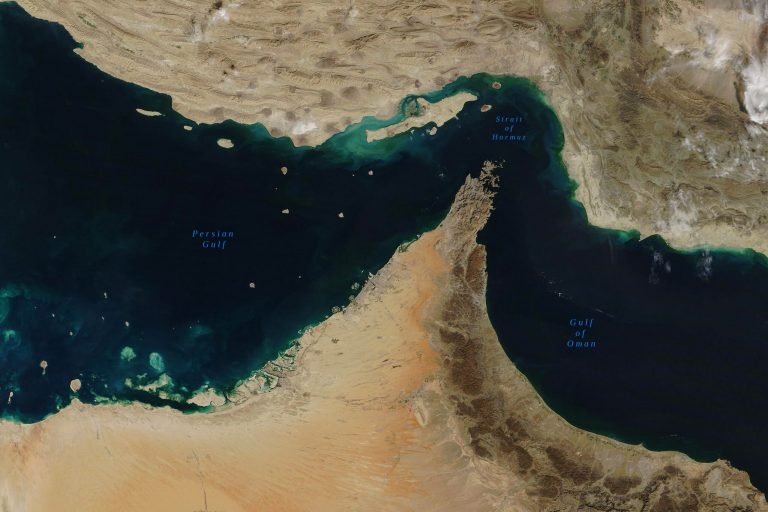
The Hormuz dimension of the talks surfaced as the sharpest point of friction. Iranian officials have framed management of the Strait — through which roughly a fifth of global oil shipments pass — as a matter for Iran and Oman alone. Baqaei, responding to a question from Fars reporters, stated plainly that the Strait of Hormuz "is Iranian and Omani and has nothing to do with America." The spokesperson for the diplomatic agency was more specific when asked about traffic management: "Our priority is to create mechanisms to manage traffic in the Strait of Hormuz and this is the main issue," Ghoreishi said. "It is an important discussion."
The question of tolls — an issue that had surfaced in Western reporting — drew a direct denial from the Iranian side. "We do not collect tolls in the Strait of Hormuz and we do not seek to collect tolls," the spokesperson told an American journalist, according to the Fars transcript. That denial carries operational weight: the strait's geography means any credible threat to restrict traffic would move markets, and Iranian officials know it. The denial is not a concession so much as a positioning statement — Tehran asserting that Hormuz is sovereign territory under a bilateral arrangement, not a domain where Washington has standing to negotiate.
The framing of "normalization" — plans attributed to Western diplomats for a post-deal regional architecture — drew a sharper rebuke. Iranian officials described such proposals as "the imposition of an abnormal entity on the region," language that positions any attempt to institutionalise American influence in Gulf security as fundamentally illegitimate. The sources do not specify what specific normalisation plan prompted that response, but the resistance to it is explicit.
The Structural Frame
What this negotiation is not is a simple bargain between two governments. The Hormuz question is a proxy for a deeper disagreement about who has jurisdiction over the Gulf's kinetic infrastructure. Iran operates from a legal and geopolitical position that the strait is managed by the states whose coastlines it borders. The United States operates from the position that free passage through a global chokepoint is a matter of international security in which it has a legitimate interest, regardless of geography.
That gap is not semantic. An agreement in which Iran accepts international monitoring of Hormuz traffic would represent a meaningful shift from its current position — and the sources do not indicate any such shift is on the table. The more likely near-term outcome is a framework that papers over the disagreement while leaving the structural tension intact. A 60-day window produces a document with the word "memorandum" in it; the harder questions — what exactly Iran enriches, how much, under what inspection regime — remain the subject of a negotiation that has not yet concluded.
Stakes and Forward View
The stakes are immediate in the energy market and structural in the wider geopolitics. A closure or restriction of the Strait of Hormuz would drive oil prices sharply higher; the economic exposure for Asian importers — China in particular — and for American consumers is real and understood by both negotiating parties. Iran is aware it holds a geographically significant card. Washington is aware that allowing Iran to retain enriched material while sanctions are eased is a risk that cannot be fully mitigated through verification alone.
The 60-day window is not a deadline in the conventional sense — it is a frame that both sides have agreed to operate within, which allows each to claim progress domestically while the harder questions remain open. What the sources from this week confirm is that the Hormuz question is not peripheral to the nuclear talks; it is central to the structure of whatever agreement eventually emerges. Iranian officials have made that explicit. Whether Washington is willing to accept a deal in which Hormuz is treated as an Iranian-Omani matter — not an American one — remains the defining question of this negotiating track.
Western wire coverage focused on the nuclear concession as the headline; the sources indicate the Hormuz dispute is what will determine whether the memorandum produces a deal or a document.
Wire provenance
This editorial synthesis draws on the following public wire/social posts:
- https://t.me/FarsNewsInt/11445
- https://t.me/FarsNewsInt/11442
- https://t.me/FarsNewsInt/11449
- https://t.me/JahanTasnim/11670
- https://t.me/wfwitness/22184
- https://t.me/FarsNewsInt/11451