Iran nuclear talks: progress on substance, silence on signing date
Tehran confirms significant headway on the technical text of a potential nuclear understanding with Washington, but its foreign ministry on 25 May 2026 firmly rejected characterisations that a deal is close — pointing to the absence of any guarantee on American compliance.
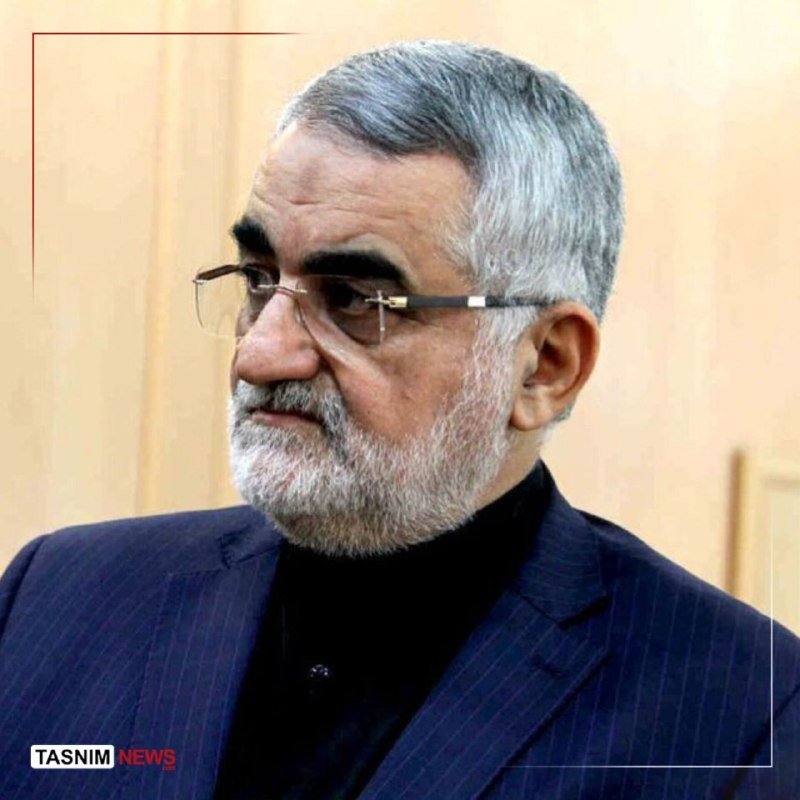
Iran's Foreign Ministry has confirmed significant technical progress in talks with the United States over Tehran's nuclear programme, but explicitly rejected any suggestion that a formal agreement is imminent. Speaking in Tehran on 25 May 2026, spokesperson Esma'il Baqaei said discussions over recent weeks had covered substantial ground, yet the question of whether Washington would honour any eventual commitments remained unresolved. The statement amounts to a calibrated pushback against optimistic readouts circulating in American and regional media — and a signal that Iran intends to control the pace of any narrative before it is asked to accept binding obligations.
The core tension in these negotiations is not primarily technical. Both sides appear to have moved considerably closer on the substance of a potential nuclear understanding — limitations on enrichment activity, monitoring arrangements, and the scope of any sanctions relief. The harder problem is enforceability: a country that spent years building a nuclear programme under the weight of international isolation will not accept an agreement that can be shredded by the next administration or the next tweet. Baqaei's reference to American political "vacillation" is a direct acknowledgment that Iran is pricing in the instability of its counterpart, not merely negotiating the content of a deal.
What Tehran actually said
The Iranian position, as presented by Baqaei on 25 May 2026, contains several distinct layers. First, the foreign ministry acknowledged that negotiations had advanced on a broad range of topics and that a large portion of the discussion text had been agreed in substance. Second, and crucially, Baqaei drew a firm line between progress on the technical text and the near-term prospect of signing. "To say that this means the signing of an agreement is imminent," Baqaei stated, "is not correct." Third, Baqaei made clear that the Iranian team would not treat the cessation of hostilities across all regional fronts as a secondary or separate matter: it is embedded in the text of the understanding itself. This is not a sequencing debate — whether sanctions relief or nuclear steps come first — but a structural one about whether the entire framework collapses if the regional conflict continues.
What the sources do not specify is how precisely the ceasefire language is formulated, whether it constitutes a binding commitment from all parties to the Gaza and Lebanon conflicts, or whether it is a negotiating position Iran is using to extract concessions before the nuclear text is finalised. The ambiguity matters. A ceasefire provision in a US-Iran bilateral document does not, by itself, bind Israel, Hamas, or Hezbollah — a point Tehran is almost certainly aware of, which raises the question of what enforcement mechanism Iran envisions.
The American compliance problem
Baqaei's sharpest statement addressed the credibility of American commitments directly. "There is no guarantee for the adherence of the other side," the spokesperson said, according to the Tasnim summary of the briefing. The phrasing is deliberate: Iran is not merely demanding stronger verification clauses inside a potential agreement, it is making the absence of such guarantees a stated reason for declining to endorse optimistic characterisations from Washington.
This is a structurally rational position for a government that watched the Joint Comprehensive Plan of Action unravel after the United States withdrew in 2018 under the Trump administration's first term. The economic damage from the subsequent maximum-pressure campaign was severe and lasting. The Islamic Republic's nuclear programme, which was capped at roughly 3.67 percent enrichment under the JCPOA, advanced to weapons-grade levels of around 84 percent during the period of maximum pressure — a trajectory that did not reverse when sanctions were partially eased. Iran is negotiating from a position of demonstrated capacity, not theoretical concern, and that capacity gives it leverage it did not possess during the original JCPOA talks.
The reference to American political vacillation is a further signal that Iran is watching domestic American dynamics — polling, congressional pressure, the administration's need for a headline foreign policy achievement — and pricing those factors into its own negotiating posture. The sources do not indicate whether Iranian officials believe a second Trump administration is more or less reliable than its predecessor; they indicate only that the question of reliability is at the forefront of Tehran's calculus.
What a framework would — and would not — settle
A comprehensive US-Iran nuclear understanding would represent the most significant diplomatic reversal in the Gulf since the 2015 agreement. It would not, however, resolve the underlying structural tensions that produced the confrontation in the first place. Those tensions include competing influence across Iraq, Syria, and Yemen; the,长期伊朗Israeli strategic rivalry; and the broader question of whether American regional dominance can accommodate a self-confident Iranian state that controls a significant portion of the world's hydrocarbon reserves.
The sources indicate that Trump's stated preference is for a single, comprehensive agreement — not a series of incremental steps. That preference creates internal pressure inside the administration to demonstrate visible progress before domestic political deadlines, a dynamic that Iranian negotiators will factor into their own timelines. Whether that compression serves the goal of a durable agreement, or increases the risk of a framework that collapses under its own contradictions, is not answerable from the current material. The sources are silent on what role European parties, the International Atomic Energy Agency, or the broader P5+1 group are playing in the current process, compared with their central mediating role in the 2015 talks.
The regional dimension adds further complexity. A permanent ceasefire across all fronts — Gaza, Lebanon, Yemen — would require commitments from actors who are not party to the bilateral nuclear dialogue. Iran's allies in the region have their own political calendars, their own constituencies, and their own assessments of what a deal means for their own strategic position. The sources do not indicate whether those actors have been consulted, or whether the ceasefire language in the text amounts to an Iranian commitment on behalf of its partners without their explicit buy-in.
The path ahead and the distance still to travel
The talks will continue. Both sides have incentives to keep the channel open: the administration needs a foreign policy accomplishment, and Iran needs sustained sanctions relief to address an economy that has not fully recovered from the post-JCPOA reimposition of restrictions. But the distance between a text agreed in substance and a document that both sides are willing to sign is considerable — particularly when the question of American reliability is treated by one party as a first-order problem rather than a secondary concern.
What is clear from Baqaei's statements on 25 May 2026 is that Iran is not going to be rushed into an agreement on someone else's timeline. The negotiations are described as the product of several weeks of sustained diplomatic contact, and the assessment that significant progress has been made is genuine — not a talking point designed to manage expectations. But a negotiated settlement of the kind being contemplated here, one that encompasses both nuclear constraints and a regional ceasefire, requires a level of mutual confidence that neither side has yet demonstrated it possesses. The talks represent a genuine opening. Whether they produce a durable agreement or a more sophisticated form of managed confrontation will depend on whether American political volatility and Iranian security concerns can be bridged by text alone — a question that remains open.
This publication's wire coverage of the Iran talks has been sourced primarily from Iranian diplomatic and state-linked channels, which carry their own framing imperatives. Readers will note the contrast with the more optimistic readouts circulating in American media; Monexus has reported both positions and notes that the gap between them reflects a substantive disagreement about what compliance guarantees would actually mean in practice.
Wire provenance
This editorial synthesis draws on the following public wire/social posts:
- https://t.me/ClashReport/12438
- https://t.me/JahanTasnim/15847
- https://t.me/JahanTasnim/15846
- https://t.me/JahanTasnim/15845
- https://t.me/tasnimnews_en/22919