Israeli Security Cabinet Convenes on Beirut Strikes After Hezbollah Drone Incursions
Israeli military leadership pushed for targeted strikes on buildings in Beirut during an emergency security cabinet meeting convened on 25 May 2026, according to multiple reports from Israeli and regional sources, as cross-border drone activity between Hezbollah and Israel continues to escalate.
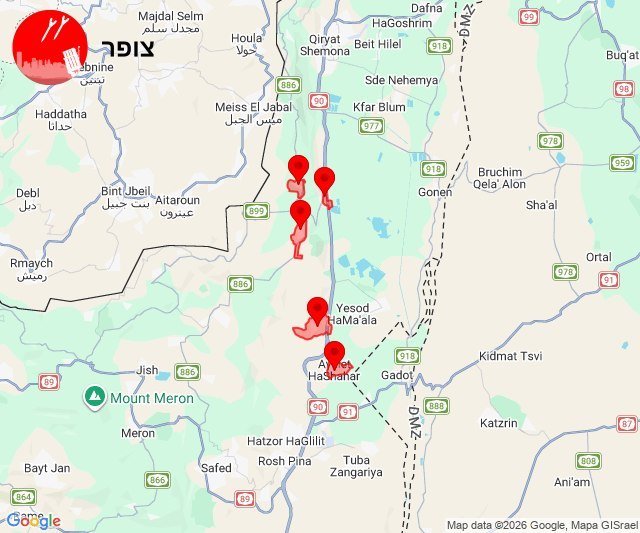
Israeli military leadership pushed for targeted strikes on buildings in Beirut during an emergency security cabinet meeting convened on 25 May 2026, according to multiple reports from Israeli and regional sources. Chief of Staff Zamir requested the security discussion in response to drone activity attributed to Hezbollah originating from Lebanese territory, according to the Telegram channel englishabuali, which cited cabinet proceedings.
The meeting, described as a limited cabinet session by the Telegram channel amitsegal, marked the second consecutive day of senior-level deliberation on Lebanon-related security options. A separate report from the Telegram channel ClashReport noted that Chief of Staff Zamir articulated the case for striking specific buildings in Beirut during the session. Israeli officials present at the meeting were reported to have noted that Israel does not yet possess full independence of action regarding Lebanon, according to the ClashReport account of the proceedings.
Immediate Context: Drone Incursions and Escalation Logic
The cabinet session follows a period of sustained cross-border drone activity between Israel and Hezbollah, the Iran-aligned Lebanese political and military faction. Neither the Israeli Defense Forces nor the Prime Minister's Office has publicly confirmed the specific drone incidents that prompted the security discussion, and the cabinet's deliberations remain classified. The Telegram sources, which carry varying degrees of editorial independence from Israeli official positions, provide the only available accounts of the closed-door proceedings.
Hezbollah has previously justified its drone operations as responses to Israeli overflights and strikes on Lebanese soil. The group maintains a significant arsenal of unmanned aerial systems, some capable of precision strikes, and has demonstrated willingness to deploy them in response to what it characterizes as Israeli provocations. For Israel, incursions into its airspace by hostile drones represent a direct challenge to its air defense architecture and sovereign territory.
The framing of the incident as requiring an immediate cabinet-level response reflects the heightened sensitivity in Jerusalem to any perception of diminished deterrence along the northern border. Successive Israeli governments have maintained that Lebanon bears responsibility for militant activity emanating from its territory, a position that carries legal and diplomatic weight under international law frameworks governing state responsibility for non-state actors.
The Cabinet's Contested Authority
The report that Israel does not yet possess full independence of action regarding Lebanon is significant. It suggests that either domestic political constraints, legal review of proposed targets, or broader strategic calculations are limiting the military's freedom to act without explicit cabinet sanction. Israeli security operations against Lebanese targets, particularly in civilian-populated areas of Beirut, carry substantial political and legal risk.
Hezbollah's status as a designated terrorist organization by the United States, the United Kingdom, Germany, and other states does not automatically resolve the legal questions surrounding strikes that could produce civilian casualties or damage non-military infrastructure. International humanitarian law requires distinction between military and civilian objects and proportionality in any response. Israeli legal advisors have historically insisted on these constraints; the reported cabinet deliberation may reflect genuine disagreement over whether proposed targets satisfy those requirements.
The Telegram accounts do not specify which buildings were proposed as targets, what intelligence underpins the choice of those locations, or what estimated civilian harm the proposed strikes might produce. That information remains unknown.
Regional Dimensions and Iranian Geometry
Any Israeli strike on Beirut carries implications well beyond Lebanon. Hezbollah's deterrent capacity is calibrated against Israeli aggression, and its leadership has repeatedly stated that any significant strike on Lebanese territory would trigger a broader response. The group's rocket and missile arsenal, estimated in the tens of thousands, poses a threat that Israeli air defenses can partially but not fully neutralize.
Iran, which arms, funds, and advises Hezbollah, watches Israeli military movements with close attention. Iranian state media framing of Israeli actions in Lebanon has historically emphasized themes of sovereignty violation and Western-backed aggression. The structural logic of Tehran's regional posture suggests it would view Israeli strikes on Beirut as an opportunity to deepen Hezbollah's political standing in Lebanon and to demonstrate continued commitment to the resistance axis.
For the United States, which maintains a complex relationship with both Israel and Lebanon, any escalation complicates diplomatic priorities in the region. Washington has sought to prevent a second front in a conflict already shaped by the Russia-Ukraine war and tensions over Iran. American officials have privately urged Israeli restraint on northern border operations, according to sources familiar with the matter, though the specifics of those communications are not publicly confirmed.
Stakes and Forward View
The immediate risk is that a strike on Beirut, if carried out, triggers the kind of exchange both sides have sought to avoid. Hezbollah's leadership, facing domestic economic pressure in Lebanon, may calculate that a military response to Israeli strikes serves political purposes at home. Israel's leadership, meanwhile, must weigh the domestic political cost of perceived weakness against the operational risk of escalation.
What is known: Chief of Staff Zamir made the case for strikes. What remains unclear: whether the cabinet authorized any action, what targets were discussed, and what intelligence assessments informed the request. The Telegram sources that provide the only window into the meeting are not official Israeli communications, and their accounts may be incomplete, partial, or inaccurate.
The broader pattern — drone incursions generating escalation pressure, closed-door deliberations in which military leadership advocates kinetic response, and regional actors calculating costs — is familiar from multiple previous cycles of Israel-Hezbollah tension. What differs is the current moment: a Lebanese state that is functionally bankrupt, a Syrian arena that remains volatile, and an Iran whose nuclear program continues to advance despite diplomatic engagement.
Whether the cabinet meeting produces action or restraint will be shaped by intelligence assessments of what Hezbollah might do in response, legal opinions on target selection, and political calculations in Jerusalem. None of those inputs are visible from outside.
Desk note: This publication drew on Telegram-sourced accounts of a closed Israeli cabinet session. No Israeli government spokesperson confirmed the contents of the meeting as of publication. The asymmetry between what is reported and what is confirmed is characteristic of early reporting on sensitive security deliberations; we have noted where sourcing is partial rather than fabricate a fuller picture than the evidence supports.
Wire provenance
This editorial synthesis draws on the following public wire/social posts:
- https://t.me/englishabuali
- https://t.me/ClashReport
- https://t.me/amitsegal
- https://en.wikipedia.org/wiki/Hezbollah