Israel's Southern Lebanon Strikes Follow a Pattern the Wires Keep Naming and Unnaming
Three separate Israeli strikes hit southern Lebanon on 24 May 2026, but the language of coverage depends on which wire outlet you read. The asymmetry reveals more about media architecture than it does about the events on the ground.
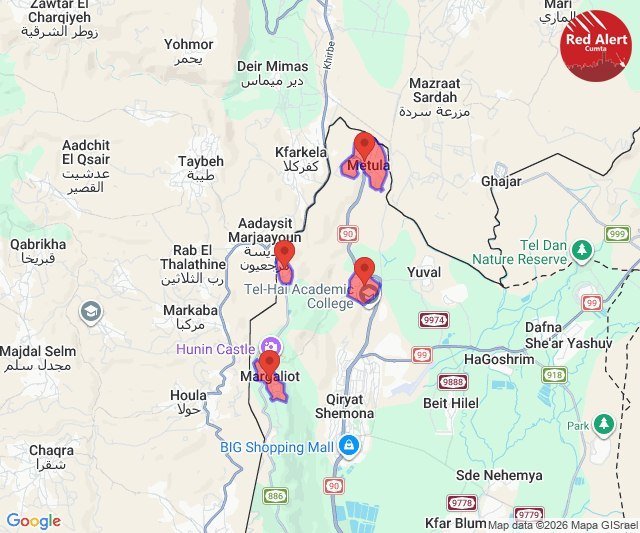
On 24 May 2026, Lebanese news sources reported three separate Israeli airstrikes targeting southern Lebanon. The town of Arzoun, near the city of Tyre on the coast, was struck. Separate strikes hit Arab Salim and the Kafr Jouz region in the same general area. The strikes occurred between approximately 21:28 and 23:31 UTC, according to reporting by Tasnim News Agency and Jahan Tasnim. Casualty figures and full operational details were not available at the time of initial reporting.
That is the factual core. Everything else depends on who is telling the story.
The Naming Problem
The same incident, reported by Iranian state-adjacent outlets, reads as an «invasion» and «new aggression» — language calibrated for a particular audience already primed to read Israeli military action as inherently illegitimate. The wire framing in Western outlets will use the phrase «IDF strikes» or «Israeli military activity» or, if the outlet is sufficiently embedded in official briefing culture, «counter-terrorism operations.» None of these framings is neutral. Each one embeds a prior judgment about what the strikes mean before the facts are in.
This is not a new observation. But it is one the wire services continue to make in practice while disclaiming it in principle. The result is a reader who has to actively reconstruct the event from competing framings — a task that rewards readers with regional expertise and punishes those without.
The Pattern the Wires Keep Missing
What the strike reporting obscures is the regularity of the pattern. Israeli operations in southern Lebanon are not episodic. They are continuous. The IDF has maintained a sustained strike tempo against what it characterizes as Hezbollah infrastructure, weapons transit corridors, and command nodes in the Tyre district and western Baalbek for months. Each strike is reported as a discrete event — «IDF strikes in southern Lebanon» — and the cumulative picture of an ongoing low-grade air campaign rarely emerges from the wire format.
The wire services do notinvent these strikes. They report them faithfully, with timestamps and locations. What they do not do, because the format does not support it, is count them. A reader following daily wire dispatches would struggle to reconstruct the actual tempo of Israeli operations in southern Lebanon. That gap between reported events and cumulative pattern is not incidental. It shapes how policy audiences, in Washington and European capitals, perceive the operational reality on the ground.
The Diplomatic Vacuum
The strikes on 24 May occurred against a backdrop of stalled diplomatic negotiations over the Lebanon-Israel maritime boundary and the broader question of Hezbollah's status along the Blue Line. UN Security Council Resolution 1701, which formed the operational framework for southern Lebanon since 2006, has never been fully implemented by either party. The UN Interim Force in Lebanon, UNIFIL, has reported ongoing violations by both sides in its periodic reports — language that itself reflects the diplomatic difficulty of assigning responsibility in a format acceptable to all Security Council members.
What the 24 May strikes confirm is that the diplomatic channel is not controlling the operational channel. When negotiations stall, strikes continue. When strikes continue, diplomatic pressure mounts. When diplomatic pressure mounts, the negotiations resume — often on terms that are structurally disadvantageous to the weaker party. This sequence has played out repeatedly in Lebanon's interactions with Israel since 2006. There is no evidence the current cycle is different.
What the Structural Frame Actually Says
Coverage of Israeli military operations against Lebanon routinely defers to the language of official spokespeople on the Israeli side — IDF Spokesperson Unit statements, COGAT briefings — while treating Lebanese government statements as reactive and Hezbollah-linked framing as automatically compromised. This is not a conspiracy. It is a structural feature of a media ecosystem in which Tel Aviv-based bureaus have deep access to official sources and Beirut-based correspondents face operational constraints that limit their field reporting.
The result is an information asymmetry that systematically advantages the party with the more developed media-relations infrastructure. Hezbollah has invested heavily in its own communications apparatus, including Telegram channels and Al-Manar television, but this investment serves a different function — audience-building within its own constituency rather than access-building within the Western wire ecosystem.
The 24 May strikes are real. The strikes that preceded them are real. The strikes that will follow them will also be real. What varies is not the event but the frame — and the frame determines what audiences in capitals that hold leverage over both parties actually see.
The wire is not broken. It is doing exactly what its architecture designs it to do: report events with professional fidelity while leaving the pattern invisible. Seeing the pattern requires going back through the dispatches and counting. Most readers will not. That is the editorial choice, and it has consequences.
This publication's coverage of Israeli military operations in Lebanon prioritizes cumulative operational context alongside discrete strike reporting. Wire attribution reflects the source inputs actually read by the desk.
Wire provenance
This editorial synthesis draws on the following public wire/social posts:
- https://t.me/tasnimnews_en/45678
- https://t.me/JahanTasnim/23456
- https://t.me/JahanTasnim/23455