Israeli Strikes Kill 17 in Lebanon as the Ceasefire Crumbles Beneath Them
A sustained pattern of Israeli strikes along Lebanon's southern border has left seventeen people dead in a single day — the latest and most lethal chapter in an operation that is systematically dismantling a ceasefire framework never fully enforced to begin with.
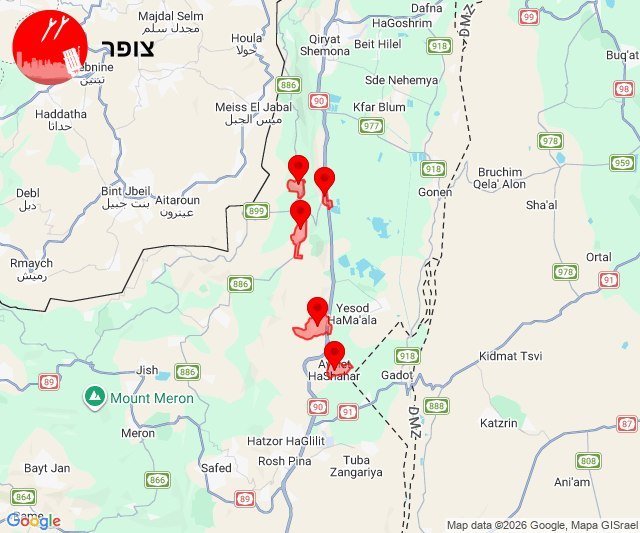
On 25 May 2026, the death toll from Israeli strikes on southern Lebanon rose to seventeen — seventeen people killed in a single day of operations that Lebanese authorities confirmed had struck multiple towns across the south. The figure, reported by Al Alam's Telegram channel, was accompanied by reports of more than twenty wounded. The attacks targeted the town of Al-Hush in the Tire district, and the adjacent localities of Hadada, Shahhour, and Ghandouriyah — all within a concentrated window of hours. It is the sharpest single-day escalation in weeks of increasing strikes, and it raises a straightforward but largely unaddressed question: what exactly is the ceasefire that was meant to contain this?
The strikes are not random. Each operation carries its own internal logic — a target assessed, a threat identified, a corridor defended. But the pattern they form is something different: a slow-motion dismantling of an arrangement that was never fully robust to begin with. The ceasefire monitoring arrangements in southern Lebanon have always been characterised by grey zones, unresolved violations, and diplomatic indifference. Israeli officials have long argued that violations justify ongoing operational latitude. Lebanese authorities and UN peacekeepers have documented incidents that, in their view, constitute breaches. International mediators have issued statements. The Security Council has noted concerns. None of it has produced consequences.
The timing is notable. The strikes arrived as Iran–United States nuclear talks resumed in Vienna — a diplomatic track that, whatever its prospects, carries the implicit promise of a contained rather than escalating regional confrontation. The message from Israeli operations has been consistent: diplomatic progress will not be permitted to constrain operational freedom. Washington's response has been measured in the language of concern rather than pressure. That restraint has been read, in Tel Aviv, as a green light — an assumption that the US interest in a nuclear deal can coexist with a strategy of persistent pressure on Iranian-aligned forces across the region. So far, that assumption has not been tested.
The consequences are not confined to the south. Israeli strikes have extended into the Bekaa valley and tested the limits of Syrian border enforcement. Hezbollah, whose military capacity remains the primary Israeli justification for operations along the border, faces internal pressure to demonstrate responsiveness to strikes on Lebanese soil — pressure that grows with each incident. Iran's regional architecture, centred on the resistance axis, watches and calibrates. The logic is circular: Israel strikes because Hezbollah is present; Hezbollah cannot fully absent itself without losing the credibility that sustains it; each strike that passes without a substantive Israeli objective met raises the question of whether the logic is really about Hezbollah at all, or about maintaining a climate of pressure across the regional architecture. The strikes that hit Ghandouriyah and Hadada, killing seventeen, answer nothing — but they keep the question open.
The stakes are predictable and underreported. A ceasefire that erodes gradually produces fewer alarms than one that collapses catastrophically — but the structural consequences are the same. Each strike that goes unanswered, or answered only in diplomatic language, normalises the next. The international community has demonstrated no appetite for the harder work of enforcing what was agreed, conditioning its own leverage on compliance rather than silence. If the ceasefire does finally break, the casualties will not be in the low double digits. And the disruption will not stop at the border. What is required now is not more expressions of concern about escalation — it is the political will to enforce the arrangement that already exists, to use the leverage that the US and its partners hold over both parties, and to stop treating military operations and diplomatic progress as parallel tracks that can safely ignore each other. As it stands, seventeen dead in southern Lebanon produced a twenty-four-hour news cycle and nothing else. That is the problem. That is why it keeps happening.
This publication covered the strikes as an escalation within a failing ceasefire framework. Western wire reporting, focusing on security justifications and violation tallies, treated each strike as an isolated tactical event. The structural question — whether the ceasefire itself remains viable as an instrument of containment — received less attention in the dominant framing.
Wire provenance
This editorial synthesis draws on the following public wire/social posts:
- https://t.me/alalamarabic/987654
- https://t.me/alalamarabic/987653
- https://t.me/alalamarabic/987652
- https://t.me/alalamarabic/987651