Italy's Regional Ballots Test the Meloni Government's Coalition at Mid-Term
Seven Italian regions went to the polls on 25 May 2026 in simultaneous elections that amount to the most significant political test for Prime Minister Giorgia Meloni's government since its 2022 mandate — with live coverage from Venice to Messina tracking results in real time.
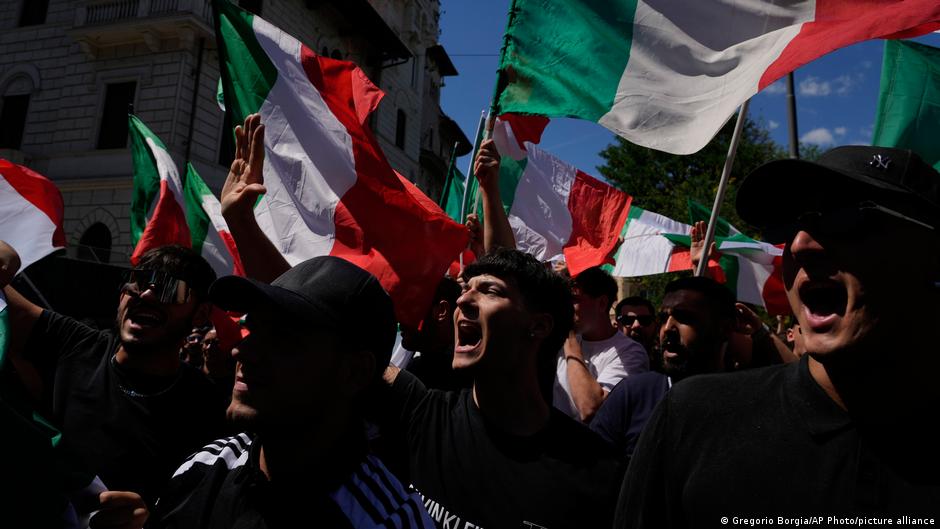
Italy held simultaneous regional elections on 25 May 2026, with seven of the country's twenty regions voting in a ballot that Corriere della Sera covered live under the direction of editor Luciano Fontana. The election spans the peninsula — from Veneto in the north to Sicily in the south — and amounts to the most significant mid-term test for Prime Minister Giorgia Meloni's government since it took office in late 2022. Counting was underway as results came in from Venice, Milan, Bologna, Ancona, Campobasso, Naples, and Palermo.
The political stakes are considerable. Italy's regions control substantial chunks of healthcare, education, transport, and local policing budgets — and several have historically served as springboards for national political careers. Results from these seven ballots will be read in Rome as a verdict on a government that has governed for three-and-a-half years without an electoral mandate of its own: Meloni's coalition holds a parliamentary majority but has never faced a nationwide popular mandate since taking office. Regional elections have no direct effect on national government, but the signals they send about voter mood — and about internal coalition tensions — are read closely by every faction in the Italian system.
Italy's Devolved Structure and the Weight of Regional Votes
Italy's twenty regions occupy a distinctive place in the country's constitutional architecture. Established by the 1948 constitution and substantially devolved in the early 2000s, they are not equivalent to American states or German Länder, but they hold real power: five of them have special statute status with additional fiscal autonomy, and all of them administer the public services that shape daily life for millions of Italians. Regional presidents — presidents of giunta — are directly elected and command their own governing coalitions. Several, including Veneto's Luca Zaia and Friuli-Venezia Giulia's Massimiliano Fedriga, have national profiles that exceed their regional brief.
The seven regions voting on 25 May 2026 — Veneto, Liguria, Marche, Umbria, Abruzzo, Campania, and Sicily — encompass a wide political and demographic spectrum. Northern regions like Veneto have long trended toward centre-right parties and have strong autonomous movements; southern regions like Campania and Sicily are more contested terrain, historically harder for any single coalition to dominate. The simultaneous timing of the vote creates a natural national snapshot, even though each region's electorate is choosing on local issues.
What the Coalitions Are Actually Fighting For
Meloni's party, Fratelli d'Italia, is not running candidates in all seven regions under its own banner — the party has historically contested some regions in coalition with Forza Italia and the Lega, with ticket-splitting arrangements that suit local leaders more than national brand management. This means that the results will require disaggregation: a strong performance by the Lega in Veneto does not automatically translate into a verdict on Fratelli d'Italia, and a weak showing by Forza Italia in Campania does not mean the national coalition is fracturing. Political analysts in Rome will spend the days following the vote parsing which party's candidate attracted which demographic and why.
The centre-left coalition, led nationally by Elly Schlein's Democratic Party, is hoping to hold or improve its positions in regions where it has incumbent presidents. Liguria and Campania are the most scrutinised contests: both have centre-left administrations whose re-election would be taken in Rome as evidence that the opposition can compete in moderate territory, not just in the traditionally left-leaning central regions. Marche, Umbria, and Abruzzo — all traditionally contested — will test whether the centre-right's 2022 national surge has durable regional roots or reflects temporary conditions.
The Lega's Matteo Salvini has a personal stake in Veneto's result. His party has governed the region for years; a weakened Lega vote share there would sharpen internal critics who argue the party has lost its northern, autonomy-focused identity under Salvini's heavy national involvement. Forza Italia's Silvio Berlusconi is no longer living, but his party still runs candidates in regional races, and the integrity of the Forza Italia brand remains a live question in a coalition where Fratelli d'Italia has increasingly dominated the centre-right space.
The Risk of a Narrative Overwrite
Coverage of Italian regional elections tends to collapse from the beginning into a single national story — as if voters in Veneto and Sicily were responding to identical stimuli. The live reporting from Corriere della Sera — tracking results region by region, city by city — resists that compression somewhat by design. But the interpretive pressure in Rome's political class is strong: results will be briefed, spun, and summarised within hours of the counts becoming clear, and the summary version will drown out the regional specifics.
What gets lost in that overwrite is the structural complexity of Italian regional politics. Fiscal autonomy campaigns in Veneto operate on a completely different political logic than economic hardship campaigns in Campania, even when both are nominally centre-right. A Meloni-aligned candidate winning in Sicily is not the same event as a Meloni-aligned candidate winning in Veneto — the former signals penetration into historically anti-establishment southern territory; the latter signals consolidation of already-reliable ground. Interpretation matters as much as the raw numbers.
The sources do not yet provide confirmed vote counts or declared winners for any of the seven regions. Initial returns are expected through the evening of 25 May 2026 and into the following days for the regions with closer margins. What is known is the scope of the ballot and the institutional weight of the offices being filled — and that alone is significant.
What Comes Next: Coalition Calculations and 2027
The political consequences of these elections will play out over months, not days. Regional governments take office over the summer; coalition negotiations at the regional level will determine how stable each new administration is. At the national level, Meloni's government will be watching for signals about how to calibrate its remaining time in office — it is expected to serve a full term through 2027, but mid-term governments adjust their priorities based on electoral tests, and a series of poor regional results would constrain Meloni's room to manoeuvre on fiscal policy.
The EU's ongoing fiscal consolidation requirements — Italy must meet deficit and debt targets under the Stability and Growth Pact — create a structural constraint that no regional election result can resolve. But the political permission to implement those constraints depends on the government's electoral credibility. A string of centre-left victories in regional ballots would strengthen the opposition's hand in parliament and complicate the government's ability to pass budgetary measures that require broad coalition discipline.
The 2027 general election is not on the horizon yet, but party strategists in Rome are already calibrating for it. Regional results provide the most recent public mandate data points available — real votes, not polls — and every faction will use the coming weeks to position themselves for the next national campaign. Meloni's own 2022 victory was built on a coalition that had never previously governed together; the durability of that arrangement depends on whether the regional tests confirm its strength or expose its fault lines.
This article draws on live reporting from Corriere della Sera's directorial team covering results from Venice to Messina. The sources provide the institutional scope of the ballot and the political stakes but do not yet contain confirmed regional counts; the above analysis is limited accordingly.
Wire provenance
This editorial synthesis draws on the following public wire/social posts:
- https://t.me/CorriereDellaSera