Japan's Iran Deal Rally Collides With Supply Chain Reality
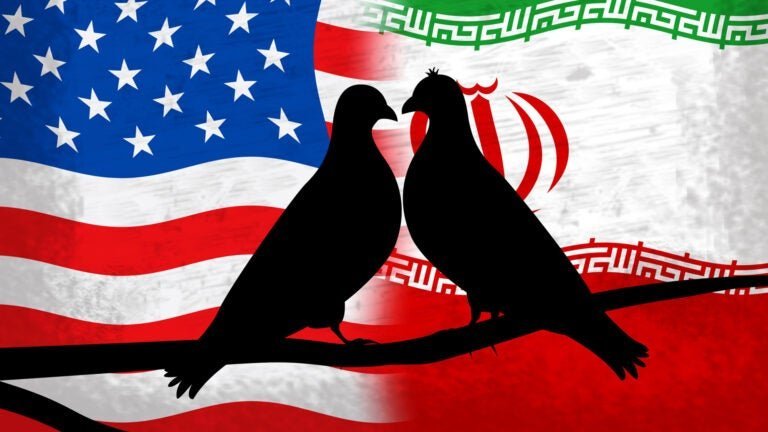
Japanese equities touched a new intraday high on Monday morning, driven by investor appetite for riskier assets as reports surfaced of diplomatic progress between Washington and Tehran. The Nikkei 225's morning advance reflected a market betting that an easing of tensions could unlock Iranian oil flows and reduce the premium that has weighed on energy-import costs for resource-dependent Asian economies. But that optimism sits uneasily alongside a set of structural constraints that no single diplomatic breakthrough can dissolve in the near term.
The Polymarket odds capture the gap between market enthusiasm and the underlying geopolitical reality. As of 25 May 2026, the probability of a US-Iran agreement being announced by the end of the month stood at 37 percent, while the probability of Iran surrendering its enriched uranium stockpile stood at just 11 percent. The Iranian foreign ministry spokesman described a deal as "not imminent" on the same date. Those numbers, taken together, suggest that the rally is pricing a scenario the Iranian side has not yet endorsed — a familiar pattern in emerging-market equity cycles where sentiment runs ahead of diplomacy.
The Tomahawk Delay Problem
The Financial Times reported on 25 May 2026 that the United States has warned Japan of severe delays in Tomahawk cruise missile deliveries, citing the pressures that the ongoing Iran conflict has placed on American defence production lines and stockpiles. Japan has made cruise missile capability a centrepiece of its revised national security strategy, viewing precision-strike assets as essential to its archipelagic deterrence posture. Any delay in acquiring those systems directly affects Tokyo's ability to field the capability it has publicly committed to.
The delay is not merely a bilateral procurement inconvenience. It reflects a deeper stress fracture in the architecture of US alliance commitments when American military resources are simultaneously committed to a Middle Eastern theatre. Japan, which under its current security architecture relies heavily on American deterrence and the forward-deployed assets that underpin the US-Japan alliance, faces a situation where the guarantor of its security is stretched across two simultaneous contingencies. The structural question this raises — whether alliance commitments made in peacetime conditions can be honoured in wartime conditions — has no easy answer.
Energy Transition Headwinds From Southeast Asia
The Iran deal rally optimism also encounters headwinds from the energy transition landscape that Japan and its regional partners are navigating. A Malaysia-Japan hydrogen project involving both local and Japanese investors is scaling back due to funding constraints, Nikkei Asia reported on 25 May 2026. The retreat underscores the difficulty of commercialising low-carbon energy infrastructure in an environment where capital is being pulled toward defence spending and commodity price uncertainty.
The hydrogen project is a concrete instance of a broader dynamic: the Indo-Pacific energy transition is being crowded out by geopolitical risk premiums. When oil markets face disruption from a Middle Eastern conflict, capital that might otherwise fund long-gestation clean energy projects gets redirected toward short-term liquidity management or redirected into defence-adjacent sectors. Japan's ambitions to position itself as a clean energy technology exporter — a cornerstone of its economic strategy in the region — depend on stable capital flows and counterparties willing to commit to multi-year project timelines. The Malaysia setback suggests those conditions are not currently met.
Simultaneously, Indonesia — a critical node in any Indo-Pacific economic architecture — is confronting what a local executive at a Japanese consumer goods company described as the prospect of "vicious" stagflation, per Nikkei Asia reporting on 25 May 2026. The combination of stagnant growth and persistent price pressure in Indonesia has direct implications for Japanese firms operating in that market, many of which generate regional earnings that underpin the equity valuations currently being bid up in Tokyo.
Reading the Odds Against the Deal
The Polymarket probabilities are worth examining on their own terms. A 37 percent chance of a deal by month's end is a statement about uncertainty, not confidence. The 10 percent probability that the United States obtains Iran's enriched uranium by the end of June suggests the more consequential scenarios — forced denuclearisation or weapons-grade material transfer — are priced as remote. And the 23 percent probability of Iranian internet access being restored by the end of the month signals that the information environment inside Iran remains tightly controlled, a fact that complicates any assessment of domestic support for a diplomatic settlement.
Iran's foreign ministry has explicitly rejected the characterisation of a deal as imminent. That statement, coming from a principal party to the negotiations, carries weight that market positioning does not. The history of US-Iran diplomatic cycles includes several episodes where early optimism gave way to structural disagreements — over centrifuge infrastructure, over sanctions architecture, over verification protocols — that no amount of goodwill could bridge in compressed timeframes. There is no obvious reason why this cycle would resolve faster than prior ones simply because equity markets have become more attentive to it.
What the Rally Gets Wrong
The Japan equity market is doing what it often does: extrapolating from the most favourable scenario in a range of plausible outcomes. A US-Iran deal, if achieved, would indeed be positive for Japanese importers — lower oil premiums, reduced shipping insurance costs, greater energy security for an economy that imports virtually all of its crude. Those are real benefits.
But the structural constraints will not lift on deal day. The Tomahawk delivery delays reflect industrial capacity realities in the American defence sector that are not contingent on Iranian behaviour. The hydrogen project funding crunch reflects global capital market conditions that a diplomatic announcement in the Gulf would not immediately reverse. Indonesia's stagflation reflects domestic monetary and fiscal dynamics that are opaque to external actors. Japan faces a set of compounding pressures — regional demand weakness, energy transition costs, alliance procurement bottlenecks — that no single diplomatic development resolves.
The market may well be right that a deal, if it arrives, would be bullish. The question is whether the current price fully accounts for the probability that it does not arrive, or arrives only partially, or arrives and fails to unlock the structural improvements that the bullish thesis requires. On the evidence available, that question remains open.
This publication covered the Japan equity rally through the lens of structural constraints rather than lead-with-the-deal optimism. The dominant wire framing led with the market advance itself; this piece led with the gap between market pricing and the underlying geopolitical fundamentals.
Wire provenance
This editorial synthesis draws on the following public wire/social posts:
- https://polymarket.com/event/us-obtains-iranian-enriched-uranium-by?via=x-afr2
- https://t.me/nikkeiasia
- https://t.me/nikkeiasia
- https://x.com/unusual_whales/status/1922345678901234567
- https://x.com/unusual_whales/status/1922345678901234568