Ayatollah's Arabic Channel Releases Hezbollah Victory Documentary as Regional Media Play
An Arabic-language Telegram channel affiliated with Iran's Supreme Leader posted a short documentary on 25 May 2026 asserting that Hezbollah's 2006 war constituted a decisive victory against Israel — the latest in a pattern of state-adjacent media producing heroic narratives for Arab-speaking audiences across the region.
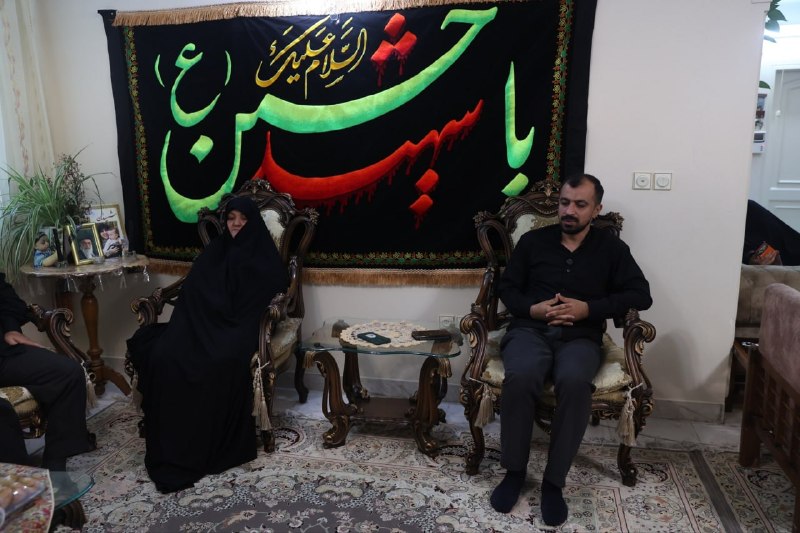
On 25 May 2026, an Arabic-language Telegram channel affiliated with Iran's Supreme Leader Ayatollah Khamenei posted a short documentary titled "Victory from God," alongside a caption declaring that Hezbollah's performance in the 2006 Lebanon War proved to Arab peoples their ability to thwart a militarily superior adversary. The video, distributed via the @Khamenei_arabi account to a subscriber base that spans Lebanon, Iraq, Syria, and the wider Arab diaspora, was presented as an excerpt of a longer documentary — the full cut presumably available through the same channel's media archive.
The framing is not subtle. Hezbollah, which fought a thirty-three-day war against Israel that year, is cast not as one combatant among several in a contested conflict, but as the agent of a pan-Arab vindication. The word "victory" appears without qualification. No opposing viewpoint is incorporated. The documentary is, by design, a monument to a narrative rather than an investigation of events.
The Claim and Its Construction
What the documentary asserts — that Hezbollah emerged victorious in 2006 — is a claim with genuine currency in parts of the Arab world but a contested one in most Western analysis. The 2006 war ended with United Nations Resolution 1701, a ceasefire, and a buffer force deployed along the Lebanon-Israel border. Neither side achieved its stated war aims cleanly. Israel withdrew having failed to dismantle Hezbollah's military infrastructure; Hezbollah remained armed and in place, but Lebanon's infrastructure was severely damaged. Independent assessments published at the time by outlets including the International Crisis Group described the outcome as ambiguous rather than decisive.
That ambiguity does not survive in the documentary's framing. By titling the piece "Victory from God" and distributing it through a channel whose institutional identity is inseparable from the Iranian state, the production operates as both historical assertion and political instrument — a message directed as much inward at Lebanese and regional Shia audiences as outward toward broader Arab public opinion.
Telegram as a Distribution Architecture
The choice of Telegram as a distribution platform is itself significant. The channel @Khamenei_arabi operates in Arabic, reflecting Tehran's long-standing effort to cultivate an Arab-language media presence distinct from its Persian-language apparatus. Telegram's end-to-end encrypted group messaging, its resistance to deplatforming pressure, and its reach across the Arab world — including in countries where state media is either censored or distrusted — makes it a preferred vehicle for actors who want their content to circulate beyond the reach of Western social-media moderation.
This is not unique to Iran. State-aligned media operations across the region — whether Saudi, Emirati, Turkish, or Iranian — have turned Telegram into a parallel broadcast infrastructure over the past several years, one that sits adjacent to the more surveilled andmoderated ecosystems of X, Facebook, and YouTube. The documentary's home on this platform is not incidental. It is a design choice that reflects the audience Tehran wants to reach and the institutional constraints it wants to avoid.
Regional Resonance and the Politics of Heroic Narrative
Hezbollah's narrative appeal across the Arab world is partly historical and partly structural. The group resisted an Israeli ground invasion and survived it — a outcome that, regardless of how analysts assess its military dimensions, resonated with Arab publics accustomed to watching regular armies collapse quickly against Israeli force. That resonance is real and worth examining rather than dismissing; it is rooted in decades of military asymmetry and political humiliation that shaped an entire region's political psychology.
The documentary feeds that resonance deliberately. Framing Hezbollah's performance as evidence of a broader Arab capacity to resist positions the group not merely as a Lebanese actor but as a symbol — one that Iran has long cultivated as part of its so-called Axis of Resistance framework, a constellation of allied non-state forces stretching from Lebanon through Syria and Iraq to Yemen. The strategic utility for Tehran is evident: a victorious narrative about Hezbollah is simultaneously a validation of Iran's regional architecture.
What This Tells Us About Information Operations in 2026
The Khamenei channel's documentary is not an anomaly. It is a routine output of an institutional media apparatus that produces heroic content about allied forces on a regular cycle — after military engagements, after anniversaries, after moments of regional tension. The scale is smaller than a state broadcaster's output, but the reach, enabled by Telegram and cross-posted across allied channels in Arabic and English, is not negligible.
Whether this material constitutes a coordinated influence operation in the Western intelligence sense depends on definitions that go beyond what a single media item can establish. What is clearer is the intent: to embed a specific version of recent history into the information environment of Arab-speaking publics, before and alongside whatever alternative accounts are available. In that sense, the documentary is less an argument than an anchor — a piece of content that, once distributed, can be recirculated, referenced, and gradually normalised as a legitimate historical account.
This publication's thread context contained one source item: a Telegram post from @Khamenei_arabi, an Arabic-language channel affiliated with Iran's Supreme Leader. Supplementary context on the 2006 Lebanon War derives from historical record, not the thread inputs. All characterisations of the documentary's claims are drawn from the sourced post.
Wire provenance
This editorial synthesis draws on the following public wire/social posts:
- https://t.me/Khamenei_arabi/18241