Lebanon's Liberation Day Poses Hard Questions About the Negotiation Path
President Joseph Aoun's Liberation Day rhetoric frames negotiation as strength. The battlefield casualties in southern Lebanon suggest the ground is less settled than the speech suggests.
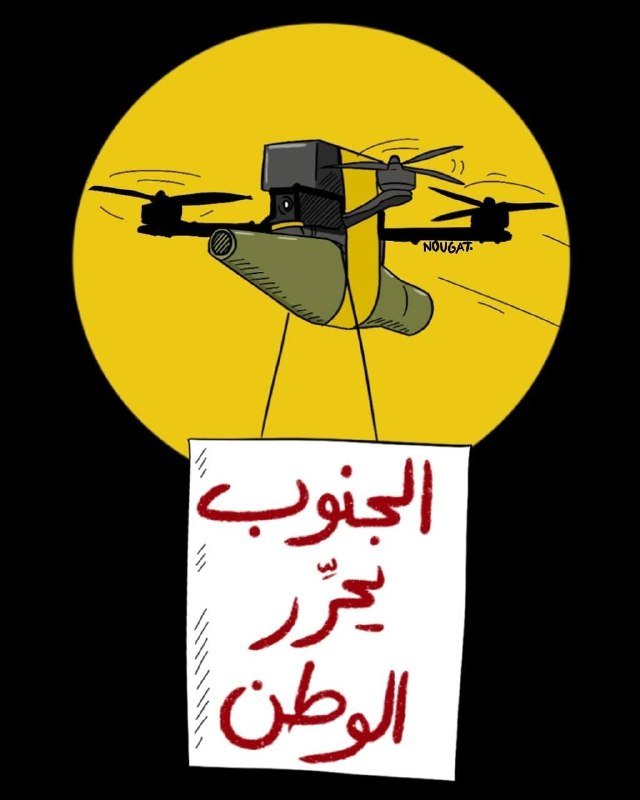
Twenty-six years ago, Israel pulled its forces from southern Lebanon after a grinding 22-year occupation. The date — May 25, 2000 — became a fixed point in Lebanese national calendars, a day to mark what official rhetoric calls the triumph of steadfastness. On May 25, 2026, President Joseph Aoun returned to that script, delivering a Liberation Day address that reaffirmed Lebanon's demand for full Israeli withdrawal from all disputed territory. The words carried their familiar weight. The question is whether they correspond to a reality the Lebanese state can actually shape.
Aoun's speech, reported by Al Alam Arabic on the morning of May 25, 2026, contained three interlocking claims. First, that the 2000 withdrawal was the product of Lebanese sacrifice and resolve, not diplomatic choreography. Second, that the current situation — Israeli forces in disputed border areas, ongoing cross-border incidents — constitutes a new form of occupation that Lebanon will not accept. Third, that the Lebanese state is pursuing Israeli withdrawal through "the negotiation option," which Aoun specified would "neither be a concession nor a surrender." The framing is deliberate: resistance and diplomacy are presented as continuous, not competing, strategies.
The Battlefield Counterpoint
The speech arrived against a backdrop that complicates its optimism. On the same morning, Al Alam reported that the Israeli army had confirmed one soldier killed and another seriously wounded in battles in southern Lebanon. Lebanese sources separately reported an Israeli drone strike in the Khardali area of southern Lebanon. These are not isolated incidents. The disputed Shebaa Farms corridor and the broader border zone have seen sustained low-intensity contact since the 2023 shift in regional dynamics, with Israeli forces conducting periodic incursions and Lebanese armed groups maintaining a presence that Tel Aviv characterizes as a security threat.
The discrepancy between Aoun's language — "the negotiation option" as a dignified substitute for armed struggle — and the流血 happening meters from the negotiating table is not unique to Lebanon. It is a pattern familiar across frozen and semi-frozen conflicts: political leaders claim ownership of a diplomatic process while security actors on the ground operate according to a different logic. The question Aoun's speech sidesteps is which logic currently holds more terrain.
Negotiation as Domestic Signal
Within Lebanese domestic politics, the speech performs a specific function. Aoun, a career military officer who assumed the presidency in late 2025 after a prolonged institutional deadlock, has staked his legitimacy on state centralization — on the idea that the Lebanese state, not armed factions, should be the interlocutor with Israel and the international community. The Liberation Day address reinforces that positioning. "Those who liberated the south with their blood are soldiers and resistance fighters, like all Lebanese, deserve a strong, cohesive state," Aoun said, according to Al Alam. The phrase is inclusive on its surface but structurally hierarchical: armed actors are folded into the state framework, not positioned outside it.
This is a narrower claim than it might appear. Aoun is not asserting that the Lebanese army will retake disputed territory by force. He is asserting that whatever withdrawals eventually occur will occur because the Lebanese state demanded them — that diplomatic pressure, regional alignment, and international law provide the levers. Whether those levers are sufficient given current Israeli government posture, and given the absence of a functioning UNIFIL enforcement mechanism, is a question the speech does not address.
What "Negotiation Option" Actually Requires
The structural difficulty Aoun faces is not rhetorical but positional. Lebanon's negotiating position rests on several pillars: UN Security Council Resolution 1701, which ended the 2006 war and envisioned a disarmament of non-state actors in southern Lebanon; French and American diplomatic engagement; and the leverage that any prolonged border instability creates for Israel's northern communities. None of these pillars is firm. Israel has for years disputed the demarcation of the Shebaa Farms area, arguing it is Syrian territory and therefore not covered by Lebanese occupation frameworks. The Lebanese state has limited practical control over actors in the border zone. And the current Israeli government has shown limited interest in diplomatic shortcuts that its security establishment believes create more problems than they solve.
Aoun's framing — that negotiation will "neither be a concession nor a surrender" — suggests an awareness of the domestic political cost of any outcome that does not look like a clear win. Lebanese presidents who are perceived to have accepted less than full sovereignty over Lebanese territory do not survive politically. The speech is calibrated to manage that risk while buying time for a diplomatic process whose outcome is genuinely uncertain.
The killings reported on May 25, 2026 — the Israeli soldier dead, the Lebanese areas struck by drone — are data points that will complicate that process regardless of what negotiators say in rooms away from the border. The gap between the speech's confidence and the ground's volatility is not evidence that Aoun is wrong to pursue negotiation. It is evidence that negotiation, in this context, is a high-risk, uncertain-reward proposition for everyone involved.
The sources do not indicate what specific diplomatic proposals Lebanon has tabled, what response it has received, or whether a timeline for renewed talks exists. What the speech and the morning's battlefield reports together suggest is that the Lebanese state is attempting to manage a situation in which its preferred instrument — diplomacy — is operating at a different tempo than the instrument it claims to have superseded — force. That gap, rather than any single statement from either side, may be the most accurate description of where things stand.
This piece was filed from Beirut bureau perspective, using Al Alam Arabic wire reporting as the primary input alongside contextual reporting on the Shebaa Farms dispute and UNIFIL mandate coverage. The Liberation Day framing is consistent with historical Lebanese state communication on May 25; the structural analysis reflects the publication's independent editorial assessment.
Wire provenance
This editorial synthesis draws on the following public wire/social posts:
- https://t.me/alalamarabic
- https://t.me/alalamarabic
- https://t.me/alalamarabic