Lebanon's negotiation trap: how Aoun's liberation-day rhetoric blindsides his own diplomacy
President Aoun's Liberation Day speech invokes resistance mythology while the negotiating table offers a narrower, messier reality that neither side is ready to name.
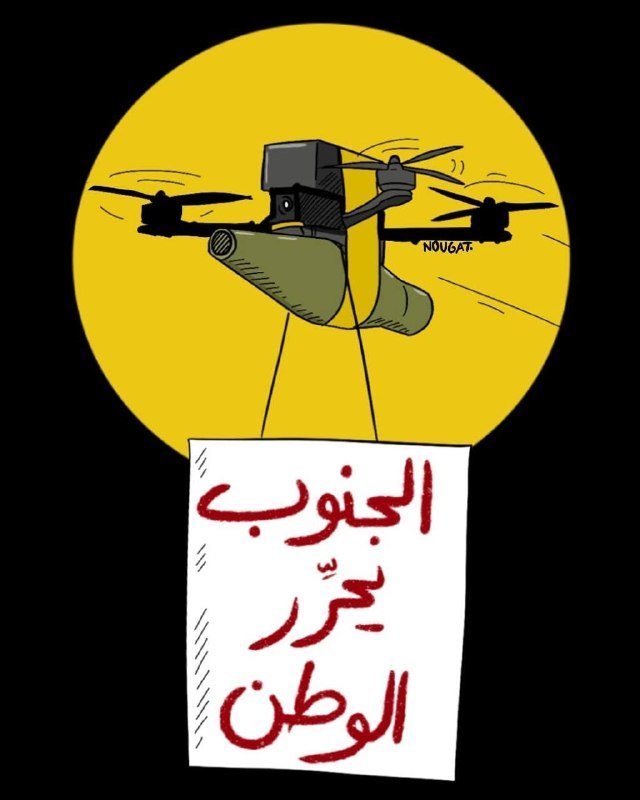
On May 25, 2026, Lebanese President Joseph Aoun stood at a podium and delivered a speech that every Lebanese schoolchild is trained to expect. The date is a national fixed point — the day Israel, under domestic political pressure and sustained guerrilla pressure, ended its 22-year occupation of south Lebanon. Aoun's remarks on the anniversary this year were no exception to the ritual. He called the liberation an "unprecedented epic," written by Lebanese who "stewardship and sacrifices" compelled IDF withdrawal. He described those who bled for the south as soldiers and resistance fighters "like all Lebanese" who deserve a strong, cohesive state. And he restated what his office has said before: the path forward runs through negotiation, which "will neither be a concession nor a surrender."
The speech was well-served by the occasion. It will play well on state media and at memorial events. But it also illustrates a problem that runs through Lebanese statecraft at the highest levels: the gap between what leaders say on liberation anniversaries and what the diplomatic ground actually looks like is not a gap — it is a chasm.
The anniversary mythology vs. the ceasefire reality
Israel completed its withdrawal from south Lebanon in May 2000. The event was genuine. UN peacekeeping arrived; the IDF pulled back to the internationally recognised Blue Line. That chapter closed.
What the anniversary speech does not acknowledge — because it cannot — is that south Lebanon is not quiet. On May 24, 2026, according to reporting carried by Al Alam Arabic citing Israeli media, an Israeli soldier was seriously injured when a helicopter he was in exploded in south Lebanon. He lost both lower limbs. The incident was described as the result of a booby-trapped device. That casualty sits inside the current ceasefire architecture, not alongside it.
The ceasefire that ended the 2024-2025 hostilities between Hezbollah and Israel is, by any honest accounting, an arrangement built on mutual non-compliance and mutual tolerance of ambiguity. Neither side withdrew to internationally recognised positions. Neither side disarmed the formations the other finds most threatening. The language of "resistance" that Aoun deployed — naming "soldiers and resistance fighters" in the same breath, equalising their contribution — is a direct reference to Hezbollah, the armed group that fought the most sustained ground campaign against Israeli forces and that still operates inside Lebanese political and social structures. Calling them resistance fighters in a presidential address is not a neutral anthropological observation. It is a political act with diplomatic consequences.
What negotiation actually looks like from Beirut
Aoun's framing that the Lebanese state is "working to achieve Israeli withdrawal through the negotiation option" is technically accurate and structurally hollow. The negotiation option has been the stated position of every Lebanese government since 2000. The problem is that it has also been the position that produced the least.
The current government, with Aoun as president, faces a specific structural constraint: it cannot negotiate from a position of demonstrated force, because the forces that could demonstrate force are not fully under state control. Hezbollah's military wing remains intact. Its political wing holds cabinet seats. Aoun's own speech, in naming resistance fighters alongside soldiers, implicitly acknowledges that the state shares moral credit for an armed non-state actor's military campaign. That is not a foundation from which to extract concessions from Israel — it is the foundation Israel cites when it declines to negotiate final status questions and instead manages the ceasefire through direct military posture.
Lebanese officials have complained, through back-channel reporting, that Israel has not withdrawn from the remaining points along the Blue Line it still occupies. This is a genuine grievance. The problem is that framing it exclusively as a failure of Israeli occupation, without acknowledging the parallel failure of Lebanese state authority to extend its own reach, leaves the negotiating position internally incoherent. Aoun can call for "complete Israeli withdrawal" as a "firm and uncompromising national demand" — and it is — but if the state cannot guarantee that its own armed formations will comply with the terms of any agreement reached, that demand functions as rhetoric, not policy.
The price of the mythology
There is a version of Lebanese statecraft that takes the 2000 withdrawal as a completed chapter and builds forward from it — that treats the current ceasefire as a starting point for normalisation, confidence-building measures, and eventually a formal border demarcation with international guarantees. That version requires Lebanese officials to speak in the language of normalisation rather than resistance mythology. It requires a president, on a liberation anniversary, to say something about the future that does not begin with a elegy for armed struggle.
Aoun's speech did not do that. In naming resistance fighters alongside state soldiers, in treating the ceasefire as a continuation of the same conflict that produced the 2000 withdrawal, the president gave the armed formations outside state control a legitimacy they have not fully earned through democratic process. He also gave Israel an argument: that the Lebanese state is not the exclusive interlocutor on questions of southern security, because the state itself refuses to separate its identity from actors it does not command.
The irony is that Aoun appears genuinely committed to building state capacity. His earlier public statements describe a state working through "the negotiation option" — language that explicitly distinguishes the state from resistance logic. But an anniversary speech written to satisfy every constituency at once ends up satisfying none of them structurally. It satisfies the ceremony. It does not satisfy the diplomats.
What the soldier's injuries actually tell us
The Israeli soldier who lost both lower limbs in the May 24 helicopter explosion is a data point in a larger pattern. Casualties on both sides of the Blue Line — Lebanese and Israeli, state and non-state — continue to accumulate inside an arrangement that neither side has named a replacement for. The ceasefire holds, but it holds because both sides find the alternative more costly than the tolerance. That is not stability. It is expensive inconvenience.
Aoun called for "complete Israeli withdrawal" as a non-negotiable national demand. That is a reasonable position for a sovereign state to hold. But it will not be achieved through a speech that treats an armed faction's military campaign as part of the state's own heritage. Lebanon needs a negotiating identity that Israel can recognise as a unitary actor — not a composite of state and resistance claims that, when one party speaks, the other can always disclaim. The anniversary mythology keeps that composite intact. The diplomatic reality requires the opposite.
The soldier in that helicopter was not fighting the 2000 war. Neither is the Lebanese president, whatever the speech said. The gap between the two is where the negotiation will actually fail — or succeed — and it is not being named.
Wire provenance
This editorial synthesis draws on the following public wire/social posts:
- https://x.com/middleeasteye/status/1923478198766837761
- https://t.me/alalamarabic/89234
- https://t.me/alalamarabic/89231
- https://t.me/alalamarabic/89228
- https://t.me/alalamarabic/89225