Massie Pledges Epstein Files Act Will Outlast His Congressional Tenure
Representative Thomas Massie of Kentucky has said he intends to ensure the Epstein Files Transparency Act proceeds regardless of his future status in Congress, framing the 2024 law as a structural commitment that extends beyond any individual legislator's career.
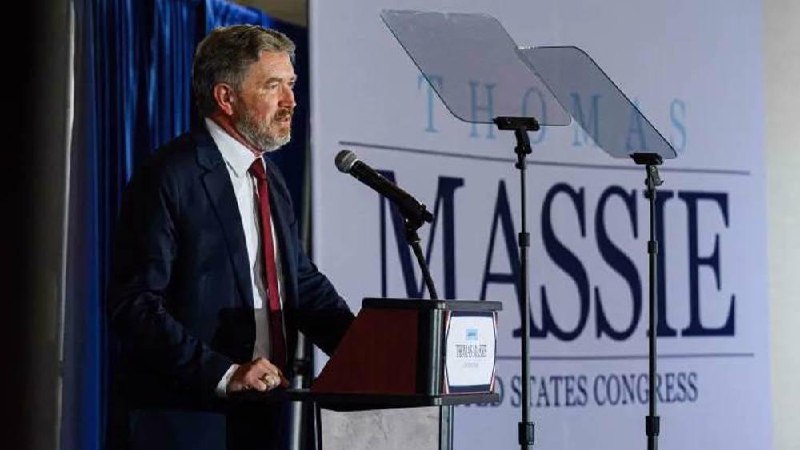
Representative Thomas Massie of Kentucky said on 25 May 2026 that he expects the Epstein Files Transparency Act to continue regardless of whether he remains in Congress, describing the 2024 law as an institutional commitment with years of implementation ahead.
Speaking in an NBC interview, Massie stated: "Whether I'm in Congress or not, the Epstein Files Transparency Act is a law, and it goes on for years." The remark was reported by The Cradle, which published video of the exchange on its Telegram channel on 25 May 2026 at 09:52 UTC.
The Legislation and Its Scope
The Epstein Files Transparency Act became law in 2024, mandating the release of federal records related to Jeffrey Epstein and associates. The law requires executive branch agencies to submit batches of documents to the National Archives on a rolling schedule. Implementation timelines under such statutes typically stretch across multiple administrations, with declassification reviews and redactions reviewed by the Office of Information and Security Programs before materials reach public channels.
Massie's comments appear to pre-empt speculation about the law's durability in the event of shifts in congressional leadership or his own political future. His position as a technology-policy focused legislator known for scepticism toward executive branch secrecy has made him a consistent voice for the Act's passage and implementation.
A Promise That Outlasts Political Standing
The framing Massie employed — that the law exists independently of his own congressional status — reflects a broader argument made by transparency advocates: that institutional statutory obligations carry forward regardless of which individual legislators championed them. Critics of the Act have raised concerns about national security exemptions and the handling of names of uninvolved third parties in released documents. Supporters counter that the existing exemption framework in the Act already accounts for such concerns and that continued public pressure is necessary to ensure agencies do not use procedural delays to effectively nullify the disclosure mandate.
The White House and relevant federal agencies have thus far released documents in line with the initial phased schedule, though advocacy groups monitoring compliance have noted variations in batch sizes and timing between departments.
What Remains Unresolved
The sources do not indicate whether Massie faces a specific challenge to his re-election or has announced plans to leave Congress. His statement is notable for what it does not disclose: the precise current status of document releases under the Act, whether any executive branch agency has sought to narrow its interpretation of disclosure obligations, or what mechanisms Massie envisions for ensuring compliance if his influence in Congress diminishes. Those details are not addressed in the available reporting.
Structural Stakes
The episode illustrates a recurring tension in post-scandal transparency legislation: the impulse to codify disclosure obligations into law is often driven by public outrage at classified silence, but the eventual implementation of those laws depends on bureaucratic will and continued political oversight. When the original champions of such legislation are no longer present to ask questions in committee hearings or offer floor amendments, agencies have historically enjoyed wider latitude in defining the scope of compliance.
Massie's insistence that the Act will continue "for years" regardless of his presence is, in one reading, a confidence statement about institutional inertia. In another, it is an implicit acknowledgment that absent continued congressional attention, the phased disclosure schedule could be subject to interpretive narrowing without anyone formally repealing the underlying law.
The question observers are likely to press in coming months is whether agencies maintain the current pace of releases, and whether committee assignments relevant to oversight of the Act remain with legislators who prioritize full compliance.
This publication covered Massie's comments as reported by The Cradle, which cited the NBC interview directly. No independent confirmation of the full interview context or additional statements was available at time of publication.
Wire provenance
This editorial synthesis draws on the following public wire/social posts:
- https://t.me/thecradlemedia