Netanyahu's Lebanon Gambit: Escalation as Diplomatic Sabotage
Israel's intensifying strikes on Lebanon this week raise a question the official communiqués carefully avoid: is the government in Jerusalem working to end the northern front, or to ensure it never ends at all?
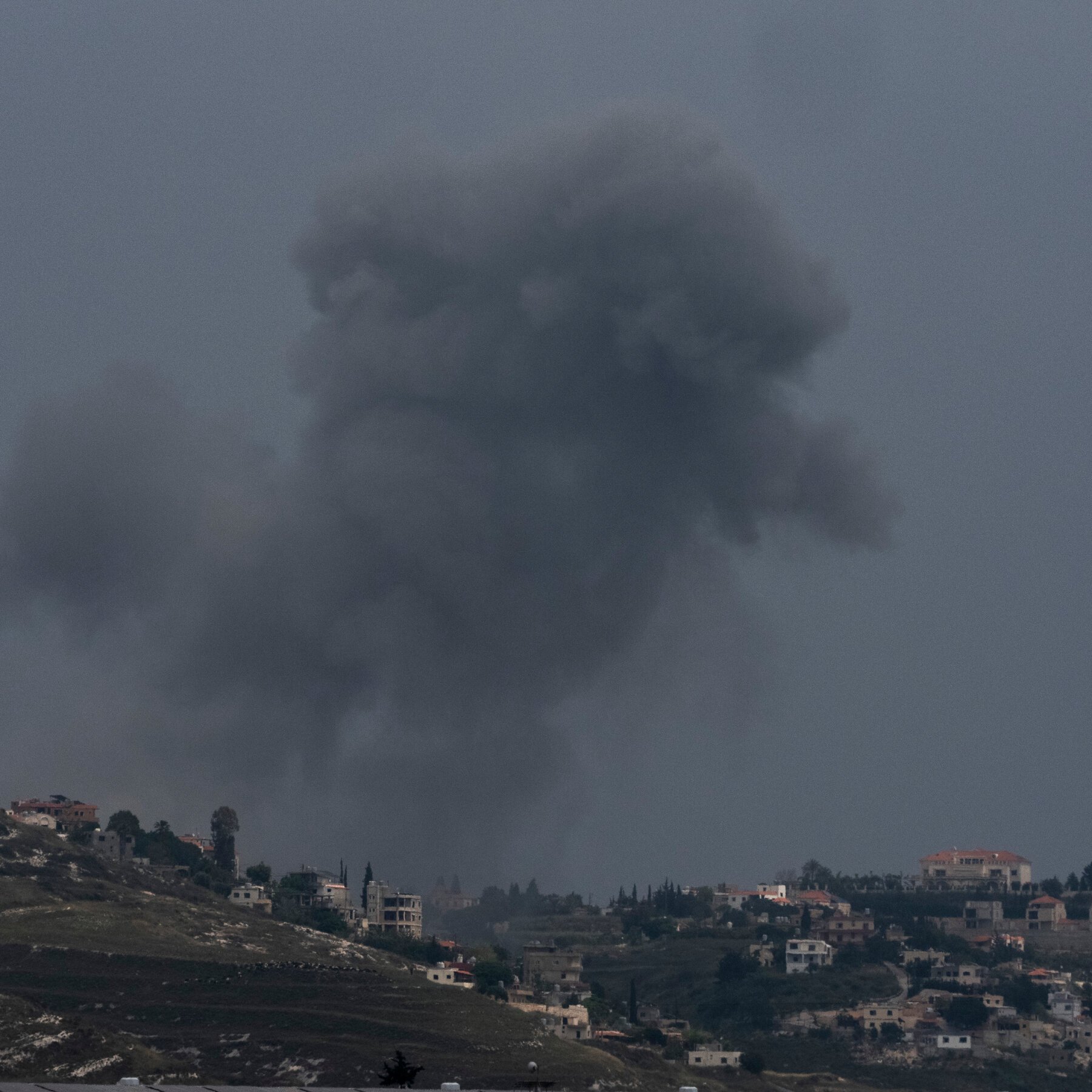
Israel's campaign against Hezbollah entered a new phase this week, and the官方 language leaves little room for diplomatic interpretation. Prime Minister Benjamin Netanyahu announced on 25 May 2026 that the Israeli Defence Forces would intensify strikes throughout Lebanon, declaring that his government was "not taking our foot off the gas pedal" and would instead "press the pedal down even harder." The IDF subsequently struck Hezbollah infrastructure in the Beqaa Valley and multiple other locations across the country. The message from Jerusalem is unambiguous: this war continues on Israeli terms.
What remains deliberately ambiguous is whether Israel actually wants it to stop.
The official framing presents the escalation as a defensive necessity. IDF spokespeople describe the strikes as targeting a terrorist organization's infrastructure — infrastructure that, in the Israeli reading, poses an ongoing threat to northern communities. This language is internally coherent. Hezbollah has fired rockets into Israeli territory since October 2023; border communities on both sides have been displaced; a sustained military response to those strikes has been the consistent position of the Netanyahu government. By the logic of its own statements, Israel is responding to an active threat with proportional force.
But the timing and framing of the 25 May announcements warrant scrutiny that the official communiqués do not invite. Iranian state-adjacent accounts, cited in reporting by analysts tracking the region, have characterised the escalation as a deliberate effort to sabotage a potential diplomatic settlement. The claim — that Israel is "desperately trying to wreck any potential agreement by carrying out mass slaughter in Lebanon" — is adversarial framing, not a sourced fact. It should not be reported as established truth. It should, however, be engaged as a serious strategic question, because the pattern it describes is not unprecedented.
Netanyahu has form in this regard. His political survival has been structurally linked to the continuation of wartime conditions. A ceasefire in Gaza, a diplomatic off-ramp in Lebanon — each would create political space for early elections and legal scrutiny that the prime minister has spent eighteen months avoiding. The northern front offers a parallel dynamic: maintaining military pressure forecloses the diplomatic alternatives that his governing coalition's right flank would reject. That is not proof of intent. It is a structural incentive that any serious political analysis must account for.
The Negotiation Problem
Whatever diplomatic tracks exist between Israel and Hezbollah run through intermediaries — the United States, France, Lebanon's own fractured government — and they have produced no publicly confirmed framework. Israel's stated demand is clear enough: the implementation of United Nations Security Council Resolution 1701, which envisions Hezbollah's withdrawal from the southern Lebanon buffer zone. Hezbollah's stated position is equally clear: no withdrawal without a ceasefire in Gaza. The two conditions create a logical loop that has held since the resolution was adopted in 2006 and systematically violated by both parties.
The strikes of 25 May do nothing to resolve that loop. They deepen it. Each additional IDF operation inside Lebanese territory hardens Hezbollah's justification for maintaining its military posture — the group can point to Israeli aggression as evidence that withdrawal would be suicidal — while simultaneously making any Lebanese government concession to Resolution 1701 more politically untenable. The strikes may degrade Hezbollah's infrastructure. They do not degrade the logic that keeps that infrastructure in place.
Media Architecture and the Official Frame
The Telegram channels and wire services that transmitted the 25 May announcements performed a transmission function with efficiency. They amplified the IDF's operational language — infrastructure sites, Beqaa Valley, full force — without systematically interrogating its relationship to stated diplomatic objectives. This is not a criticism of those outlets; it is a structural observation. Official military spokespeople deliver pre-formed narratives optimised for immediate broadcast. The work of contextualisation — asking whether these strikes advance or foreclose a political settlement — falls to outlets willing to think beyond the press release.
That work becomes harder when the source material actively discourages it. The statements from Jerusalem contain no language suggesting frustration with diplomacy, no acknowledgment of civilian harm inside Lebanon, no reference to the roughly 90,000 Lebanese civilians who have been displaced by the past seven months of exchanges. The IDF speaks of terrorist infrastructure; the displaced speak of homes. The gap between those two framings is where journalistic responsibility lives.
The Escalation Trap and Its Beneficiaries
The immediate losers from this trajectory are clear. Lebanese civilians in the south and the Beqaa Valley face continued airstrikes with no foreseeable end. Israeli border communities remain evacuated. The fragile Lebanese state — itself experiencing a multi-year economic collapse — absorbs another layer of instability. Diplomatically, the window for a mediated settlement narrows with each additional strike. Washington and Paris, whose involvement has been the only plausible diplomatic vehicle, lose leverage when Israel acts in ways that signal it does not want their mediation to succeed.
The beneficiaries are less discussed. Within the Israeli governing coalition, continued war conditions suppress political competition and defer the reckoning that awaits whenever the guns fall silent. Hezbollah, paradoxically, also derives a certain political utility from Israeli escalation: each strike reinforces the group's core argument that disarmament is impossible while Israel occupies Palestinian territory and conducts operations inside Lebanon. The war serves both sides' most militant wings simultaneously, which is a reliable sign that it serves neither side's civilians.
The 25 May escalation will be characterised by the Israeli government as a necessary response to an ongoing threat. That framing has the virtue of simplicity. It does not have the virtue of completeness. A publication that limits itself to IDF spokespeople on a story this consequential is not reporting — it is stenography. The harder question, the one the official communiqués work to prevent readers from asking, is whether the government in Jerusalem actually wants the northern front to end, or whether it has simply found a durable political arrangement with its continuation.
The answer will not be found in a press release. It will be found in whether the strikes continue, and why.
Wire provenance
This editorial synthesis draws on the following public wire/social posts:
- https://t.me/Middle_East_Spectator/2026/25-may-18
- https://t.me/GeoPWatch/2026/25-may-18-netanyahu-statement
- https://t.me/wfwitness/2026/25-may-18
- https://t.me/englishabuali/2026/25-may-netanyahu-gas-lebanon