Oil, Optics, and Opportunity: The US-Iran Deal That Could Remake Global Energy Markets
With oil prices sliding and Polymarket signals pointing toward a US-Iran draft deal, the structural stakes for global energy architecture are becoming impossible to ignore. But skeptics are right to ask: what exactly has been agreed, and at what cost to regional stability?
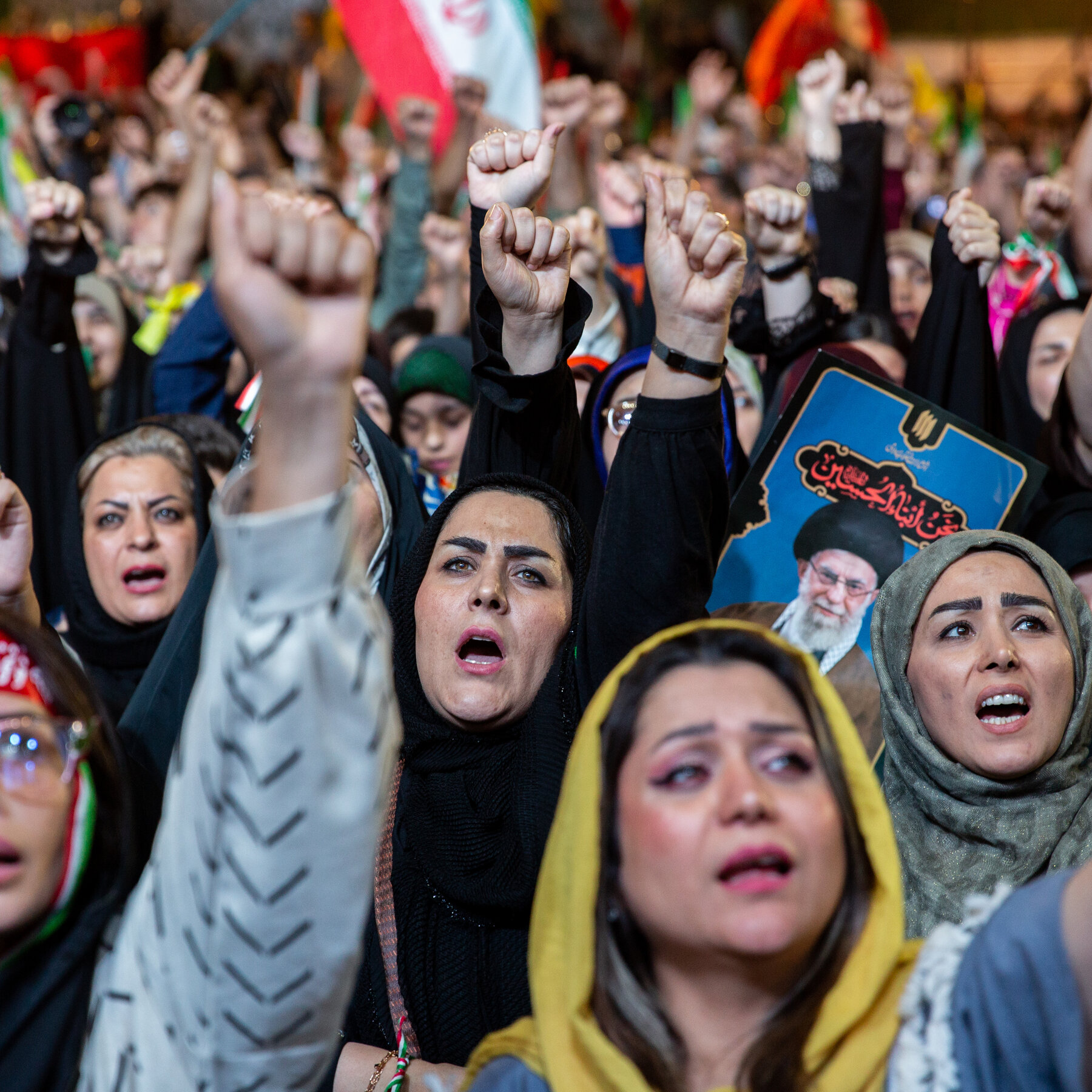
Oil markets moved sharply on 24 May 2026, with Brent crude sliding nearly five percent to a two-week low, a decline that traders and analysts attributed to mounting optimism over a potential US-Iran agreement. The move came as multiple signals converged: Polymarket's probability clusters, Reuters reporting on Singapore's first-quarter outperformance, and a cascade of diplomatic statements suggesting that Washington and Tehran were edging toward a preliminary framework. By the evening of 23 May, a draft deal was reportedly expected to be announced the following afternoon — a timeline that, if accurate, would represent the most significant diplomatic breakthrough between the two countries since the 2015 Joint Comprehensive Plan of Action unraveled in 2018.
The immediate market reaction is legible enough: any easing of sanctions pressure on Iran's oil sector would add barrels to a market that has been pricing in persistent geopolitical risk premium. But beneath the price action lies a more complicated structural story about what a reopened Iranian export corridor would mean for US alliance architecture in the Middle East, for Saudi and Israeli strategic calculus, and for the broader architecture of dollar-denominated energy trade that has anchored US financial hegemony for decades.
The Signal Stack: What the Wires Are Saying
The thread of evidence supporting a potential deal is, by the standards of diplomatic reporting, unusually dense — and unusually difficult to corroborate fully.
On 23 May 2026, Polymarket data showed that a US-Iran draft agreement was expected to be announced by the afternoon of 24 May. That timeline has since passed without a confirmed announcement, a discrepancy that illustrates the gap between market-priced probabilities and on-the-ground diplomatic reality. Also on 23 May, former President Donald Trump stated that his call with Israeli Prime Minister Benjamin Netanyahu "went very well" and that a peace deal would be announced shortly — language that conflated a US-Iran agreement with a broader Middle East framework that Israel has publicly resisted. Trump also characterized the deal prospects as a "solid 50/50," a formulation that simultaneously signaled progress and acknowledged uncertainty in terms that investors found instructive.
Separately, US intelligence assessments — cited via Polymarket on 24 May — reportedly concluded that Iran's supreme leader, Ayatollah Ali Khamenei, is "holed up" in an undisclosed location with limited external access. The sourcing on this point is thin; the characterization could reflect anything from genuine security concerns to a negotiating posture designed to limit the supreme leader's oversight of a deal that subordinates hardliners within the Iranian system. Without corroboration from established wire services, the claim must be treated as unverified.
Iranian state-adjacent sources, meanwhile, offered a markedly different framing. According to Polymarket reporting on 24 May, Iran stated that it has not agreed to hand over its highly enriched uranium and that the nuclear question is not part of the preliminary deal framework. This directly contradicts what the US side appears to be presenting as a comprehensive package, and it raises a structural question: if the nuclear file is excluded from an initial agreement, what exactly is being traded, and on what timeline does the more contentious issue get resolved?
Netanyahu's office, also on 24 May, declared that Israeli policy remains unchanged and that Iran "will not have nuclear weapons" — language that functions simultaneously as a statement of principle and a quiet veto threat over any agreement that does not include irreversible nuclear concessions.
Singapore as Bellwether: Reading the Trade Data
One underweighted input into the US-Iran calculus is the economic backdrop against which any deal would be evaluated. Singapore's Ministry of Trade and Industry reported on 22 May 2026 that the city-state's economy grew six percent year-on-year in the first quarter of 2026, beating official advance estimates — a result that Polymarket flagged and that Reuters corroborated. Singapore is not merely a wealthy city-state; it is the hinge point of global container shipping between the Indian Ocean and the Pacific, and its trade volumes function as a leading indicator for broader Asian demand.
Six percent growth in one of the world's most trade-integrated economies is not a signal of decoupling or retreat from global commerce — it is a signal that the supply chain reconfigurations that began during the 2020s, accelerated by tariffs, pandemic disruptions, and the Russia-Ukraine war's effects on European logistics, have found new equilibrium channels. If Singapore is thriving at six percent, the thesis that US-China trade tensions are permanently fracturing the global trading system requires revision.
This matters for the US-Iran deal calculus in a specific way: a global economy that is absorbing new supply capacity — whether from easing Iranian exports or from the continued ramp-up of US shale — will handle that supply more easily than one operating near capacity constraints. The oil price decline on 24 May suggests that traders are pricing in a scenario where additional Iranian barrels land into a market with enough flexibility to absorb them without a sharp price collapse. Whether that market confidence is warranted depends on demand trajectories in China and India, both of which have signaled continued appetite for seaborne crude but both of which are also accelerating domestic refining capacity.
What Israel Fears — and Why It Matters
Netanyahu's statement on 24 May was not a diplomatic formality. It was a public assertion of veto — a reminder that any US-Iran agreement that Israeli intelligence and security establishments view as insufficient on the nuclear question will generate immediate pressure on the Knesset, on US Congressional relationships, and on the quiet defense cooperation that underpins the bilateral relationship.
The framing of the potential deal matters here. If the preliminary framework involves sanctions relief in exchange for verified constraints on uranium enrichment above a specified percentage — a commonly discussed scenario in Vienna-style negotiations — that may be sufficient for a Democratic administration seeking a legacy win but insufficient for an Israeli government that has argued consistently that any Iranian civilian nuclear program is a proliferation risk.
The US intelligence report about Khamenei's isolation compounds this uncertainty. If the Iranian supreme leader is genuinely cut off from information flows and institutional oversight, it is unclear whether any deal struck by his negotiators — presumably including figures like Foreign Minister Abbas Araghchi, who has been the primary diplomatic interlocutor — would be binding on hardliners within the IRGC and the broader security establishment. Israeli analysts have long argued that the test of an Iranian agreement is not what Tehran promises but what the Iranian system actually does. A Khamenei who cannot verify implementation is, from this perspective, a deal that cannot be verified.
The Structural Stakes: Energy Architecture and Dollar Politics
Stepping back from the immediate diplomatic noise, the US-Iran deal scenario sits inside a structural contest that is larger than any two countries: the question of what the global energy trade looks like in the 2030s, and which financial infrastructure underpins it.
US shale production has transformed American energy geopolitics over the past decade. The United States is no longer simply a consumer nation that imports oil and exports dollars — it is a net exporter whose production decisions move global prices and whose export infrastructure increasingly competes with OPEC+ for market share. An Iranian return to full export capacity would compress that competitive advantage, at least in the short term. The fact that oil prices fell on the news of deal optimism — rather than spiking — suggests that traders are not currently treating Iranian re-entry as an existential threat to US shale economics. But if the deal produces a sustained increase in Iranian exports over a twelve-to-eighteen-month horizon, the competitive dynamics shift.
There is a second structural layer: the dollar's role in energy pricing. Petrodollar recycling — the mechanism by which oil revenues denominated in dollars flow back into US Treasury markets — has been a quiet buttress of US financial power since the 1970s. Iran has been a persistent, if partial, exception to this architecture, conducting oil trade in non-dollar currencies and building bilateral payment infrastructure that circumvents SWIFT. A deal that reintegrates Iranian oil into dollar-denominated trade would be, among other things, a reaffirmation of dollar architecture. A deal that preserves Iran's non-dollar trading channels would be something else: a quiet acknowledgment that the petrodollar system has fractured enough that even a US rapprochement cannot fully restore it.
Which scenario the current negotiations are moving toward is not yet clear from the public record. The sources do not specify whether sanctions relief is conditional on financial infrastructure compliance, and that omission is consequential.
What Remains Unresolved — and Why That Matters
The thread context reveals a set of tensions that no single wire service has yet resolved.
First, the timing discrepancy: a draft deal was expected by the afternoon of 24 May. As of this article's filing, no confirmed announcement has appeared in the wire services. That does not mean the deal is dead — diplomatic processes routinely miss their own deadlines — but it means that the gap between Polymarket probability and verifiable diplomatic output remains wide. Market participants who traded on the Polymarket signals may have been right about the direction of travel while overestimating the certainty of the timeline.
Second, the nuclear question: Iran's stated position that the nuclear file is not part of the preliminary deal directly conflicts with the US framing that any sanctions relief requires verifiable constraints on enrichment. These positions are not simultaneously tenable. One side will have to yield, or the deal collapses before it reaches announcement.
Third, the Khamenei isolation report: if accurate, it raises questions about whether the Iranian negotiating team has the authority to conclude an agreement that survives internal review. If inaccurate — if Khamenei is simply in a secure location and the report reflects intelligence community speculation — then the report is a noise element that could misprice the diplomatic risk.
Fourth, Israel's veto posture: Netanyahu's statement is not a negotiating position; it is a public commitment that makes any deal that Israeli security establishments view as weak politically untenable for his government. That constrains the US negotiating space more than any bilateral dynamic between Washington and Tehran.
This publication's assessment, based on the available record: the structural momentum toward some form of US-Iran accommodation is real, driven by economic interests on both sides and by the Trump administration's explicit desire for a diplomatic legacy win. But the specific terms — what Iran concedes, what Israel accepts, what the dollar architecture looks like on the back end — remain contested in ways that the optimistic Polymarket signals do not fully capture.
Singapore's six percent growth offers a useful reminder that the global economy is not waiting for diplomacy to resolve. Trade flows adapt, supply chains reconfigure, and energy demand finds its sources regardless of the headline political narrative. The US-Iran deal, if it comes, will matter — but the structural forces shaping global energy markets are larger than any bilateral negotiation.
This article was filed from Singapore, where traders were watching oil futures alongside first-quarter GDP data — a reminder that the city's economy has become one of the most reliable real-time indicators of how global trade absorbs geopolitical shocks.
Wire provenance
This editorial synthesis draws on the following public wire/social posts:
- http://reut.rs/4wKhzrq
- https://t.me/Cointelegraph/18945