Pope Leo XIV's AI Warning and the US-Iran Deal: Ethics, Oil, and a Shifting Middle East
Pope Leo XIV's landmark AI document lands as oil markets react to renewed US-Iran diplomatic momentum, raising questions about the ethical governance of military AI at a moment of potential regional de-escalation.
Pope Leo XIV releases his landmark AI document on 25 May 2026, the same week oil markets shed nearly five percent as traders price in the possibility of restored Iranian crude supply. The intersection is not accidental. The Vatican has long occupied a specific diplomatic lane—positioned between great powers, issuing moral frameworks that carry weight precisely because they claim no territorial or commercial interest. The timing of Leo's intervention, coming as US-Iran negotiations appear to be moving toward a framework, suggests the Holy See sees an opening to shape the ethical terms of a post-deal Middle East before the harder questions of enforcement and verification are settled.
The document, formally titled and released on the morning of 25 May 2026, identifies artificial intelligence in military applications as a domain requiring urgent international governance. According to reporting by Reuters, Leo had signalled his concerns prior to the release, noting he had been vocal about the use of AI in warfare and its potential to escalate conflicts, spread misinformation, and enable what the document characterises as perpetual or endless war. The framing deliberately avoids naming specific states or weapons systems, a diplomatic choice that gives the text broad applicability but limited immediate policy lever. The question is whether that restraint is a strength—making it adoptable across political lines—or a weakness that allows it to be cited approvingly while changing nothing.
The Oil Signal
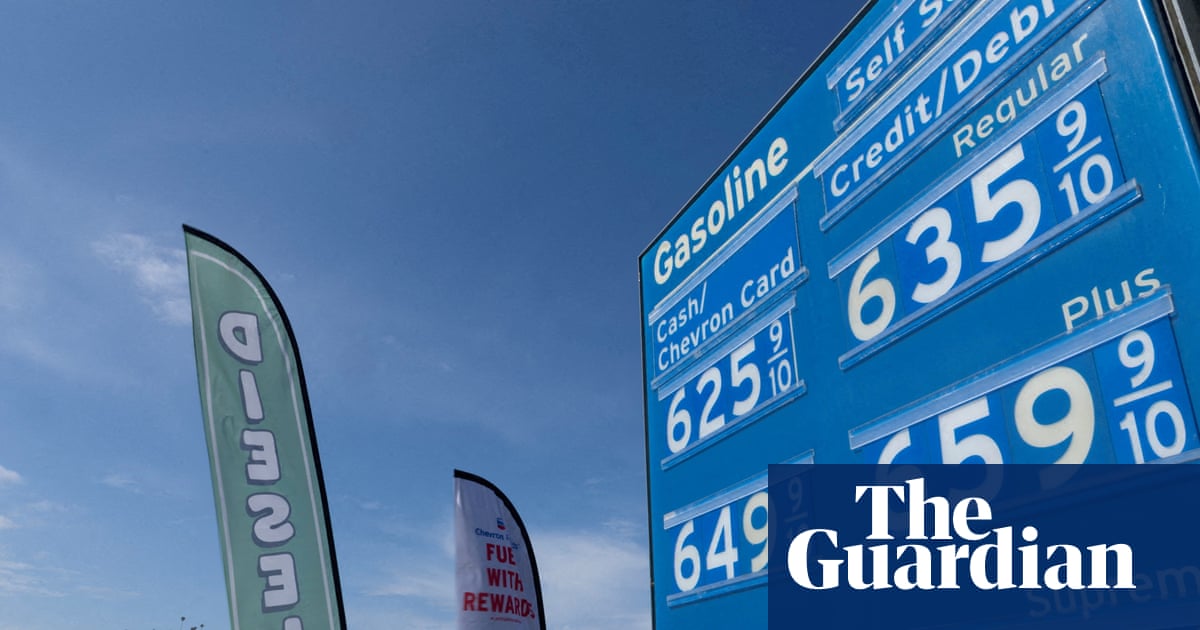
On 24 May 2026, oil prices fell to their lowest point in two weeks, a decline of nearly five percent. The proximate cause, according to market reporting, was growing optimism over a US-Iran peace deal. If negotiations succeed, Iranian crude would re-enter global supply chains at a moment when OPEC+ discipline is already under strain. Markets are doing what markets do: front-running a structural shift in supply. The more interesting question is what the geopolitical subtext of that deal would be—and whether Pope Leo's document speaks to it.
The US-Iran diplomatic track, as it has existed at various intensities over the past decade, has typically centred on nuclear compliance, sanctions relief, and regional influence. The AI document, by contrast, raises a set of questions that neither side in those negotiations has been eager to foreground: what role should autonomous systems play in any future military architecture in the Gulf? Who bears moral and legal responsibility when an AI-assisted system makes a targeting decision? If a framework agreement is reached, will it include any provisions on AI governance—or will that question be deferred to a later round of talks that may never materialise?
What the Document Does—and Does Not Do
The Vatican's leverage in international security debates is normative rather than coercive. It cannot impose sanctions, deploy forces, or regulate technology companies. What it can do is set terms of moral debate that shape how other actors justify their choices. Historically, papal documents on war and peace have operated in this register—the 1963 Pacem in Terris remains a reference point for multilateral disarmament advocates not because it changed any government's weapons programme, but because it provided a vocabulary for civil society arguments that governments eventually had to address.
Leo appears to be attempting something similar with AI. The Reuters podcast appearance by Joshua McElwee, a Vatican correspondent with deep sourcing, reinforced the signal that this document was not a routine teaching but a deliberate intervention. The language of "slowing down"—used in the Cointelegraph briefing on the document—implies that the Vatican views the current trajectory of military AI development as something closer to a crisis requiring triage than a technical problem requiring optimisation. That framing puts the Holy See at odds with the industrial logic of several major powers, where AI-enabled weapons programmes are presented as competitive necessities.
The Diplomatic Geometry
What makes the timing noteworthy is the convergence of two separate tracks. The US-Iran deal, if it holds, would represent the most significant de-escalation in Gulf security architecture in a generation. It would also, almost certainly, involve some acknowledgment by Tehran of constraints on its nuclear programme in exchange for sanctions relief. Whether AI governance makes it into that framework is an open question—and one where the Vatican's document may be attempting to move the needle.
If the deal is announced without any AI provisions, critics will argue that the international system has once again traded ethical principles for transactional outcomes. If AI provisions are included, the Vatican will claim partial credit for elevating the issue onto the agenda. Either way, the document ensures that the moral question cannot be easily dismissed as beside the point of a commercial negotiation. That is, perhaps, the most a papacy without hard power can realistically achieve: making it harder for diplomats to avoid the conversation.
This article was filed from Vatican City and Washington. Monexus tracked the oil market reaction separately via Cointelegraph's market wire.
Wire provenance
This editorial synthesis draws on the following public wire/social posts:
- https://x.com/reuters/status/1923847192844530176
- https://t.me/Cointelegraph/78432
- https://t.me/Cointelegraph/78412
- https://t.me/Cointelegraph/78431