Pope Leo XIV Calls for AI to Be 'Disarmed,' Drawing Parallel to Nuclear Governance
Pope Leo XIV has used the word 'disarm' — deliberately, he says — to describe what artificial intelligence requires: a governance framework that frees the technology from logics of domination, exclusion, and death. The framing positions AI alongside nuclear power as a force demanding international oversight.
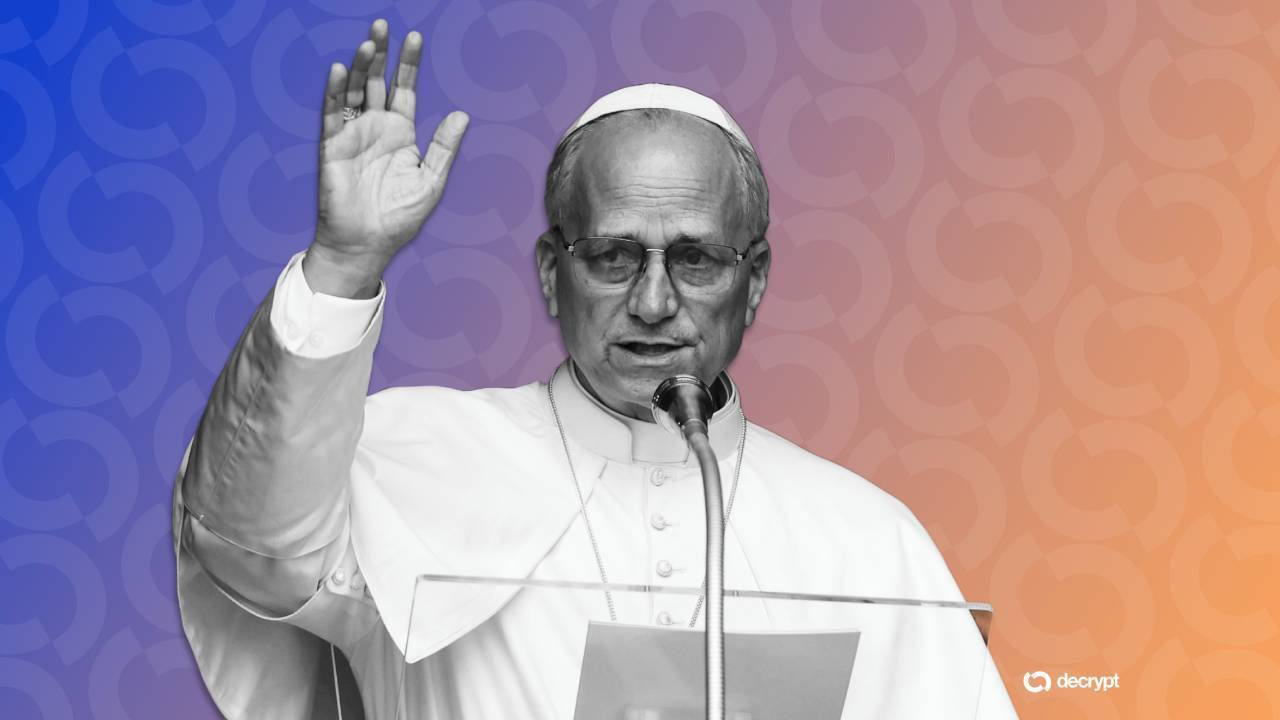
Pope Leo XIV delivered remarks on 25 May 2026 that drew an explicit parallel between artificial intelligence and nuclear power — and described both as requiring liberation from logics he framed as fundamentally coercive. "AI needs to be disarmed," the Pope said in remarks broadcast from the Vatican. "Like nuclear power, it needs to be freed from logics that turn it into an instrument of domination, exclusion, and death." The word, he acknowledged, was chosen deliberately.
The remarks represent the sharpest public intervention on AI governance from the Vatican since Benedict XVI first addressed automated decision-making systems in 2023. They arrive at a moment of renewed international debate over how — and by whom — artificial intelligence systems should be regulated, with competing frameworks emerging from Washington, Brussels, and Beijing, and no settled multilateral architecture yet in place.
The Vatican Frames a Dilemma
The South China Morning Post reported on 25 May 2026 that the Pope's address characterized artificial intelligence as a technology whose trajectory is not yet fixed — one that could serve human flourishing or accelerate exclusion and violence depending on the governance structures imposed upon it. The framing is notable for its deliberate moral universalism: the Pope did not single out any nation, company, or military bloc as the primary source of the problem. Instead, he described a logic — of domination, exclusion, and death — that he suggested was inherent in ungoverned or badly governed AI.
That framing sidesteps the increasingly sharp US–European disagreement over how AI systems should be regulated. The European Union's AI Act, which entered full application in August 2025, imposes obligations on general-purpose AI developers and bans real-time biometric surveillance in public spaces. Washington has characterized similar measures as innovation-stifling. The Vatican's language does not take sides between those positions; it implies both are insufficient if they do not address what the Pope called the foundational purpose of the technology.
'Disarm' as Political Signal
The choice of the word "disarm" carries specific weight. It is the vocabulary of weapons control, of multilateral treaties governing forces that carry existential risk. By using it, the Pope implicitly positions AI alongside nuclear weapons and chemical arms as a domain requiring binding international agreement rather than voluntary corporate commitments or uncoordinated national rules.
That framing has a practical target: the current architecture of AI governance is fragmented. The United Nations General Assembly passed a non-binding resolution on artificial intelligence in 2024, but no treaty regime exists. The OECD has published principles. The G7 has discussed voluntary codes. None of these instruments carries enforcement mechanisms comparable to those governing nuclear materials under the Nuclear Non-Proliferation Treaty or the International Atomic Energy Agency.
The Pope's intervention suggests the Vatican views that governance gap as a moral crisis, not merely a regulatory inconvenience. Whether that signal translates into diplomatic pressure depends on whether the Holy See chooses to attach itself to specific negotiating processes — a step it has not yet announced.
Competing Visions of AI Governance
The international debate over artificial intelligence governance is shaped by competing national interests that the Pope's moral framing does not resolve. China has advanced its own AI governance proposals through the UN, emphasizing state sovereignty over AI development and opposing Western-led frameworks it characterizes as attempts to restrict developing-nation access to the technology. The United States has pushed for voluntary standards and opposed binding international regulation that might constrain its technology sector's competitive position. Europe has pursued mandatory risk-based frameworks that apply to both domestic and foreign AI developers operating in EU markets.
None of these positions is compatible with the Vatican's implied preference for binding multilateral oversight. The moral authority the Holy See commands in international affairs is real — it holds permanent observer status at the United Nations and maintains diplomatic relations with more than 180 states — but that authority has historically been most effective when deployed in support of specific procedural commitments rather than general moral appeals.
There is also the question of the Vatican's own institutional relationship with AI. The Holy See has invested in AI-driven administrative systems and has not publicly opposed the use of AI in its own governance operations. Critics of the Pope's framing will note the distance between calling for AI to be disarmed and examining the role of AI in institutions that speak most loudly about its dangers.
What Comes Next
The immediate question is whether the Vatican follows the Pope's remarks with a formal diplomatic initiative — a paper, a speech to the UN General Assembly, or quiet outreach to specific delegations. In previous cycles, the Holy See has used high-profile public statements as a precursor to behind-the-scenes advocacy. The 2015 encyclical on climate change, Laudato Si', preceded several years of sustained Vatican engagement with climate negotiators.
Whether the Holy See has the institutional bandwidth for a comparable multi-year push on AI is less clear. The Vatican is managing relationships across multiple active crises — the war in Ukraine, tensions in the Middle East, pressure on Catholic communities in sub-Saharan Africa — and its diplomatic corps is not large. The question of whether "disarm" becomes a sustained campaign or a rhetorical moment will likely be answered in the coming months, when the Pope's stated positions either acquire institutional follow-through or remain as statements alone.
The deeper structural question the Pope raised is whether artificial intelligence can be governed at all in the absence of a shared political purpose among the states capable of building it. The nuclear parallel is instructive: nuclear governance worked, however imperfectly, because the United States and the Soviet Union had convergent interests in preventing use, even as they competed. AI governance lacks that baseline. The states building the most powerful AI systems are also in competition across trade, military, and technology domains. A shared framework for "disarming" AI, in any meaningful sense, does not yet exist — and the Pope has offered no roadmap for creating one.
Wire provenance
This editorial synthesis draws on the following public wire/social posts:
- https://t.me/ClashReport/99999
- https://t.me/disclosetv/99999