The Strait at the Centre of the Storm: Hormuz, the US Vessel Incident, and the Fragility of Gulf Energy Chokepoints
A US-linked vessel detained by Iranian forces in the Strait of Hormuz on 23 May 2026 has crystallised weeks of escalating maritime tension into a single concrete incident — one that Polymarket traders currently assign only a 9% probability of the waterway returning to normal traffic before month-end.
The Strait of Hormuz is seventeen miles wide at its narrowest. On a clear day the Iranian coastline is visible from the Omani shore. Roughly one-fifth of the world's oil and a quarter of its liquefied natural gas pass through that sliver of water every year, making the strait among the most consequential geography on earth — and one of the most vulnerable. On 23 May 2026, a US-linked vessel was detained by Iranian naval forces inside or adjacent to the strait, an incident that by 24 May was drawing comment from Iranian officials and generating traffic on trading markets calibrated to the probability of normalisation.
The incident, first reported via Telegram on 23 May at 13:00 UTC, gained further texture the following day when an Iranian adviser characterise the detained vessel as a "thief" — language reflecting Tehran's longstanding framing of US maritime presence in the Gulf as inherently predatory rather than merely strategic. Separately on 24 May, the prediction market Polymarket was assigning a 9% implied probability to Hormuz traffic returning to normal by the end of the month. That number is not a forecast. It is a live bet, reflecting where real money — or at least real tokens — currently sits on the question. The market, such as it is, expects the disruption to persist.
What Happened on 23 May
The precise sequence of events in the hours surrounding the detention remains partially obscured. Video circulated via Telegram on 24 May shows what appear to be Iranian maritime forces intercepting a vessel, though the full context — location within the strait, whether the vessel was boarded or merely pursued — is not fully established from publicly available sources. The characterisation of the incident as involving a "US thief" came from an Iranian official quoted the same day, without further institutional attribution in the available wire material.
What is clear is that the vessel was linked to US interests — either flagged to a US operator, chartered by a US entity, or travelling under circumstances that Tehran deemed sufficient to classify as American-adjacent. The term "thief" has a specific legal and rhetorical resonance in Iranian discourse around the Gulf: it references not merely theft but sanctions evasion, specifically the allegation that US vessels or their proxies profit from smuggling or circumvention of Iran's oil-export restrictions. Whether this particular vessel was engaged in any such activity is not established by the sources available to this publication.
Iranian Leverage and the Logic of the Chokepoint
The Strait of Hormuz is not an abstraction for Tehran. It is the single most effective piece of physical infrastructure the Islamic Republic controls. No amount of sanctions architecture, no diplomatic pressure, no carrier group in the Arabian Sea can replicate the leverage that flows from controlling a corridor through which a fifth of global oil supply must pass. This is not a revelation — it is the foundational logic of Iranian Gulf strategy for forty years — but the incident of 23 May has given it renewed specificity.
Iranian officials have consistently argued that the US military presence in the Gulf is itself the destabilising factor. The Iranian framing holds that American vessels monitor, intercept, and at times physically obstruct legitimate trade — an inversion, in their account, of the piracy narrative. The detention of 23 May, whatever its specific legal merits, is legible through that lens: an enforcement action against an actor Tehran regards as violating its claimed maritime jurisdiction, or at minimum, as operating under cover of a hostility that the US itself has instituted through sanctions.
The 9% Polymarket probability of normalisation by month-end suggests that neither Iranian nor external observers expect a swift resolution. Markets that price the odds of traffic disruption are not pricing optimism. They are pricing a trajectory in which the incident, rather than being a single intercept, becomes the occasion for a new equilibrium — more船只 inspections, more US repositioning, more legal and diplomatic friction, and a permanent elevation of the risk premium attached to Gulf transit.
The Energy Calculus
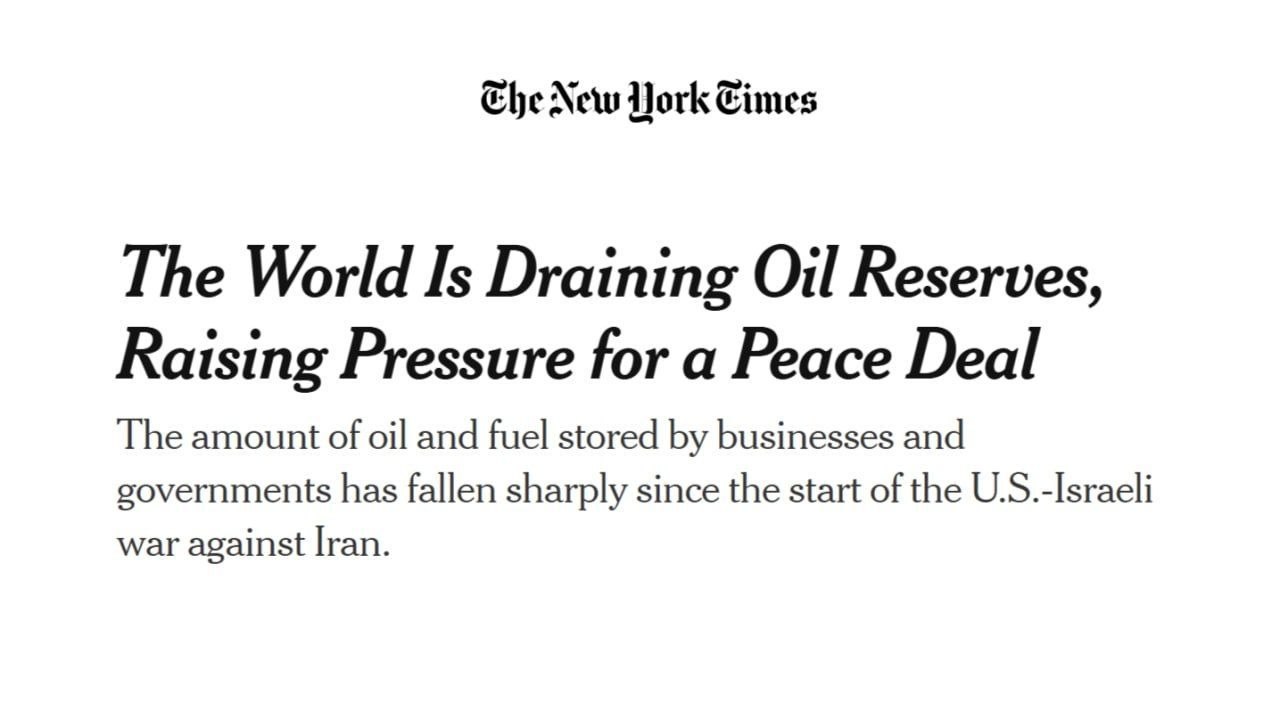
The Strait of Hormuz handles approximately 21 million barrels of oil per day in ordinary conditions, alongside substantial LNG flows from Qatar. Any meaningful reduction in throughput — whether through increased inspection regimes, vessel diversions, or outright blockage — transmits rapidly into global energy markets. The economic mechanism is direct: tighter supply raises spot prices for crude, which feeds through into refined product costs within days for road transport and somewhat longer for aviation and industrial consumers.
The geopolitical mechanism is slower but potentially more durable. Insurance costs for Gulf transit rise. Shipowners begin routing cargoes around the Cape of Good Hope, adding weeks to delivery times and significantly increasing freight costs. Asian importers — China, India, Japan, South Korea — accelerate whatever diversification programmes they have in place, purchasing more from Russian, West African, or North Sea sources to reduce their exposure. These adaptations, once made, tend not to fully reverse. A disruption that lasts three months can alter trade flows for years.
This publication has previously noted the structural irony in Western policy towards Gulf energy security: the same sanctions architecture designed to limit Iranian oil revenue has, by concentrating global supply dependence on a handful of chokepoints, enhanced Iran's geopolitical leverage in the event of a confrontation. The detention of 23 May is not, in isolation, that confrontation. But it is a data point in a pattern that global-South energy consumers are watching closely, and drawing their own conclusions from.
The Broader US-Iran Strand
The vessel incident arrives at a moment of sustained friction between Washington and Tehran, without rising to the level of outright conflict. The US has maintained a substantial naval presence in the Gulf and broader Middle East throughout this period. Iranian naval forces operate from bases on the northern shore of the strait and in the wider Gulf with growing confidence. Neither side has an obvious interest in a direct engagement that could not be contained — but both sides maintain the pressure precisely because the ambiguity is functional.
The language used by the Iranian adviser — "thief" — is calibrated for domestic and regional audiences rather than diplomatic channels. It signals a willingness to escalate the rhetorical register and, implicitly, to frame any US response as confirmation of the predatory narrative. Whether this reflects a decision at the highest levels of the Iranian state, or the semi-independent initiative of a naval commander operating with strategic cover rather than specific orders, is not clear from the available sources. The ambiguity is itself informative: it suggests that Tehran has not abandoned the option of a deniable posture while also demonstrating that its forces can act decisively when they choose to.
The Polymarket figure also reflects something about market psychology that is worth noting. Probabilities in the single digits are not predictions of catastrophe — they are statements about the difficulty of normalisation. Even if the immediate incident resolves, the question of whether Hormuz traffic returns to "normal" by end of May is different from whether it returns to its pre-incident baseline. "Normal" in a strait contested by two parties in persistent tension is already an unstable condition.
What Comes Next
The immediate question is whether the vessel is released quickly, through diplomatic back-channels or direct negotiation, or whether it becomes the subject of a prolonged legal and political dispute. The latter outcome — more common historically in Gulf maritime incidents — typically raises the temperature rather than lowering it.
The medium-term question is whether the incident changes the behaviour of other vessel operators in the strait. Shipping companies with vessels flagged to US interests, or operating under US charter, will recalculate risk. They may divert; they may insure differently; they may seek Iranian clearance as a precondition of transit rather than relying on the implicit protection of their flag state. Each of these adaptations erodes the US security guarantee that underwrites free transit in Gulf waters — not because the US has stopped providing it, but because the risk calculus of relying on it has shifted.
The longer-term question is structural: what happens to a global oil market that depends on a single, contested waterway when the contesting power is a state under comprehensive Western sanctions, with a sophisticated naval capability and a forty-year track record of leveraging exactly this geography? The answer is not that the market collapses — it adapts, through pricing, through routing, through investment in alternative infrastructure. But adaptation takes time and costs money, and the costs are not borne equally by the actors who created the conditions for the disruption and those who did not.
The 9% figure on Polymarket is, in the end, a minor data point — a snapshot of crowd-sourced uncertainty on a single platform. But it captures something genuine: that as of 24 May 2026, the probability of the world's most important energy corridor operating without visible friction by the end of the month is roughly the same as the probability of rolling a double six on a fair die. The die may come up clean. The strait may quiet. But the odds are what they are.
—
Desk note: The wire picture on the Hormuz vessel incident was thin at time of writing — one Iranian-adjacent Telegram post, one Polymarket probability, one additional Telegram post on the same account dated 23 May. This article drew those threads together and located them within the established structural context of Gulf energy security and US-Iran strategic competition. We are watching the Iranian and US official channels for confirmation of the vessel's status and for any indication of diplomatic movement. The 9% Polymarket figure is included as a market signal, not a predictive claim.