How the Strait of Hormuz Became the Pivot Point for a New Geopolitical Order
A proposed US-Iran agreement that would reopen the Strait of Hormuz and clear mines during a ceasefire window is reshaping energy markets, regional alliances, and the structural leverage of dollar-based sanctions — with Singapore emerging as a quiet beneficiary and litmus test.
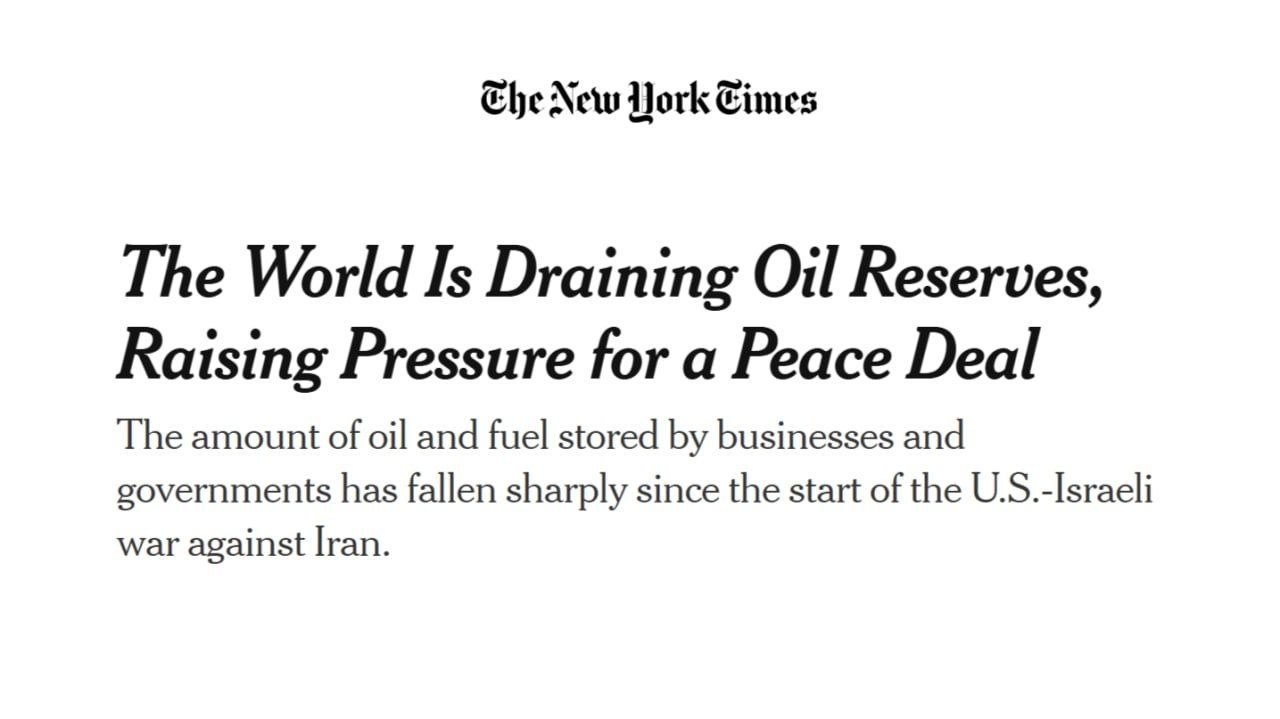
On the morning of 24 May 2026, energy markets delivered a verdict before diplomats had finished talking. Brent crude fell nearly 5 percent to a two-week low after reports surfaced that the proposed US-Iran agreement under negotiation would require Iran to clear naval mines from the Strait of Hormuz during a 60-day ceasefire extension — and that the waterway itself would reopen under the deal's terms. Singapore's Monetary Authority, meanwhile, was quietly working with industry groups to modernize the infrastructure that private banks use to open accounts for international clients. The two developments — one headline-grabbing, one buried in a regulatory notice — share a common thread. The city-state that sits at the mouth of the world's most consequential shipping lane is recalculating its position as a deal that once seemed implausible drifts toward plausibility.
The terms on the table, as currently understood, are limited in ambition but significant in scope. Iran would clear the mines it planted during the hostilities — an act that effectively weaponized the strait's geography — and in return receive sanctions relief tied to verified compliance milestones. The deal would not resolve the nuclear question permanently. Iran has stated explicitly that it has not agreed to hand over its highly enriched uranium, and that the nuclear issue sits outside the preliminary framework. That caveat alone means the agreement, if reached, is a pause — not a resolution. But even a pause carries weight when the alternative is a closed waterway.
The Hormuz Geometry
No geography in global energy politics is more sensitive than the 21-mile-wide passage between Oman and Iran that separates the Persian Gulf from the Gulf of Oman. Roughly 20 percent of the world's oil flows through it. When it functions normally, tankers move without incident. When it does not, the ripple effects reach petrol stations in Nairobi, industrial energy costs in South Korea, and the insurance premiums that every maritime intermediary builds into their business model.
That Singapore sits downstream of this chokepoint is not incidental. The city-state's port is the world's busiest transshipment hub; its banking sector handles the clearance flows for a disproportionate share of Asian commodity trade. When Hormuz closed or approached closure, shippers rerouted around the Cape of Good Hope — adding days, fuel costs, and complexity. Singapore's logistical crown, built partly on its position as the shortest routing for east-west cargo, faced structural competition from that longer arc. When the detour became habitual rather than exceptional, patterns shifted in ways that took years to partially reverse.
Singapore's economy grew 6 percent year-on-year in the first quarter of 2026, beating official advance estimates. A portion of that performance reflects the premium that a disrupted strait injects into routing decisions. Reopen Hormuz fully, and some of that premium erodes — but only partially, and only in the short term. The structural question is whether a stable, sanctions-relieved Iran returns to the global oil market as a normalized supplier rather than a circumvention risk, and what that normalization does to the architecture of energy trade finance.
Tehran's Calculus — and the Shadow over Khamenei
The most disorienting intelligence finding in this cycle came from US assessments reported on 24 May 2026: Iran's Supreme Leader, Ayatollah Ali Khamenei, was described as effectively isolated, holed up in an undisclosed location with limited outside contact. If accurate, the report raises a question that the negotiating parties have an interest in leaving ambiguous — who is actually making decisions inside the Iranian system right now, and whether whoever that is can deliver on commitments at the table.
Iran's negotiators have insisted the nuclear issue does not form part of the preliminary framework. That is a position, not a concession. It signals that the hardliners within the system — whoever remains institutionally coherent enough to constitute a faction — have drawn a line short of the weapons program question. Whether that line is defensible politically depends partly on what sanctions relief actually looks like in practice, and whether the Iranian public and the patronage networks that sustain the state see tangible economic returns.
The market-implied probability of a deal by the end of June 2026 sat at roughly 34 percent on Polymarket as of 24 May, a figure that reflects informed betting rather than diplomatic certainty. The gap between 34 percent and the certainty that energy markets appeared to be pricing in during the price decline that same day suggests that either the market is front-running the political process, or that the deal's probability distribution is more compressed than the betting odds indicate.
Tel Aviv's Red Line — and What It Signals
Israel's position, delivered publicly by Prime Minister Benjamin Netanyahu on 24 May 2026, was categorical. Iran's policy remains unchanged. Tehran will not have nuclear weapons. The statement was not a negotiating position — it was a stated fact about an outcome Israel intends to prevent regardless of what the Americans arrange with the Iranians. That framing matters in two directions simultaneously.
Outwardly, it signals to the Arab Gulf states and to Israel's Gulf normalization partners that Israel will not be a quiet bystander to any arrangement it considers insufficient. Inwardly, it establishes a domestic political baseline that limits Netanyahu's room to accept a deal, even a partial one. The question is whether Israel's stated opposition is a negotiating lever — designed to drive harder terms — or a genuine red line that, if crossed, produces consequences. The intelligence community's assessment of Khamenei's isolation complicates Tel Aviv's calculus. A regime that is operationally fragmented may not be a reliable counterpart regardless of what it signs.
Dollar Leverage and the Sanctions Architecture
The structural dimension of this negotiation runs through the dollar's role as the plumbing of global trade, and specifically through the mechanism by which US sanctions operate. Dollar-denominated transactions cleared through US correspondent banking networks give the Treasury Department reach that no other instrument matches. Countries that want to transact in dollars — which is essentially every country engaged in international trade — cannot afford to be cut off from the clearing system. That is the mechanism through which secondary sanctions have bite.
A sanctions-relief agreement with Iran does not eliminate that mechanism, but it does provide data on whether it can be deployed selectively — lifted in chunks tied to verified compliance — without losing its deterrent credibility. If Venezuela, Russia, and other sanctioned states observe that Iran negotiated its way back to legal oil exports, the incentive to pursue diplomatic normalization rather than circumvention economics increases. If the deal collapses and sanctions snap back, the lesson is the opposite: that the US cannot be relied upon to deliver, and that the circumvention infrastructure built during maximum pressure is the safer bet.
Singapore's role in this dynamic is partly logistical, partly symbolic. The city-state's financial sector processes flows that connect Asia to global capital markets. Its central bank's work, referenced in a Reuters report on 25 May 2026, to streamline private bank account applications alongside industry groups reflects an ongoing effort to remain indispensable to international wealth management and corporate banking. Whether that indispensability holds depends partly on whether Asia's energy trade continues to route through dollar-cleared channels or shifts toward alternative settlement mechanisms.
A reopened Hormuz does not, by itself, answer that question. But a US-Iran deal that produces sustained sanctions relief, a restored Iranian oil flow, and a stable waterway is a step toward normalizing an actor who has been outside the system for seven years. What that normalization does to the price of the dollar's exclusivity — the premium that the threat of Iranian supply disruption embedded in energy contracts, the insurance cost of Hormuz uncertainty — is a structural question that traders, central bankers, and finance ministries in Singapore and beyond are working through quietly, in regulatory notices and in the margins of the current diplomacy.
What Comes Next
The most honest assessment of the current moment is that it is unresolved. Iran has not agreed to surrender enriched uranium. Israel has drawn a red line short of any deal it would call acceptable. US intelligence assessments describe an Iranian leadership in partial disarray. The ceasefire window is 60 days. Any of several outcomes — a narrower humanitarian or maritime corridor agreement, a partial sanctions suspension, a complete breakdown — remains plausible.
What is not in dispute is that the strait's status sits at the center of the calculation, and that Singapore — along with every other economy dependent on Gulf energy flows and maritime routing — has an interest in a resolution that holds. The city-state's central bank moves are the unglamorous counterpart to the diplomatic headlines: infrastructure built to remain relevant regardless of which direction the geopolitics resolves. That is, in the end, the most Singaporean thing about this moment.
This article was desked on 25 May 2026.
Wire provenance
This editorial synthesis draws on the following public wire/social posts:
- http://reut.rs/4dK7suc
- https://t.me/Cointelegraph/179009
- https://x.com/polymarket/status/1923940471569833984
- https://x.com/polymarket/status/1923771982404464782
- https://x.com/polymarket/status/1923704379122696229
- https://x.com/polymarket/status/1923685196461228383
- https://x.com/polymarket/status/1923163718262116611