Trump's Iran Deal Carries a Catch: Normalize With Israel or Miss Out
The Trump administration is conditioning any Iran nuclear agreement on simultaneous expansion of the Abraham Accords, demanding that Muslim-majority nations normalize relations with Israel as a prerequisite — a gambit that could either reshape the region or sink both tracks simultaneously.
The Toronto Stock Exchange hit a new high on Monday, driven partly by investor optimism that U.S.-Iran nuclear negotiations were advancing — a market signal that the White House has been eager to amplify. But beneath the optimism lies a diplomatic package that is far more complicated than a straightforward sanctions-for-program freeze. President Donald Trump is demanding that Muslim-majority nations normalize relations with Israel as a mandatory component of any Iran deal, according to multiple reports published on 25 May 2026. The condition, which no previous administration has staked so explicitly, transforms two separate regional negotiations into a single intertwined ultimatum.
The proposal, first reported by Middle East Eye and corroborated by Al Jazeera's breaking news desk, asks nations including Pakistan to sign on to the Abraham Accords — the 2020 agreements that saw the United Arab Emirates, Bahrain, and Morocco establish diplomatic relations with Israel — before being granted a seat at any final Iran agreement. Trump reiterated the condition publicly via social media on 25 May, saying negotiations with Iran were progressing and that the outcome would be either "a great deal for everyone, or there will be no deal at all."
The strategy is blunt by design. Rather than treating the Iran nuclear question and Arab-Israeli normalization as parallel tracks, the White House is treating them as non-separable. That framing carries both an intellectual logic and a set of serious risks that regional capitals are now working through at speed.
The Linkage Logic
The administration has framed the Abraham Accords expansion as a structural prerequisite rather than a diplomatic bonus. Officials appear to believe that an Iran deal with Gulf states still hostile to Israel is incomplete — that regional realignment, not merely nuclear containment, is the goal. By tying normalization to the Iran negotiations, the White House creates a single pressure point that distributes leverage across multiple dossiers simultaneously.
For Iran, the message is indirect but legible: Tehran must accept not only international inspection regimes and uranium enrichment limits, but also a geopolitical environment in which its regional allies — and its capacity to leverage Arab public opinion against Israel — are structurally weakened. The Islamic Republic cannot block other nations from recognizing Jerusalem. For the Gulf states being asked to expand the Abraham Accords, the message is different: accept normalization now, and Iran will be incentivized to conclude its own deal, which removes the last legitimate reason to postpone.
This is not how the original Abraham Accords worked. Those agreements were bilateral, sequenced, and largely decoupled from the Iran question — the UAE and Bahrain normalized with Israel in part because they believed Iranian regional ambitions had been sufficiently contained by the Trump-era maximum pressure campaign, not because they were promised an Iran deal in exchange.
What the Muslim-Majority Nations Are Being Asked to Accept
The countries receiving this demand are not in equivalent positions. Pakistan — named specifically in reports from Sprinterpress and corroborated by Middle East Eye — has no diplomatic relations with Israel and has never publicly committed to normalization despite decades of pressure from Washington. The Pakistani position has historically been linked to its support for the Palestinian cause and its domestic political calculation that pro-Palestinian sentiment is a reliable vote-winner across a broad ideological spectrum.
Asking Pakistan to normalize with Israel in exchange for a seat at an Iran deal table is not a small ask. It requires the Pakistani government to absorb the political cost of a reversal on Jerusalem — a reversal that carries no guaranteed gain, because the Iran deal's benefits (sanctions relief, access to the global financial system) are the target of the deal itself, not a prize being distributed to Pakistan. Pakistan may receive access to a completed arrangement, not a stake in its construction.
Saudi Arabia, which has signaled interest in normalization for several years, faces a different calculus. Riyadh has made clear it wants the U.S. security guarantee and the technology transfer packages that a formal U.S.-Saudi alliance would bring. If Israel is the condition for that alliance, the Saudis may calculate that normalization carries its own strategic value independent of the Iran file — but they will want iron-clad security commitments in return, not merely a seat at a negotiating table.
The condition as reported leaves limited room for nuance. "Mandatory" is the word attributed to the administration via multiple sources. That removes the diplomatic fiction that the Abraham Accords expansion is a voluntary enhancement of an existing framework — it is being treated as a price of admission.
The Iran Calculus
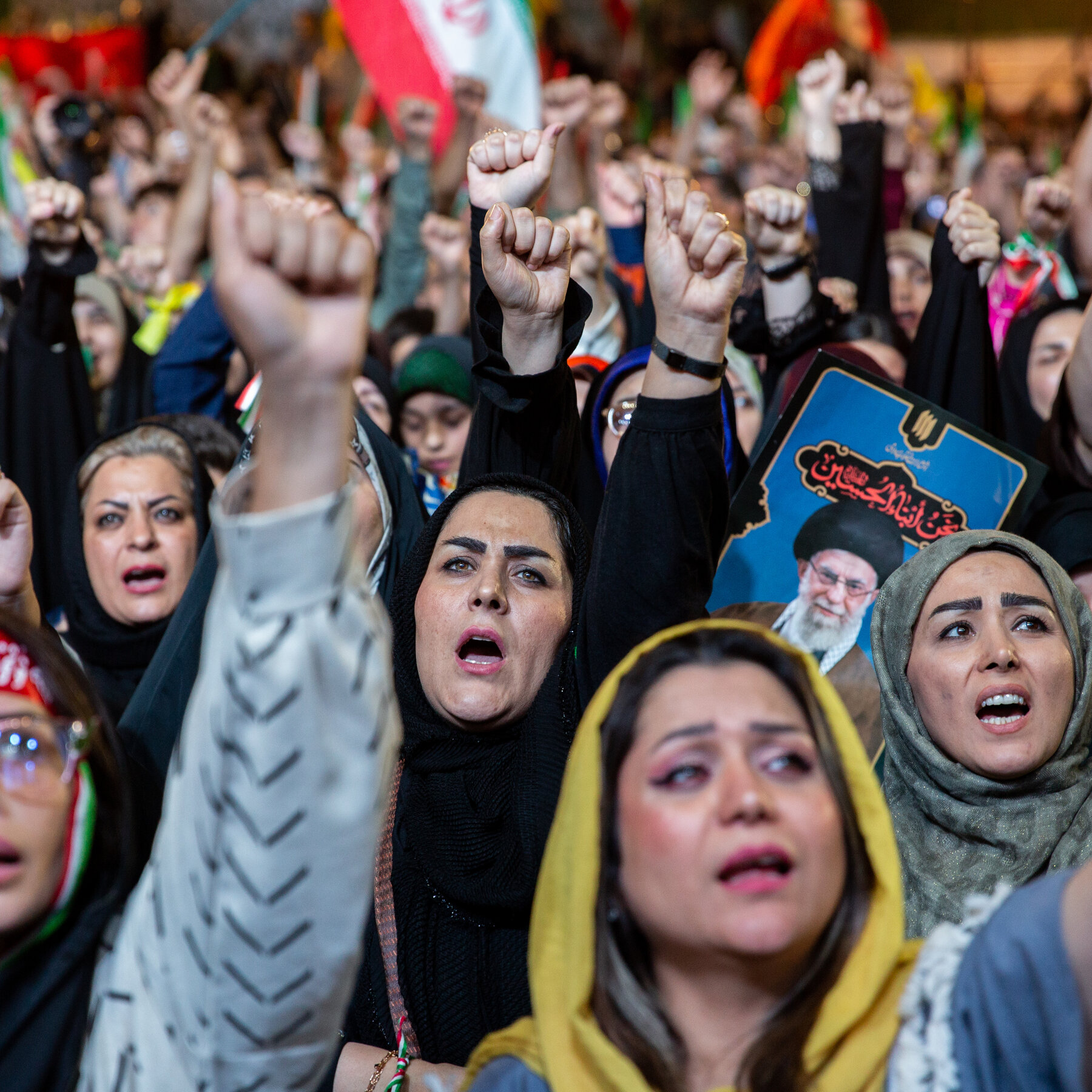
Tehran's position is complicated by the fact that it has spent years arguing that the Abraham Accords represented an Arab capitulation to Israeli pressure and a betrayal of Palestinian rights. Iranian state media has consistently framed the agreements as a U.S.-driven realignment designed to isolate Iran by offering Gulf states a way to side with Israel without resolving the underlying Palestine question. Now the Trump administration appears to be making that same framing into a negotiating condition.
This creates a structural problem: if Iran refuses to engage with the Abraham Accords expansion, it may be blamed for blocking a broader regional settlement. If Iran accepts the expansion as a condition of its own deal, it implicitly validates a framework it has spent years denouncing. Neither outcome is straightforward for a government whose legitimacy is partly constructed on opposition to the Israeli-Palestinian status quo.
Iranian officials have not publicly responded to the specific Abraham Accords condition as of late afternoon on 25 May, per available sourcing. The negotiations are ongoing, and the public position may shift — Iranian negotiators have historically been willing to accept terms privately that they would not endorse publicly.
Risks of the Bundled Approach
The bundling of two separate diplomatic achievements into a single conditional package carries an obvious risk: if either track fails, both may fall. A Muslim-majority nation that declines normalization — or that cannot secure domestic approval for it — does not merely absent itself from the Abraham Accords; it may be positioned as having blocked an Iran deal. That attribution would carry significant diplomatic cost, particularly for states already facing U.S. pressure on sanctions compliance and financial access.
Conversely, an Iran deal that collapses under the weight of its own conditions — over uranium enrichment limits, over the sequencing of sanctions relief, over inspection access — would leave the Abraham Accords expansion without its stated justification. Normalization without a completed Iran deal would mean Muslim-majority nations accepted the political cost of recognizing Israel without receiving the regional security improvement the package was supposed to deliver.
The market reaction — the TSX hitting a new high — suggests investors are pricing in the optimistic scenario: a resolved Iran, reduced regional tension, and an expanded normalization architecture. That is a plausible outcome if the negotiating parties find enough common ground. But diplomatic history in the Middle East is littered with packages that were too large to hold together.
What remains unclear from the available sourcing is whether the "mandatory" framing represents the administration's opening position, a firm red line, or a negotiating pressure tactic designed to be partially walked back in exchange for concessions elsewhere. The Reuters reporting that the TSX rally reflects optimism about the talks suggests the market is treating progress as the base case — but financial markets price probability, not certainty.
The next several days will test whether the Iran deal can absorb the Abraham Accords condition without fracturing. If it cannot, the bundled approach will be remembered not as a diplomatic masterstroke but as an example of how the compression of separate negotiations into a single demand can destroy both.
This publication's wire coverage ran the Abraham Accords expansion as a secondary development behind the TSX rally and the nuclear negotiation progress. Monexus chose to lead with the linkage condition itself, on the grounds that the conditional framing — mandatory normalization rather than voluntary enhancement — changes the character of the diplomacy being proposed, and that the standard wire framing understated the leverage being applied to Muslim-majority capitals.
Wire provenance
This editorial synthesis draws on the following public wire/social posts:
- http://reut.rs/4du64wL
- https://t.me/intelslava
- https://x.com/sprinterpress/status/1952345678901198345