Trump's Iran Deal: Maximum Pressure Meets a Maximumist Ask
Trump's promise of a deal 'completely opposite' to the JCPOA appears to demand concessions Tehran has historically refused, raising questions about whether the administration is negotiating or posturing.
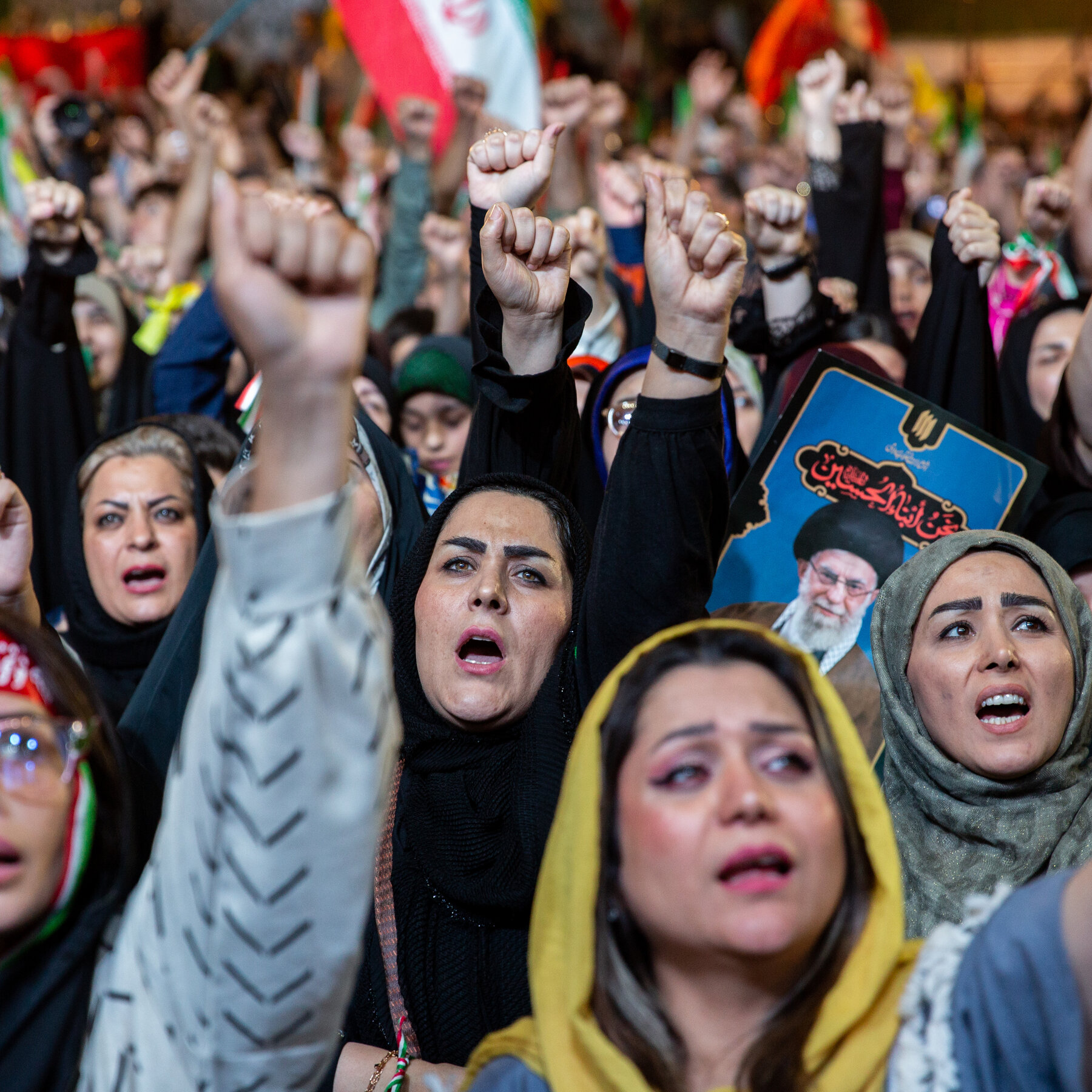
On 25 May 2026, speaking to reporters before boarding Air Force One, Donald Trump said the United States was working toward a nuclear framework with Iran that would be the "complete opposite" of the 2015 Joint Comprehensive Plan of Action. His administration, he added, would not rush into any deal. Three months into a regional conflict that has reshaped the strategic calculus across the Middle East, the president was simultaneously projecting openness to diplomacy and signaling that the terms on the table would look nothing like those his first administration tore up eight years ago.
The contradiction, if it is one, is the entire point. The Trump team's stated position — permanent curbs on Iran's enrichment programme, verified dismantling of advanced centrifuge infrastructure, sanctions relief tied to concrete actions rather than good-faith gestures — is precisely the outcome Iran has historically refused to grant. Whether this represents a negotiating posture designed to extract maximum concessions before a genuine deal, or a maximalist position intended to foreclose agreement while claiming the high ground, is the question that will define the next phase of US-Iranian engagement.
The Historical Weight
The JCPOA, negotiated under Barack Obama and implemented in January 2016, offered Iran sanctions relief in exchange for curbing its nuclear programme under international monitoring. Enrichment was capped at 3.67 percent — well below weapons-grade — and Iran was required to reduce its stockpile of low-enriched uranium and surrender核心 equipment for a minimum of ten years. Inspections were intrusive by historical standards, though critics — including Trump — argued the deal's sunset clauses made it a time-limited arrangement that simply deferred the problem.
Trump withdrew from the agreement in May 2018, reimposing the full weight of US secondary sanctions and arguing that Iran had been given access to tens of billions of dollars in frozen assets without sufficiently constraining its nuclear ambitions. In the years that followed, Iran's nuclear programme advanced considerably. Uranium enrichment climbed to 84 percent purity — weapons-adjacent — and the International Atomic Energy Agency reported that Iran had accumulated enough enriched material for multiple nuclear devices, if it chose to weaponise it. The diplomatic window that existed in 2015 had narrowed considerably.
The current negotiating environment differs from 2015 in ways that cut both directions. Iran is governed by a more hardline administration than Mahmoud Rouhani's, one that ran partly on resistance to US pressure and would face significant domestic political costs for acceding to demands it views as capitulatory. Simultaneously, the regional context — a three-month-old war that has drawn in US forces, exposed the limits of American power projection, and forced Gulf states to recalculate their own security postures — has created incentives on all sides to explore off-ramps.
What the Administration Is Actually Demanding
The administration has been explicit about what it wants. Trump has described the prospective framework as the "complete opposite" of the JCPOA, a formulation that suggests not merely different terms but a fundamentally different structure. Officials have indicated the new arrangement would not include time-limited provisions that allow Iran to expand enrichment after a fixed period. It would require verified, ongoing dismantlement of advanced centrifuge infrastructure. And it would link any sanctions relief to demonstrated compliance rather than phased easing — a significant departure from the sequential, trust-but-verify approach that characterised the original deal.
The administration has also sought to decouple the nuclear question from broader US-Iranian engagement. The JCPOA was explicitly scoped as a nonproliferation agreement, not a normalization framework. But critics, including some within the Republican foreign policy establishment, argued that it inadvertently provided Iran with a pathway to regional great-power status by lifting sanctions while leaving its missile programme and proxy networks intact. The current team appears to want a narrower, more defensible arrangement — one that demonstrably prevents weaponsisation without credentially rehabilitating the Iranian state.
The sources do not specify what fallback position the administration would accept if Iran declines the maximalist terms, or what leverage beyond sanctions and military signalling the US is prepared to deploy. What is clear is that the administration has been careful to manage expectations. On 25 May 2026, officials played down the prospect of an imminent breakthrough, underscoring that differences between the two sides remain substantial.
Structural Constraints and the Dollar Question
Any analysis of US-Iranian diplomacy must account for the structural role of dollar-denominated finance in constraining Iranian behaviour. Since the 1979 revolution, US sanctions have operated as an extraterritorial tool of foreign policy, leveraging the dollar's role in global commodity markets to deny Iran access to the international financial system. This architecture does not require allied cooperation; it operates through the structural dependency of global banks and corporations on US dollar clearing. Even states and companies with no direct US exposure cannot risk being cut off from dollar-denominated markets.
The Trump administration's approach to sanctions relief appears to be shaped by a desire to avoid the criticism that the JCPOA had effectively transferred cash to Iran without sufficient constraints on its behaviour. A framework that ties relief to verified compliance, rather than offering upfront sanctions easing in exchange for promises, would structurally limit the amount of liquid capital Iran could access before demonstrating it has permanently abandoned its nuclear ambitions. Whether this is a principled negotiating position or a design for an agreement that Iran cannot accept is, again, the central question.
The dollar architecture also shapes the regional political economy in ways that go beyond the nuclear file. Saudi Arabia, the UAE, and other Gulf states have equities in any Iran framework that are not always aligned with Washington's stated goals. Riyadh has been careful to signal that it does not seek confrontation with Iran — a notable shift from the confrontational posture of the Salman era — but has also been clear that it will not accept Iranian nuclear weapons. A deal that allows Iran economic relief without resolving the regional proxy competition could create space for a more assertive Iranian foreign policy in Iraq, Yemen, and the Levant. The sources do not specify how the Gulf states' views are being incorporated into the current negotiating process, though Oman — a longstanding back-channel — is understood to be playing a facilitating role.
Israel's position remains outside the diplomatic framing but inside the strategic calculation. Israeli officials have maintained, publicly and through back-channels, that they retain the right to use military force against Iranian nuclear facilities if diplomacy fails. This is not a negotiating position — it is a standing posture that has shaped Iranian strategic thinking since the programme's inception and continues to constrain Tehran's calculations.
What Remains Uncertain
The sources available do not specify the administration's precise negotiating position on several key questions: whether Iran would be permitted to retain any enrichment capability under a final framework; what inspections regime is being proposed for undeclared sites; what timeline, if any, is attached to sanctions relief; and whether there is a defined fallback position if the current talks collapse. Iranian official statements, cited in regional media, have insisted that Iran will not negotiate under duress and that its nuclear programme is a sovereign right — formulations that suggest significant distance between the two sides' opening positions.
What is verifiable is that Trump is publicly committed to an outcome that looks maximalist relative to anything Tehran has previously accepted, while simultaneously leaving the door open to negotiation. The administration has also demonstrated, across multiple bilateral negotiating contexts, a pattern of establishing extreme positions before pivoting to more moderate outcomes — a pattern that may be deliberate strategy or may reflect internal divisions about what outcome is actually desirable.
The three-month-old regional conflict adds a dimension that the sources do not fully illuminate. The war has imposed costs on all parties and created political incentives to explore diplomatic off-ramps. It has also demonstrated the limits of US military leverage and underscored to regional actors the risks of extended confrontation. Whether this context makes agreement more likely or provides additional cover for a maximalist negotiating position remains to be seen.
The Stakes
The outcome of these talks will shape the regional order for a generation. A successful framework that genuinely constrains Iran's nuclear programme would remove one of the most persistent flashpoints in Middle Eastern geopolitics and create space for broader diplomatic engagement. It would also, if structured carefully, avoid the criticism that the original deal simply deferred the problem while Iran accumulated resources and regional influence.
A failed negotiation carries different but equally significant risks. Iran might interpret the collapse of talks as evidence that the US is negotiating in bad faith, providing political cover for an accelerated dash toward weapons-grade enrichment. Israel might interpret it as a green light for military action, with consequences that are difficult to model. And Gulf states, watching from the sidelines, might begin to reassess their own nuclear options — a cascade effect that would fundamentally destabilise the nonproliferation architecture across the region.
The sources indicate that gaps between the two sides are real and that neither party has signalled willingness to accept the other's opening position. What they do not indicate is where the actual centre of gravity lies, or whether the administration's public maximalism reflects an internal consensus or a negotiating posture designed to manage expectations.
The desk notes that this publication's sourcing is limited to three X posts and one Telegram wire item. The administration's detailed negotiating position has not been independently confirmed, and Iranian official statements have not been incorporated in full. A fuller accounting of the diplomatic record will follow as additional sourcing becomes available.
Wire provenance
This editorial synthesis draws on the following public wire/social posts:
- https://t.me/intelslava/15283
- https://x.com/Reuters/status/2058847501680287744
- https://x.com/Polymarket/status/2058847512345678912