Trump's Thai Gambit: Iran's Unusual Diplomatic Riposte and the Fraying Edge of 'Maximum Pressure'
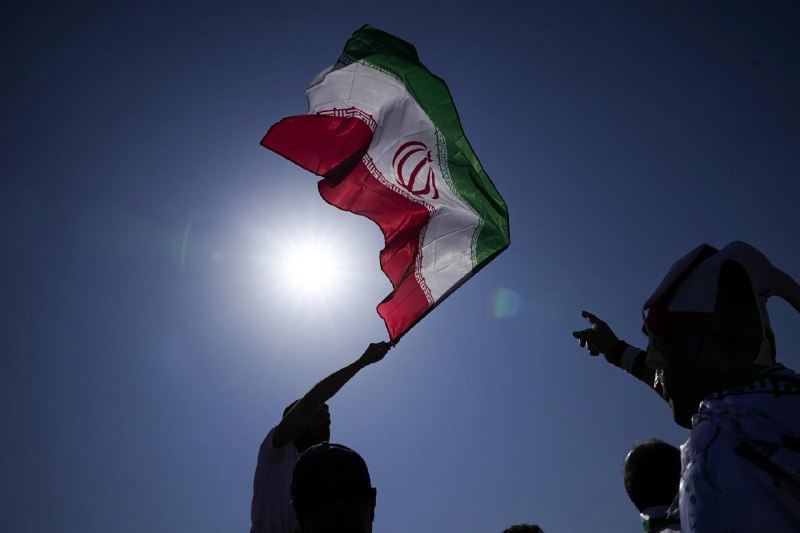
On the morning of 25 May 2026, the Iranian embassy in Bangkok posted a response to Donald Trump that broke with the measured, back-channel conventions of diplomatic practice. The US president had, once again, issued threats against Tehran. The embassy — not the foreign ministry in Tehran, not a hardline faction's mouthpiece — replied directly, publicly, and with uncharacteristic sharpness. The episode, small in itself, illuminates a larger fracture in how the United States and Iran are attempting to manage a negotiation neither side can afford to let collapse.
The substance of the Trump administration's position was laid out hours earlier by the president himself. The US would not, he said, "rush into" a deal with Iran. Negotiations were proceeding, in his framing, in "an orderly and constructive manner." Iranian officials, for their part, insisted that key differences remained unresolved. The gap between those two characterisations — Washington's measured public posture and the implied pressure behind it — is where the diplomatic work actually gets done, or fails to.
The Bangkok Signal
The choice of the Thai embassy as the vehicle for a public response was not random. Thailand occupies a particular geopolitical position: a nominally non-aligned middle-power with deep US security ties, yet one that has also maintained functional relations with Tehran across multiple cycles of sanctions and escalation. The embassy in Bangkok has, in prior periods of tension, served as a discreet communication channel between Washington and Tehran. That it chose to go public on 25 May signals something changed.
What changed, most likely, is Tehran's calculation about the utility of quiet diplomacy. If the US is unwilling to rush into a deal — and the Trump administration's internal debates over the Iran nuclear architecture are well-documented — then the pressure campaign Iran had hoped to relieve through back-channel talks is not delivering. Going public, from Iran's perspective, may be an attempt to impose reputational costs on Washington for a stalled process, or to establish a written record that the obstacle lies with the American side.
The response's substance, as captured in wire reporting, was remarkable chiefly for its directness. Iranian diplomatic communications, even at their most combative, tend to proceed through official statements issued by the foreign ministry in Tehran, the Islamic Republic's mission to the UN in New York, or the controlled rhetoric of state-adjacent outlets. A Bangkok-based mission speaking without clearances from the foreign ministry would be unusual under normal circumstances. Either the embassy acted with implicit authorisation — a calibrated signal — or it acted without, which would itself be a signal of internal fissures in Tehran's handling of the file.
Washington's Ordering Problem
The Trump administration's stated position — no rush, orderly progress — sounds like patience. It is, in practice, a pressure tactic. The original "maximum pressure" campaign against Iran operated through the blunt instrument of secondary sanctions, strangling oil revenues and constraining Tehran's external financial architecture. The current iteration is more sophisticated: the threat of a deal withheld is, in certain respects, more potent than the threat of one concluded on unfavourable terms. Iran needs sanctions relief to address its economic distress. Washington knows this. The negotiating posture therefore trades in delay rather than denial.
The difficulty for Tehran is that this structure is not visibly working in its favour. Iran's economy has absorbed years of cumulative sanctions stress. The rial remains volatile. External investment, which a credible JCPOA revival was supposed to unlock, shows no signs of returning under current conditions. Iranian officials saying key differences remain — as they did on 25 May — is consistent with a negotiating position under pressure rather than one of strength.
There is a counter-reading, though. The US has its own structural incentives to conclude a deal. The broader regional architecture — informal as it remains — involves Iranian behaviour in Iraq, Yemen, and the Gulf that Washington finds more manageable when there is a framework of engagement rather than pure confrontation. A collapsed negotiation or a breakdown attributed to American inflexibility would complicate the administration's regional posture in ways that go beyond the nuclear file itself.
The Structural Frame
What the Bangkok episode and the parallel DW reporting on 25 May reveal, taken together, is a negotiation operating under asymmetric duress. Both sides have reasons to continue talking; neither side has a strong incentive to close. The US benefits from the appearance of engagement — it keeps the regional order stable enough while the pressure does its work — without necessarily delivering the agreement Iran needs to re-enter the global economy at scale. Iran benefits from the appearance of seriousness — it keeps European partners and the remaining JCPOA signatories from drifting toward the US position — without necessarily making the concessions Washington is demanding.
This is a familiar structure in great-power diplomacy: talks that serve as their own object, where the process is the product and a formal agreement becomes almost secondary. The risk is that such arrangements accumulate unsolved problems until a trigger event — an incident at sea, a sabotage operation, an assassination of a kind that has marked prior cycles — forces a reckoning neither side prepared for.
The Iranian embassy's move in Bangkok, whether authorised or not, was a disruption to this equilibrium. It introduced a public, unfiltered voice into a channel that runs on discretion. That disruption may have been intended to jolt the process; it may equally have been an expression of frustration at a process that has outlived its utility for Tehran.
What Comes Next
The immediate stakes are clear. If the current round of negotiations fails to produce a credible framework within the next several months, the US faces a decision about whether to escalate sanctions pressure — which carries real costs for global oil markets and for the regional stability Washington claims to prioritise — or to accept a de facto Iranian nuclear capability without the formal architecture of a deal. Neither option is appealing.
Iran faces a parallel set of costs. An indefinite continuation of sanctions pressure without a diplomatic off-ramp accelerates the economic deterioration that has already driven significant internal emigration and popular unrest. The embassy's public riposte, whatever its internal authorisation, suggests that patience inside the system is not unlimited.
The Bangkok episode on 25 May 2026 will not, by itself, determine the outcome of the Iran nuclear negotiations. But it is a data point — small, anomalous, and therefore significant. It tells us that something inside the managed dysfunction of US-Iran diplomacy is starting to move.
This publication covered the Iranian embassy's Bangkok response as a signal of Tehran's diplomatic posture rather than as a stand-alone incident. Wire framing on the Trump administration's Iran file has tended to emphasise US negotiating tactics; the Iranian side's internal communication signals received less sustained attention. This piece attempts to correct that imbalance.