Two Drones Launched from Lebanon Strike Military Base and Settlement in Western Galilee
Two explosive drones launched from Lebanon struck a military base and a settlement in Israel's Western Galilee on 25 May 2026, drawing air raid sirens across the northern border zone as emergency teams responded to fires at impact sites.
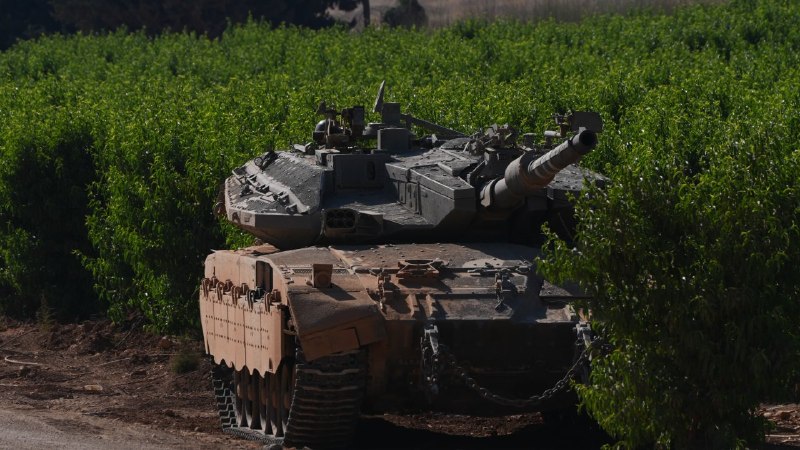
Two explosive drones launched from Lebanon struck a military base and a settlement in Israel's Western Galilee on 25 May 2026, triggering air raid sirens across the northern border zone as emergency teams responded to fires at impact sites. According to initial reports relayed across regional wire services, one device hit a military position while a second detonated inside a civilian settlement, marking one of the more significant cross-border incidents to occur in recent weeks.
The batch of alerts began minutes apart. Sirens activated in Zarit and surrounding communities in the Western Galilee at approximately 12:46 UTC, according to Arabic-language wire reports. By 13:06 UTC, both English and Arabic-language channels were carrying confirmations that two drones had been launched from Lebanese territory and that explosions had been reported at a military base and in a settlement, with firebrigades attending at least one impact site. The Israeli military has not yet issued a full statement attributing responsibility, as of the initial filing window.
A Pattern That Hasn't Held
The exchange across the Israel-Lebanon frontier has been escalating in frequency and precision for months. Since Hezbollah launched its limited cross-border campaign in October 2023 — framed as solidarity action following Hamas's attack on Israel — the pattern has been one of gradual, managed escalation. Israeli forces have conducted a sustained air campaign targeting Hezbollah's weapons infrastructure, mid-level commanders, and launch sites. Iranian-backed supply lines have been hit repeatedly in Syria and Iraq. Yet neither side has managed to establish, let alone hold, the buffer zone that a ceasefire agreement theoretically guarantees.
Hezbollah's stated rationale has been consistent: it will maintain fire until a ceasefire in Gaza is reached. Israeli decision-makers have held a parallel line: no negotiated settlement while Hezbollah retention of combat capability remains intact in southern Lebanon. The result is a frontline where the same 60-kilometer stretch of border has been absorbing strikes, counter-strikes, evacuations, and failed diplomatic rounds in roughly monthly cycles. What changed this time around was the payload — precision-guided explosive drones, rather than short-range rockets, are a categoryIsraeli commanders have designated as the threshold crossing point in the escalation ladder.
What Tuesday's Strikes Actually Represent
The security-establishment framing inside Tel Aviv draws a sharp line between different weapon types. Rockets fired in volleys are treated as a nuisance and a harassment; precision drones carrying shaped charges are treated as an intelligence and operational failure, since their approach routes and impact timing imply a degree of pre-mission reconnaissance. Military bases in the Western Galilee fall squarely in that elevated-threat category. Settlements with civilian populations are aseparate order of concern entirely.
That distinction matters for how Israel's leadership calibrates its response. An exchanged volley of rockets answered by artillery counter-battery fire is a containable exchange. A drone infiltration that reaches a settlement and sets off fires requires a visibly different reaction — politically, domestically, and in terms of the signal it sends to Tehran. Hezbollah's leadership, meanwhile, faces its own recalculation: precision strikes against military positions that draw consequences are not the same as the lower-risk barrages of an earlier phase, and every strike that escalates the bilateral friction raises the odds of an Israeli offensive that goes beyond air campaigns.
The Diplomatic Void Is the Story
Outside the region, Tuesday's strikes are likely to register as the next item in an undifferentiated list of border incidents — and that is precisely the risk. When a form of conflict becomes ambient, the international attention reflex dulls. The resumed Gaza ceasefire talks have consumed the diplomatic oxygen; a Lebanon front that is burning below the headlines is easier to defer than to resolve. Yet northern Israel has approximately 60,000 evacuated residents who have not returned home in eighteen months. The argument that the northern front is contained is an argument that the situation is structurally tolerable; the argument that Tuesday's strikes represent tolerable friction is harder to sustain when settlement-impacting drones are now in the incident ledger.
The broader structural question — whether the post-2023 Iran containment architecture has been degraded beyond repair — sits in the background of every Hezbollah incident. The axis of resistance's calculus runs through Tehran, and Washington's capacity to impose a de-escalation framework has been under strain since the Gaza war began. What is certain is that Tuesday's strikes will be briefed in Israeli cabinet meetings as data points in a larger case for finishing what the air campaign cannot.
What Happens Next
Israeli military doctrine on the northern front operates on a principle of sufficiency: maintain a state where Hezbollah cannot conduct the high-intensity barrages it once threatened, while preserving enough deterrence to prevent Iran from drawing direct conclusions. Tuesday's drones complicate that equation. If the strike capability demonstrated is repeatable — and there is no structural reason it would not be — then the sufficiency standard has quietly moved. The question before decision-makers in Tel Aviv is whether a more intensive campaign incurs more strategic cost than an escalation-by-attrition that is, for now, deemed sustainable.
Hezbollah's leadership faces a parallel calculation. Each strike that draws a significant Israeli response raises the pressure on Lebanese state institutions already straining under economic collapse and political paralysis. Each strike that does not draws the charge that the resistance is managing optics rather than fighting. The drones reached their targets on Tuesday. Whether they trigger the diplomatic intervention both sides nominally say they want — or trigger instead the full-weight offensive both sides nominally want to avoid — depends on calculations this publication cannot fully map from open-source reporting. What is clear is that the threshold is lower than it was.
This publication will continue monitoring Google's response to the injunction.
Wire provenance
This editorial synthesis draws on the following public wire/social posts:
- https://t.me/TheCradleMedia/12489
- https://t.me/TheCradleMedia/12488
- https://t.me/alalamarabic/24871
- https://t.me/alalamarabic/24870