Tykhanovskaya's Kyiv visit exposes the fiction of Lukashenko's neutrality
The Belarusian opposition leader's first visit to Kyiv lands in the shadow of a deadly strike — a juxtaposition that makes the official Minsk line increasingly untenable.
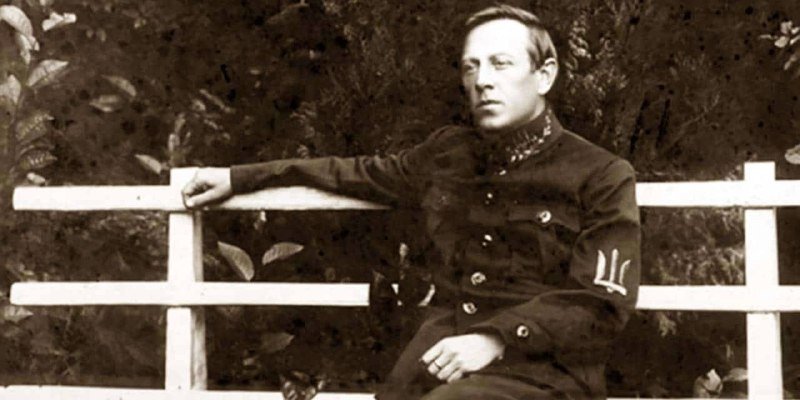
Svitlana Tykhanovskaya arrived in Kyiv on 25 May 2026. Hours earlier, the city had absorbed another strike — the death toll still climbing when the news broke. That contrast is not incidental. It is the whole story.
Tykhanovskaya, the exiled leader of the Belarusian democratic opposition, stepped into a city still counting its dead from a Russian attack that Belarusian territory helped make possible. The timing was not coincidental. It was deliberate, and it carries a political weight that Minsk's official narration has no vocabulary to address.
What the visit actually means
The Belarusian opposition has operated for years in a curious position: recognised by significant portions of the Western diplomatic community, recognised inside Belarus by a population that demonstrably does not want Lukashenko's rule, yet institutionally without a state. Tykhanovskaya's government-in-exile has no territory, no military, no leverage in any conventional sense. What it has is legitimacy — and that legitimacy has just been deposited in Kyiv.
For Ukraine, receiving the Belarusian opposition leader is a statement about whose side it is on in a conflict that extends well beyond Ukraine's own borders. This is not a bilateral courtesy visit. It is a geopolitical signal: Ukraine sees Belarus as a country under occupation by a client regime, not a neutral party, not a reluctant bystander. The visit confirms that Kyiv treats the Belarusian question as inseparable from its own.
The Lukashenko problem
Minsk's official position — that Belarus is not a party to the conflict, that its territory is being used without consent — has always required a willing audience for the fiction. That audience is shrinking.
Russian military infrastructure on Belarusian soil is not a secret arrangement quietly tolerated. It is visible, documented, and operational. The airfields, the early-warning radars, the logistical corridors — these are not ambiguously deployed. They are unambiguous. And every strike that uses Belarusian airspace or launch points moves the fiction further from any credible ground.
Lukashenko has survived by playing the neutral card: I am not at war, my soldiers are not fighting, my territory is simply... borrowed. The visit by Tykhanovskaya pulls that card out of his hand. She is in Kyiv because the Ukrainian government recognises her as the legitimate voice of Belarusians who did not choose this war and do not want to be complicit in it. That recognition is an explicit rebuttal of the neutral fiction.
The exile question as geopolitical fact
There is a tendency to treat opposition figures in exile as symbolic — important for morale, significant for diaspora communities, but operationally beside the point. The Tykhanovskaya visit suggests a different reading is overdue.
Exiled opposition structures carry institutional weight precisely because they are the only alternative that is organised, recognisable, and coherent. When Tykhanovskaya sits across from Ukrainian officials, she is not there as a guest. She is there as the representative of a population that has demonstrated, repeatedly and at considerable personal cost, that it rejects the Lukashenko arrangement. That is not a symbolic position. In a war where political legitimacy is a resource, it is a significant one.
The visit also sets a precedent. If Ukraine receives the Belarusian opposition, others may follow. The European Parliament already recognises Tykhanovskaya's Coordination Council. Several EU states have granted her recognition in various bilateral formats. Kyiv's move puts her on more formal ground and raises the diplomatic cost of treating Lukashenko as a neutral interlocutor.
What this tells us about the war's geography
The Russia-Ukraine war has always been more than a bilateral dispute. It is a conflict whose logistical architecture runs through Belarus, whose narrative machinery draws on decades of Russo-Belarusian integration, and whose stakes extend to every post-Soviet state that has been watching which way the balance tips.
Tykhanovskaya's visit narrows the space for those watching from the sidelines. It draws a line: there are those who support the war's continuation and those who do not. Neutrality is reclassified as complicity. The Belarusian opposition has decided where it stands — and it stands in Kyiv, alongside a country that did not choose this war but is living inside it.
That is not a symbolic gesture. It is a political act with consequences for everyone still pretending otherwise.
Wire provenance
This editorial synthesis draws on the following public wire/social posts:
- https://t.me/tsn_ua/28412
- https://t.me/tsn_ua/28411
- https://t.me/tsn_ua/28410
- https://t.me/hromadske_ua/22145