US Strikes Kill IRGC Navy Personnel Near Strait of Hormuz
U.S. fighter jets struck two IRGC Navy speedboats south of Larak Island on the night of 25 May 2026, killing at least four personnel in the Strait of Hormuz. The incident marks one of the most direct U.S.-Iranian military confrontations in the Gulf in years.
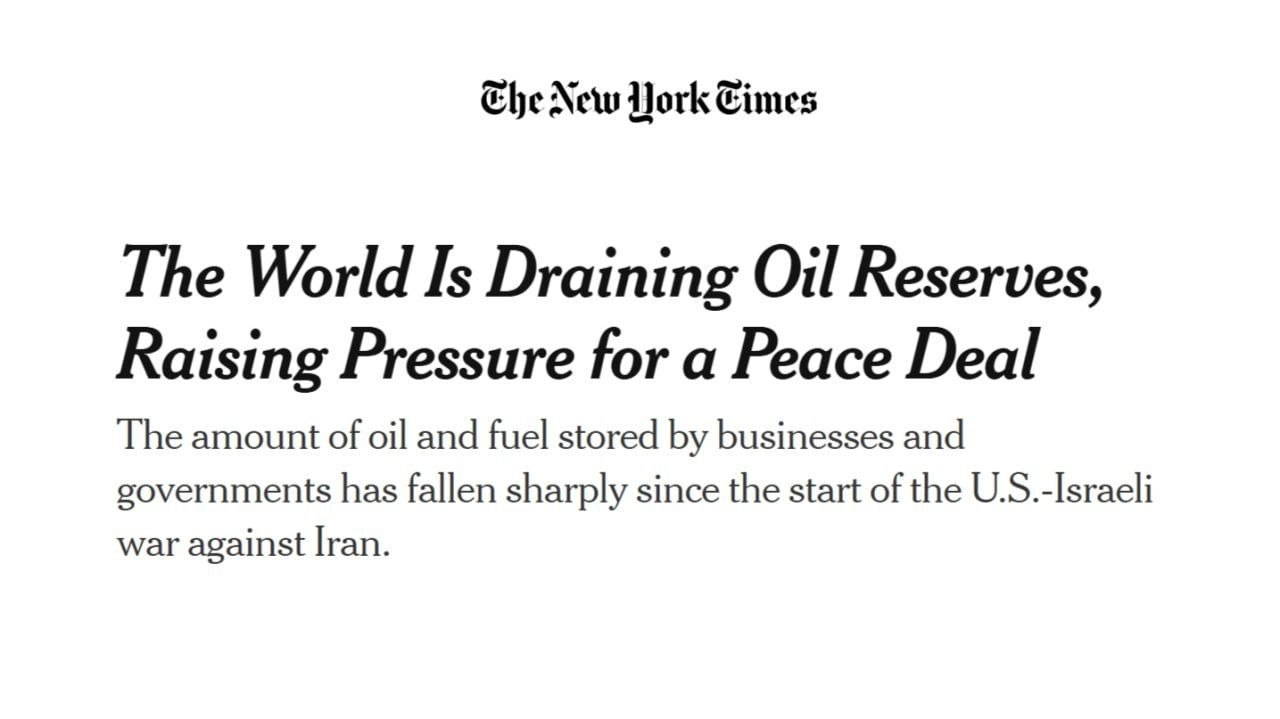
At least four IRGC Navy personnel were killed on the night of 25 May 2026 when U.S. fighter jets struck two IRGC speedboats south of Larak Island in the Strait of Hormuz. The strike, confirmed by Iranian state-adjacent media and corroborated by regional wire reports circulating on social media platforms, represents one of the most direct U.S.-Iranian military exchanges since the collapse of nuclear negotiations and the intensification of Washington's maximum-pressure campaign against Tehran.
The Strait of Hormuz is the world's most critical chokepoint for oil shipments, carrying roughly 20 percent of global crude flow on any given day. Any exchange of fire in its narrow shipping lanes — at their narrowest less than 30 nautical miles wide — carries immediate consequences for energy markets and the maritime insurance industry. The timing of this strike, weeks into a renewed round of U.S. sanctions targeting Iran's oil exports and financial sector, will sharpen questions about whether the Biden administration, or whatever successor administration holds office, has calibrated its pressure strategy with the risks of military escalation in mind.
What the sources confirm
The accounts emerging from Iranian state-adjacent media and regional wire services on the evening of 25 May 2026 are broadly consistent on the central facts: U.S. fighter aircraft engaged two IRGC Navy speedboats operating south of Larak Island, an island in Iranian territorial waters near the mouth of the Strait. At least four members of the IRGC Naval Forces were killed. No U.S. personnel were reported injured in the engagement.
The IRGC's naval arm is distinct from Iran's conventional Islamic Republic of Iran Navy. It is the primary instrument Tehran uses to project power in the Gulf, the Strait of Hormuz, and the broader Gulf of Oman, and it operates a fleet of fast attack craft, drone boats, and naval mines that Western analysts have long identified as asymmetric capabilities designed to deny sea control to a superior adversary. The IRGC Navy also coordinates the Islamic Republic's naval contributions to the Houthi-aligned network that has intermittently disrupted Red Sea shipping since late 2023.
The immediate context for the strike is not yet fully delineated in the available sources. The Pentagon had not issued a formal statement as of filing. The U.S. Central Command press desk, which handles Middle East military operations, had not confirmed the engagement publicly as of 22:00 UTC on 25 May. Questions remain open about whether the IRGC vessels were in international waters at the time of the strike, whether they had broadcast any distress or identification signal, and whether they had made any hostile approach toward U.S. naval assets in the hours preceding the engagement.
Iran's posture and the regional calculus
Tehran's response to U.S. military pressure in the Gulf has historically followed a consistent pattern: calibrated escalation designed to demonstrate resolve without triggering the kind of retaliation that would be strategically catastrophic for the Islamic Republic. The IRGC Navy's presence in the Strait of Hormuz is not in itself a provocation — Iranian vessels operate there routinely, and the waterway's geography means that IRGC patrol boats and U.S. Navy warships frequently transit within visual range of each other. The U.S. Fifth Fleet, headquartered in Bahrain, has for decades run operations in these waters under rules of engagement that permit self-defense responses to what commanders assess as hostile intent.
What changes the calculus in a period of heightened tension is the frequency of incidents and the threshold for self-defense responses. Previous administrations have exercised restraint precisely because the Strait's economic significance creates enormous incentives for both sides to avoid a wider confrontation. The IRGC understands that a miscalculation — a strike on a U.S. warship, a significant disruption to tanker traffic attributed directly to Iranian action — would give Washington the political and legal justification to conduct the kind of broader military campaign that its own internal assessments have consistently identified as carrying prohibitively high costs in lives and regional instability. Whether Iranian decision-makers judge that the current political moment in Washington, with its contested election outcomes and domestic energy priorities, lowers the threshold for such a response is a question this publication cannot yet answer from the available sources.
The wider Iran-U.S. trajectory
The strike occurs against a backdrop of sustained deterioration in U.S.-Iranian relations that has no recent parallel outside of open armed conflict. The Joint Comprehensive Plan of Action — the 2015 nuclear agreement — collapsed in 2018 when the Trump administration withdrew and reimposed sweeping sanctions. Subsequent diplomatic attempts to restore it under the Biden administration failed, and the current U.S. position, reinforced by executive orders and Congressional sanctions packages enacted through 2024 and 2025, amounts to an economic strangulation strategy aimed at forcing Tehran to accept permanent constraints on its nuclear programme in exchange for sanctions relief it has been denied for nearly a decade.
Iran, for its part, has responded by accelerating its nuclear enrichment activities to levels that, while still short of weapons-grade thresholds in terms of verifiable stock, have placed the Islamic Republic within weeks of weapons-capable production according to International Atomic Energy Agency assessments cited in Western wire reporting. Tehran has also deepened its security partnerships with Russia, providing drone technology and, reportedly, ballistic missile components that Moscow has used in its invasion of Ukraine — a relationship that has sharpened Western hawks' arguments that Iran represents an active threat to international security, not merely a regional one.
The strike on the IRGC boats fits inside this trajectory. When diplomatic channels close and economic pressure becomes the primary policy instrument, the risk that a military incident — whether intentional, inadvertent, or somewhere between — becomes a flashpoint grows. The Gulf's geography makes that risk structural. The Strait of Hormuz is too narrow, too economically significant, and too heavily trafficked by naval vessels from multiple countries for a significant incident to remain contained by goodwill alone.
Consequences and open questions
The immediate consequence, assuming no further escalation in the next 24 to 48 hours, will be a hardening of positions on both sides. Iranian state media will frame the strike as an act of aggression by a foreign power operating illegally in what Tehran claims as its territorial waters. Iranian officials will face pressure from within the IRGC to demonstrate a proportional response, even as the supreme leader and senior military commanders calculate whether the strategic costs of retaliation outweigh the domestic political costs of restraint.
For Washington, the calculation runs differently. A strike on IRGC Navy personnel — even on vessels operating in disputed circumstances — gives the administration a narrative of firm deterrence in a region where allies, particularly Saudi Arabia and the UAE, have been watching the U.S. withdrawal from Iraq and the perceived drift in Syria with growing anxiety. Whether it serves long-term U.S. interests to eliminate IRGC Navy personnel in the Strait rather than to document and de-escalate incidents is a question that will not be answered in a Pentagon press release. It is a question of strategic architecture, and it will be answered — or not — in the weeks ahead.
What remains genuinely uncertain is the trigger for this specific engagement. The sources available at time of publication do not establish whether the IRGC boats initiated hostile action, whether they were escorting or interdicted a smuggling or weapons transfer operation, or whether the U.S. side identified what it judged to be an imminent threat and acted preemptively. Without the Pentagon's formal statement and any imagery or telemetry data the U.S. side chooses to release, the central factual question — who did what, and when — cannot be definitively resolved from open sources alone.
Monexus will continue to monitor Pentagon and IRGC statements as they become available and will update this report if further corroboration changes the factual picture substantially.
Wire provenance
This editorial synthesis draws on the following public wire/social posts:
- https://t.me/BRICSNews/12471
- https://x.com/sprinterpress/status/1923471129813442577
- https://t.me/wfwitness/8912
- https://en.wikipedia.org/wiki/Strait_of_Hormuz