Prisoners protest on roof of western Venezuela detention centre
Prisoners at a facility in Barinas state climbed onto the roof and set mattresses alight on 25 May, demanding the removal of the prison director — an act of desperate visibility that underscores the conditions of Venezuela's detention system.
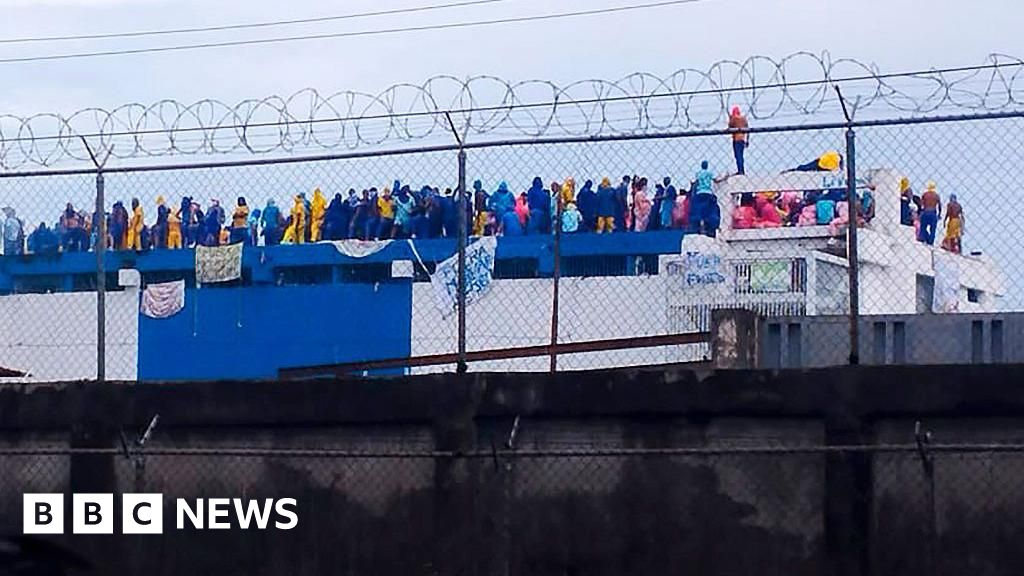
On 25 May 2026, prisoners at a detention centre in Barinas state climbed onto the roof of the facility and set mattresses alight, demanding the removal of the prison director. Reuters reported the protest in real time, documenting the smoke rising from the structure as detainees sought to make their grievances visible to an audience beyond the walls of the compound. No official statement from Venezuela's prison administration, known by its Spanish acronym IN也好, had been issued by the time of reporting.
The incident in Barinas is not an anomaly. It is the latest visible expression of a system under strain.
Venezuela's prison infrastructure has been extensively documented by international monitoring bodies as severely overcrowded, chronically underfunded, and characterised by recurring episodes of violence and unrest. Food and medical shortages are persistent features, not exceptions. Detainees have limited formal channels through which to report abuses by staff or fellow inmates. In this environment, a rooftop protest involving burning material is less an irrational act than a calculated attempt at visibility — an escalation designed precisely because ordinary channels have failed.
The sources do not specify what prompted this particular protest on this particular day. They do not identify the director by name, nor do they detail the specific grievances beyond the demand for his removal. What the Reuters dispatch confirms is the act itself: prisoners on a roof, burning mattresses, a call for the director to go. The translation of that demand into an international wire within hours is itself notable — an indication that the protest was large and visible enough to attract external attention, and that the flow of information from the region, while constrained, is not entirely shut off.
Context helps explain why this matters. Venezuelan prisons have a documented history of overcrowding that far exceeds rated capacity. Human rights organisations have repeatedly flagged deficiencies in food supply, medical care, and basic sanitary conditions. Access for independent monitors and journalists is restricted; what happens inside many facilities is known primarily through the accounts of former detainees, advocacy groups, and occasional wire reports like the one from Barinas. The conditions that produce a rooftop protest — desperation, the absence of recognised grievance mechanisms, the use of public spectacle as leverage — are not new in Venezuela. They are the product of a detention system that functions, at best, in the margins of international attention.
The political and international context shapes how this story travels. Venezuela operates under sustained scrutiny from Western governments and multilateral institutions that have documented governance deficits, restricted civil society space, and restrictions on press freedom. Domestic reporting on prison conditions is limited; independent journalism is constrained. When a Reuters dispatch surfaces from Barinas on a Tuesday morning, it carries the weight of being among the most concrete information available about the incident — not because the wire is complete, but because the alternatives are fewer. The protest is news precisely because the conditions that generate it are rarely visible.
The structural logic of the incident is not difficult to trace. Detention facilities in conditions of overcrowding and resource scarcity are environments in which inmate agency is sharply circumscribed. The tools available to prisoners who wish to communicate grievances are limited: formal complaints to staff are unlikely to produce results; appeals to external authorities are slow and often ineffective; the option of last resort is to make the protest impossible to ignore. Setting a fire on a rooftop accomplishes that. It generates visible smoke, it forces external awareness, and it creates pressure on authorities to respond. The strategy is legible. The underlying conditions — scarcity, lack of recourse, opacity — are what make it necessary.
The counter-consideration is straightforward: prison systems in other countries have similar overcrowding profiles without producing comparable visible protests. The specific dynamics in Venezuela — the relationship between inmates and staff, the role of informal governance inside facilities, the cultural and political context that shapes how disputes escalate — cannot be fully inferred from a single incident. The Reuters dispatch is a data point, not a complete picture. What it confirms is that something happened in Barinas that prisoners considered worth public visibility. The reasons and the resolution will emerge only if information continues to flow.
What happens next in Barinas will be determined by how the facility's administration responds. Comparable incidents in Venezuelan detention facilities have been resolved through negotiated de-escalation — authorities agreeing to address grievances in exchange for prisoners descending from roofs — as well as through more coercive means. The outcome will be watched by human rights organisations and regional monitors who track conditions in Venezuelan prisons, but whose access remains limited. Whether this remains a contained incident or escalates will depend on decisions made in the coming hours and days. The conditions that produced the protest — documented overcrowding, scarcity of basic resources, restricted visibility — are structural. They do not change quickly. The Barinas protest is a symptom. Whether the underlying condition receives a response depends on the attention it generates.
Desk note: Reuters carried the Barinas incident as a straight wire dispatch — prisoners on a roof, burning mattresses, demand for director's removal. Monexus has placed that incident within the documented context of Venezuelan prison conditions and the structural logic of how such protests emerge when ordinary channels are closed. The framing is deliberately understated: the facts are extraordinary, but the prose does not perform alarm.
Wire provenance
This editorial synthesis draws on the following public wire/social posts:
- https://x.com/reuters/status/2058877537967869952