Prisoners Seize Control of INJUBA Facility in Barinas, Venezuela
Inmates at Venezuela's INJUBA prison in Barinas have seized control of sections of the facility following violent clashes with staff over the appointment of a new director, according to reports on 25 May 2026.
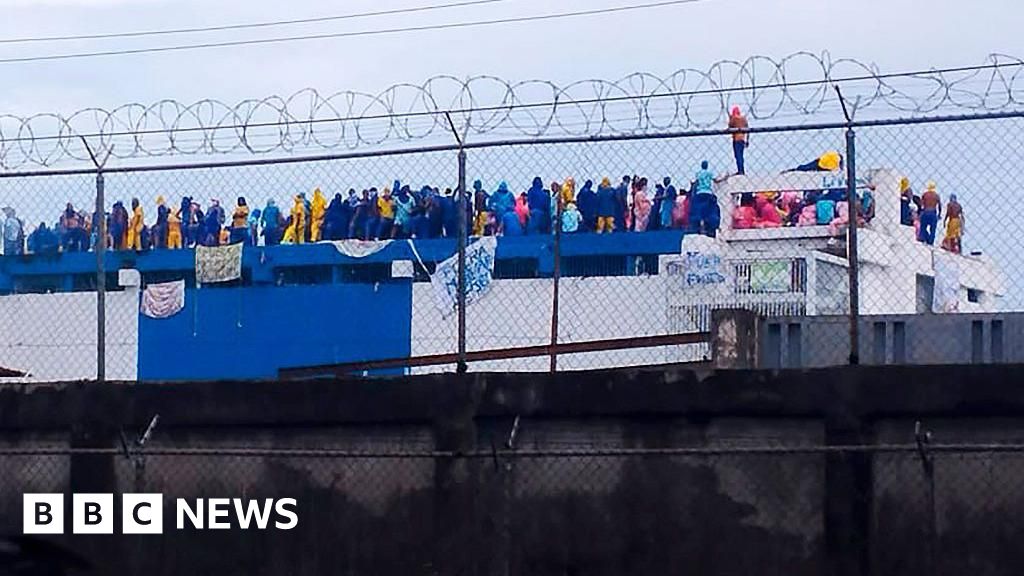
Reports emerging in the early hours of 25 May 2026 indicate that prisoners at the INJUBA correctional facility in Barinas, Venezuela, have seized control of sections of the complex. The action follows violent unrest triggered by the appointment of a new prison director, according to accounts cited by researchers tracking the incident.
The specific trigger for the uprising appears to be inmate allegations that staff carried out beatings, conducted violent searches of cells, and discharged firearms during clashes that preceded the seizure. The sources do not specify whether any injuries or fatalities resulted from those initial confrontations, nor do they detail the current disposition of the facility or whether Venezuelan security forces have been deployed.
INJUBA is one of several Venezuelan prisons that have experienced repeated episodes of inmate-organized violence in recent decades. The country's penitentiary system has long operated with chronic overcrowding, insufficient state investment, and recurring breakdowns in institutional control. In such conditions, the appointment of a new administrator — with the implicit threat of changed routines, tighter security protocols, or altered arrangements between staff and inmate populations — can function as a catalyst for organized resistance.
A Pattern of Institutional Fragility
The incident fits a recognisable trajectory in Venezuelan penal history. Rather than functioning as controlled environments where the state maintains a monopoly on force, many Venezuelan prisons operate under arrangements that grant armed inmate collectives significant practical autonomy. When authorities attempt to assert greater control — through new leadership, intensified searches, or crackdowns on contraband — inmates have frequently responded with coordinated violence or territorial seizures. The pattern reflects not merely a failure of individual prison management but a structural condition in which the state's coercive capacity inside its own facilities has been contested for years.
The Venezuelan government has periodically attempted to reassert control through military-led interventions. In 2003, then-President Hugo Chávez ordered troops into prisons to disarm inmate factions, an operation that produced its own casualties and was followed by renewed cycles of violence. More recent administrations have faced the same institutional dilemma: formal state authority exists on paper, but practical control inside large correctional complexes depends on negotiated arrangements that break down under pressure.
The sources do not indicate whether the current Venezuelan government, led by President Nicolás Maduro, has issued any public statement about the Barinas incident, nor whether an intervention operation is underway. That absence of official communication is itself notable; the speed and tone of a government's public response to prison seizures often signals how significant the event is assessed to be and whether negotiated resolution or forced retaking is anticipated.
Regional Context
Venezuela's prison crisis exists within a wider Latin American phenomenon of institutionalised prison violence. From Brazil's gang-controlled megacarcerais to Colombia's extortion networks inside penitentiaries, the region has repeatedly demonstrated that prisons can become sites of parallel governance rather than instruments of state correction. The dynamics share common features: overcrowding that overwhelms official capacity, economic stratification inside facilities that creates internal power hierarchies, and a state presence that is either absent, complicit, or overwhelmed.
What distinguishes the Venezuelan case is the degree to which armed inmate organisations have formalised their control over physical space within major prisons. INJUBA's seizure of sections by prisoners represents not an explosion of random violence but a deliberate territorial assertion — a claim to governance over a defined space within the facility. That kind of coordinated action requires organisation, communication, and leadership, all of which suggest the conditions for such a seizure had been building for some time before the new director's appointment.
What Remains Unknown
The available reporting leaves several questions unanswered. The number of prisoners involved in the seizure, the extent of the facility now under inmate control, and the current status of prison staff members who were present during the initial clashes remain unconfirmed. Whether the new director had assumed active duties or was merely announced at the time of the unrest is also unclear. The sources provide no information on the condition of any hostages or whether staff were among those taken captive during the seizure.
International human rights organisations, including the Inter-American Commission on Human Rights, have previously issued statements on Venezuelan prison conditions, though no immediate statement from those bodies was available at the time of reporting. The response — or absence of response — from regional bodies will offer one measure of how the incident is being assessed beyond Venezuela's borders.
Stakes and Trajectory
The immediate stakes are humanitarian: inmates and staff inside a facility where control is contested face elevated risk of violence, deprivation of basic services, and psychological harm. If the seizure holds, Venezuela's government faces a choice between negotiated accommodation — effectively conceding that armed inmate collectives retain territorial rights inside state facilities — and a forced retaking that carries the risk of significant casualties. Neither option is without precedent in Venezuelan correctional history.
The longer-term implications concern the credibility of state authority inside Venezuela's prison system. Every episode of this kind reinforces the practical understanding that formal government control is conditional on acquiescence from organised inmate populations. That dynamic, once established, tends to persist and deepen, making subsequent interventions more costly and more likely to fail.
For the people inside INJUBA — staff and prisoners alike — the immediate concern is simpler and more urgent: the next hours and days will determine whether this seizure resolves through negotiation, force, or something more prolonged. The international attention it receives will depend on how Venezuela's government chooses to frame and respond to an episode that exposes the limits of state authority at its most fundamental level.
This publication tracked the Barinas prison seizure through open-source reporting and researcher accounts. Monexus will continue to monitor the situation as additional verified information becomes available.
Wire provenance
This editorial synthesis draws on the following public wire/social posts:
- https://x.com/boweschay/status/2058717224932720640