Stan Wawrinka's Roland Garros Farewell Marks the End of an Era
The 2015 champion's first-round exit to Dutch qualifier Jesper de Jong closes a chapter on a career defined by resilience and three major titles earned across three different surfaces.
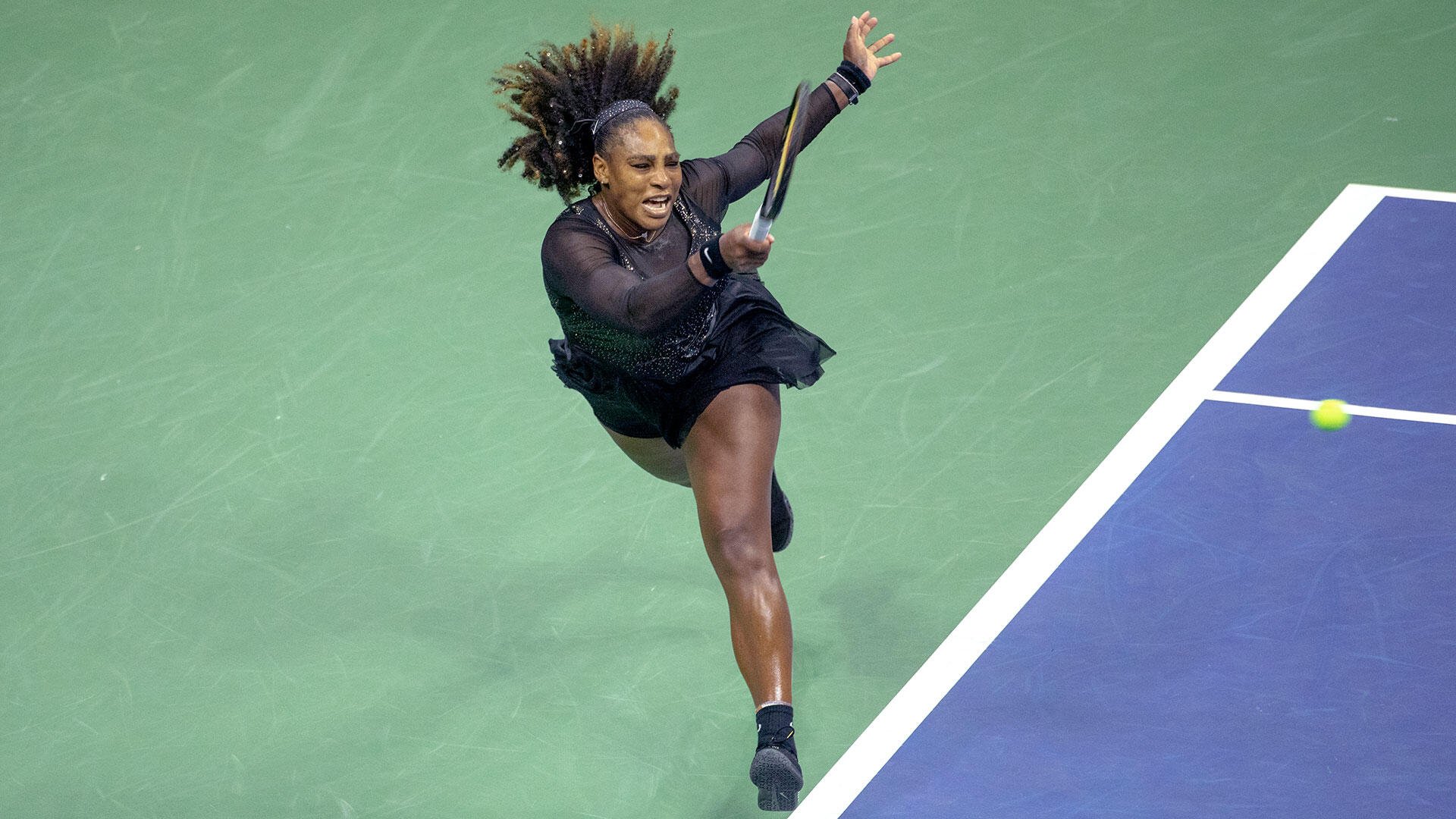
Stan Wawrinka walked off Court Philippe-Chatrier on Monday with his head held high, having fallen 6-3, 3-6, 6-3, 6-4 to Dutch qualifier Jesper de Jong in the first round of what is almost certainly his final French Open appearance. The 40-year-old Swiss, who won the tournament a decade ago in 2015, showed enough in patches across four sets to remind the Parisian crowd why he once commanded this surface. But the legs that carried him to major titles in Paris, Melbourne, and New York across a career spanning two decades eventually gave way to a 22-year-old opponent playing his first Tour-level match on clay.
The farewell was always going to arrive. What made it bearable was that Wawrinka controlled the narrative himself — a quiet acknowledgment before the draw that this might be the last time, met with a level of affection from the Parisian public that he has not always enjoyed in the way his more celebrated Swiss compatriot has. He departed on his own terms, against an opponent who had earned his place through qualifying, with a final wave that drew sustained applause.
A Career Built on the Infrequent
Wawrinka's record book reads differently from the standard elite-player template. He never reached world number one. He never accumulated the match-win totals that define a generation of top players. What he produced instead was a series of moments so improbable they bordered on implausible. The 2015 French Open title, won as a 30-year-old unseeded player, remains one of the more remarkable Grand Slam runs in recent memory — a man who had never previously held a set at that level suddenly dismantling Andy Murray in the semi-finals and Novak Djokovic in the final. Two more majors followed, at the Australian Open in 2014 and the US Open in 2016. Each came after surgery, after doubts, after periods when the consensus view was that his window had closed.
That pattern — recovery, recalibration, unlikely triumph — gave Wawrinka's career a shape unusual among his peers. He was not dominant in the way of Roger Federer or Rafael Nadal; he was persistent in a way that proved more durable than many expected.
What the Performance Revealed
The scoreline against de Jong requires context. Wawrinka won the second set decisively and held a break in the fourth before his opponent's youth told. The serving statistics were competitive. On another day, with the margins falling differently in the deciding sets, the narrative around this farewell would read quite differently.
What the match could not obscure is the physical reality facing a player who turns 41 in December. The movement that once allowed him to construct points from defensive positions and then redirect them with high-velocity backhand winners now requires more recovery time between exchanges. De Jong exploited this — pressing serve returns, varying rhythm, refusing to allow Wawrinka the settled baseline exchanges that once defined his game.
The Swiss showed enough to suggest a player of genuine quality, and enough absence of that quality to confirm retirement was not an unreasonable conclusion.
The Surface Argument
Roland Garros has always occupied an awkward position in Wawrinka's career narrative. His 2015 triumph came on a notably dry, fast clay surface that played more like a hard court than the muddy baselines that preceded it. The tournament's subsequent return to slower conditions has not suited his game as well. Of his 17 career ATP titles on clay, only two have come at the Masters 1000 level in Monte Carlo and Madrid. The narrative that Wawrinka was a clay-court specialist who won one major under unusual conditions is too simplistic — he also won on hard courts — but it contains enough truth that his record at Roland Garros after 2015 reads as underwhelming relative to his overall ceiling.
Monday's defeat, then, is less a story of a champion failing at his best surface and more a story of a player whose best surface peaked at precisely the right moment a decade ago.
What Comes Next
De Jong advances to face either Francisco Comesana or Tomas Martin Echeverria in the second round — a matchup that will test whether his qualifying run represents genuine breakthrough or favourable draw. For Wawrinka, the next question is whether he attempts to extend his career elsewhere or accepts that Roland Garros provided the exit he would have chosen.
Swiss tennis faces a transition. With Federer long retired and Wawrinka approaching the same decision, the country's extraordinary generation of male players is winding down. Dominic Stricker and Stan Wawrinka are not the same proposition, but the pipeline behind them is thinner than it has been at any point since the late 1990s. That is a structural problem for another column. On Monday, the appropriate response was simpler: acknowledgment of a player who found ways to win when the evidence suggested he should not have, and who chose his final stage with the same deliberate instinct that defined his career.
The French Open continues through 8 June 2026. Wawrinka's career record at Roland Garros now stands at 28 wins and 12 losses across 14 appearances.
Wire provenance
This editorial synthesis draws on the following public wire/social posts:
- https://t.me/france24_en/124567