The Signal and the Model: What Beijing's Patrols and the AI Odds Tell Us
Taiwan's second combat-patrol response in a week and a 9% Polymarket probability on Chinese AI supremacy are not unrelated data points. They point toward a more complicated picture of how Beijing is calibrating pressure — and where its real limits lie.
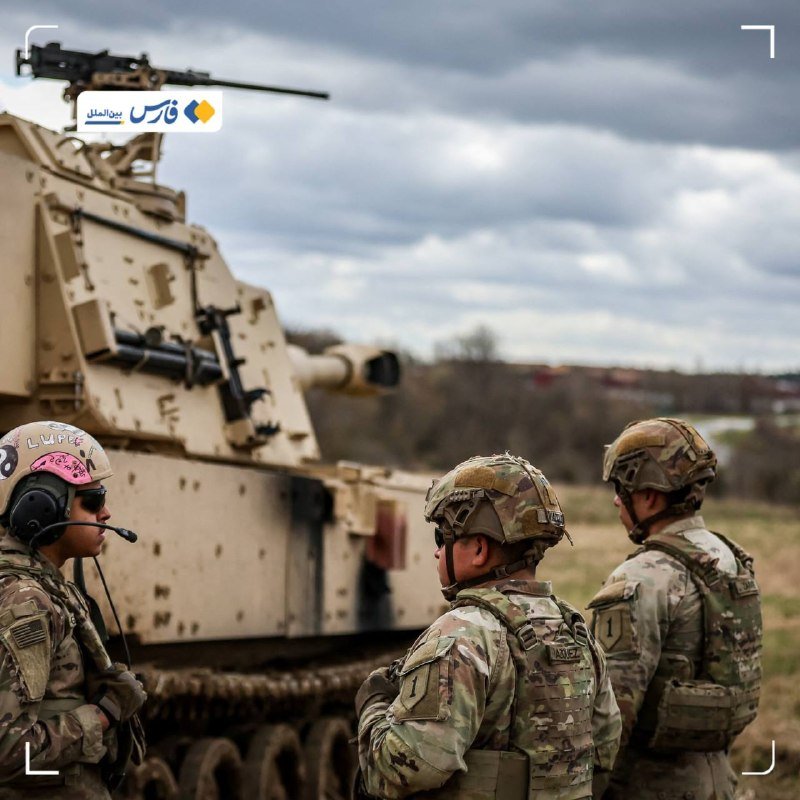
On 26 May 2026, Taiwan's Ministry of National Defense confirmed what its analysts had already been tracking for several days: a second Chinese "combat readiness patrol" in the span of a week, prompting the dispatch of naval vessels and fighter aircraft to monitor and respond. The statement from Taiwan's defense authority was unambiguous in its language. Hours later, the Polymarket prediction market was reflecting a 9% implied probability that a Chinese company would hold the world's top-ranked AI model by the end of the year. These two data points are not unrelated. Together they offer a more precise read on where Beijing's pressure sits relative to its actual capabilities — and where the gap between signal and substance remains widest.
The immediate interpretation of back-to-back patrols runs toward escalation. PLA Air Force and Navy activity in and around the Taiwan Strait has been a fixture of cross-strait tensions for years, but the framing of the most recent episode — "combat readiness patrol" language, and two of them within days — has drawn attention from regional analysts and Western defense officials. Taiwan responded by mobilising assets in kind, the standard operational posture when PLA activity is deemed to cross threshold markers. The pattern is real. What remains genuinely contested is the intent behind it.
There are two broad readings. The first, dominant in Western wire coverage, treats each uptick in PLA activity as a data point in an escalating trend — evidence of deliberate pressure calibrated to test Taiwan's responses and signal resolve to Washington. The second reading, less frequently aired in mainstream coverage, notes that Beijing has sustained high-frequency military activity around Taiwan for years without a decisive breach, and asks what purpose repeated patrols serve if the intent were genuinely kinetic. The evidence supports both readings simultaneously, which is precisely the point: ambiguity is the mechanism. Beijing does not need anyone to know whether the next patrol is routine or preparatory. The uncertainty itself is the tool.
The Polymarket number sharpens this analysis rather than resolving it. Nine percent is not zero. A one-in-eleven chance that a Chinese company overtakes the current state-of-the-art in AI by year-end is a meaningful market assignment of near-term Chinese technological competitiveness. The market is not saying China cannot build a world-class AI model. It is saying that, on the evidence available to informed traders, the timeline for that achievement remains longer than Beijing's stated ambitions and official propaganda cycles suggest. That framing — the gap between ambition and demonstrated output — is precisely what the military signalling operates inside.
China has made AI supremacy a formal policy objective, embedded in its Next Generation AI Development Plan and successive five-year technology blueprints. The investment flows are substantial: state-directed capital into compute infrastructure, semiconductor self-sufficiency programs, and national research institutions built around large-scale model development. Huawei's Ascend chip series, the maturation of domestic semiconductor fabrication under SMIC, and the concentration of talent in Beijing, Shanghai, and Shenzhen research clusters represent genuine capability that Western analysts have had to reassess upward over the past three years. None of this is marginal. The question the Polymarket figure captures is not whether China is advancing but whether the frontier is moving faster than its competitors.
The evidence on that front is mixed in ways that matter for how we read Beijing's broader posture. The compute constraints imposed by US export controls on advanced semiconductors — tightened significantly in successive rounds since 2022 — have slowed the highest-end training runs that require Nvidia H-series and B-series chips. Chinese labs have responded with architectural innovations, distributed training techniques, and aggressive data-collection strategies. Whether these adaptations are sufficient to close the gap with leading Western labs — currently Anthropic, OpenAI, and Google DeepMind — before domestic chip production reaches competitive parity is the unresolved question the market is pricing.
Taiwan sits at the intersection of both dynamics. Its position as the world's leading advanced semiconductor manufacturer — TSMC alone accounts for the vast majority of cutting-edge chip production globally — makes it indispensable to the AI development pipelines of American and Taiwanese companies alike. Military pressure on Taiwan is therefore not simply a geopolitical posture: it is a constraint embedded in the supply chain of the very competition Beijing has made its national priority. The patrols and the AI ambitions are linked by this structural reality. Beijing cannot simultaneously threaten a kinetic scenario over Taiwan and expect to remain the trusted partner in the global AI supply chains that its own development plans depend on. The signal and the model are in tension.
The stakes of misreading this dynamic are asymmetric. If Western analysts over-read Beijing's military signalling as preparation for imminent conflict, the result is defence spending spirals and diplomatic pressure that may be disproportionate to the actual threat. If they under-read it — treating each patrol as routine noise — they risk normalizing incremental grey-zone activity that shifts the operational baseline without triggering response. The Polymarket figure offers a partial corrective to both errors: it reflects the calibrated judgment of capital markets with real money on the line, and that judgment says China's technological trajectory is real but not yet decisive. The patrols will continue. The model race will continue. The gap between them may be the most important variable in the years ahead.
What this publication finds: the convergence of high-frequency military signalling with a market-implied nine-percent probability of near-term AI leadership tells us that Beijing is running a multi-track strategy, and that the tracks are not equally strong. The military signalling is cheap relative to its diplomatic yield. The AI race is expensive and its outcome remains genuinely uncertain. The patrol pattern is worth tracking; the model race is worth understanding in its full complexity, not as a predetermined contest but as an open competition where structural advantages — chip access, talent, capital, data — are being deployed against each other at scale.
Wire provenance
This editorial synthesis draws on the following public wire/social posts:
- http://reut.rs/4uAkyRQ